

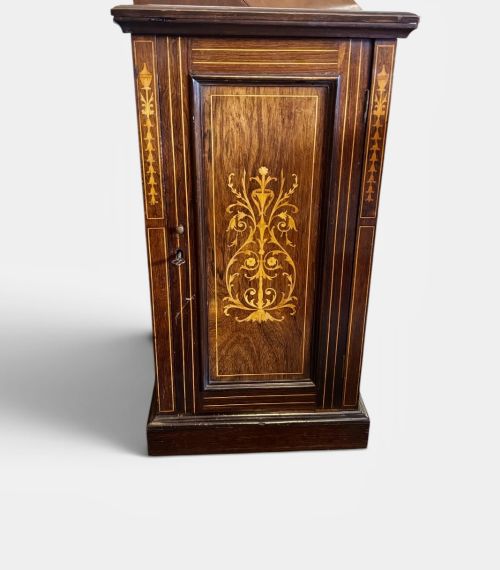
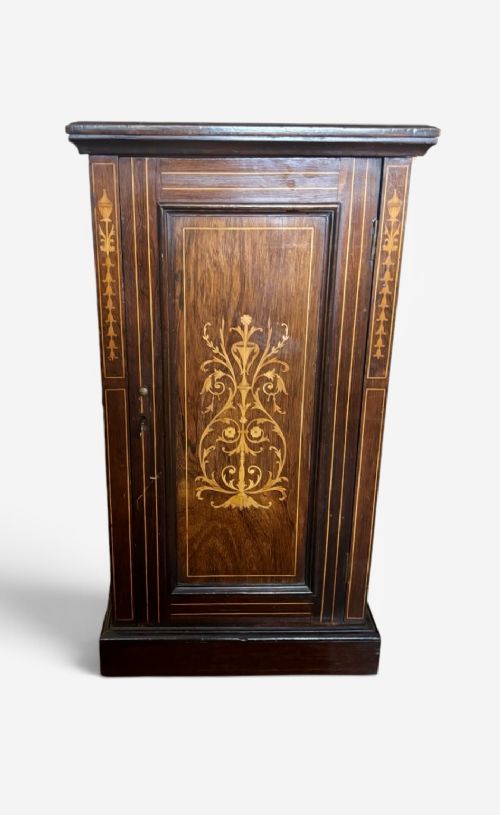


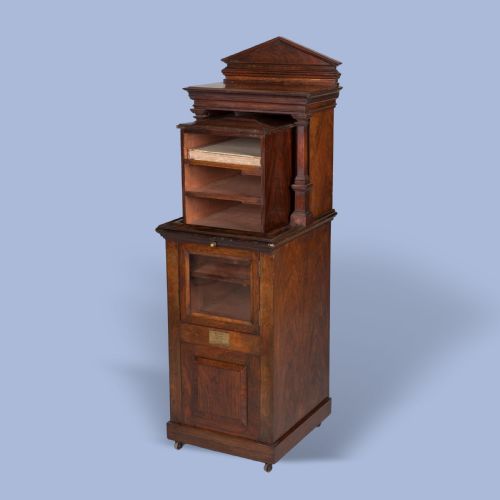


Dark Rosewood Music Cabinet
A dark rosewood music cabinet brings rich timber and refined storage into a room, offering a functional focal point for sheet music or books.
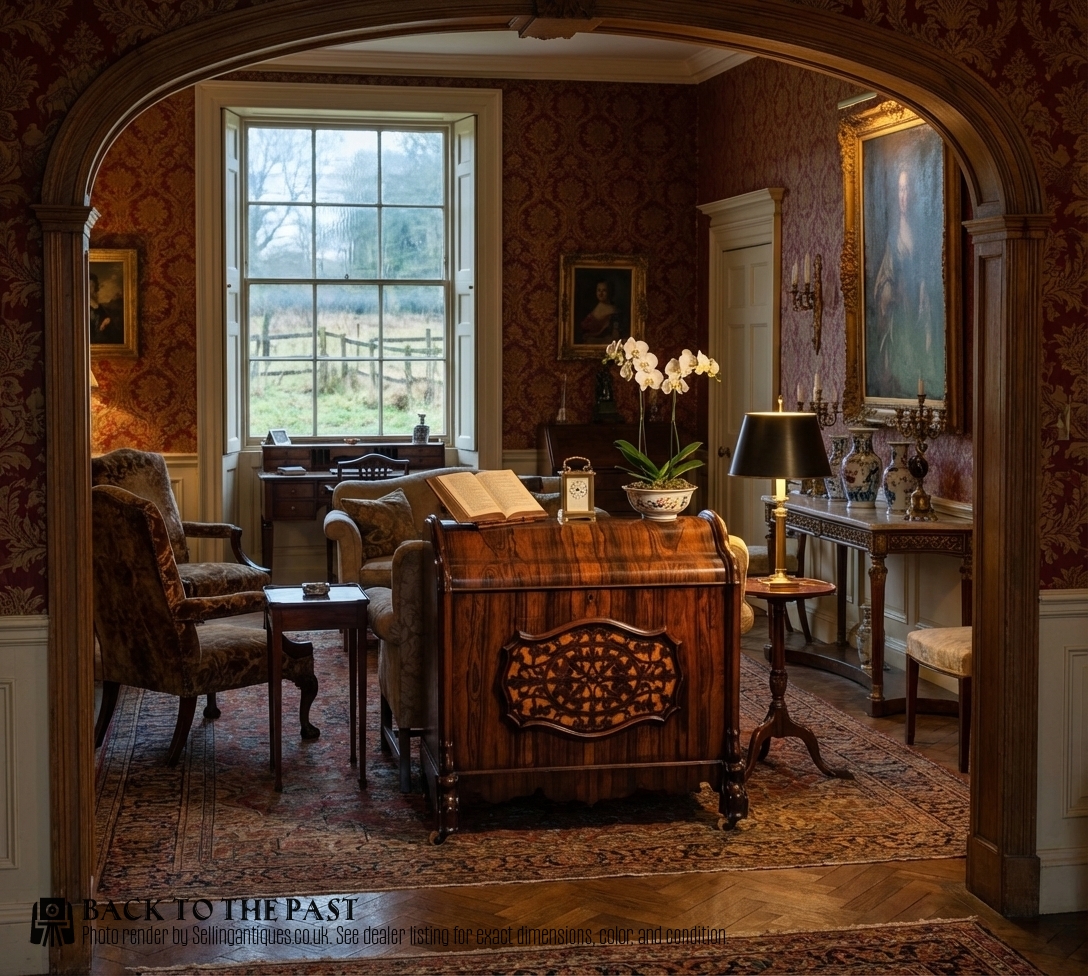
Dark Rosewood Music Cabinet
A dark rosewood music cabinet is a specialised piece designed to store sheet music, periodicals, or books, frequently taking the form of a tall narrow cabinet or a partitioned Canterbury. These furnishings date predominantly from the nineteenth century, encompassing Victorian, Edwardian, and William IV periods, alongside French Revival and Gothic Revival styles.
The versions most commonly encountered on this page belong to the Victorian and Edwardian eras, often featuring distinct wood inlays, mirror backs, or painted panels. Alongside dedicated cabinets, the selection includes related forms such as music racks, magazine racks, and multifunctional side cabinets created from dense dark timbers.
Materials and construction
Makers utilised dark rosewood as the primary timber, frequently pairing it with contrasting inlays of satinwood and boxwood to define door panels and borders. Structural elements sometimes incorporate mahogany, while decorative flourishes involve glass, mirror glass, brass fittings, and painted wooden panels.
Joinery techniques ranged from traditional cabinetry framing to specialised slatted partitions for canterburys and tiered shelving for music storage. Carved details appear on select nineteenth-century pieces, alongside marquetry and inlaid banding that highlight the grain of the rosewood.
Dark Rosewood Music Cabinet Retail Price Guide 2026
Typical asking prices for dark rosewood music cabinet among the pieces listed under this phrase on Sellingantiques today, from the lower quarter to the upper quarter. They describe what is for sale here now, not the wider market.
Materials paired with rosewood across these listings include satinwood, boxwood, mahogany, brass, glass, and mirror plates.
Assessing quality and execution
Quality in a dark rosewood music cabinet is determined by the crispness of the inlaid satinwood or boxwood work and the depth of the rosewood grain. Superior examples display balanced proportions, particularly in tall narrow formats, and integrate secondary timbers like mahogany with precision.
The complexity of the form influences the standing of a piece, distinguishing standard storage cupboards from multifunctional parlor cabinets with mirror backs or specialised sheet music interiors. Finer examples maintain original brass hardware, glass panels, and intact internal dividers rather than later replacements.
The Dark Rosewood Music Cabinet Glossary
- Rosewood
- A dense, heavily grained dark timber prized for fine nineteenth-century cabinetmaking and decorative inlays. It polishes to a deep sheen and forms the primary material for these music cabinets.
- Canterbury
- A low stand featuring upright slatted partitions designed originally to hold sheet music or folios. Many examples incorporate a low drawer beneath the main compartments.
- Inlay
- A decorative technique where contrasting woods like satinwood or boxwood are embedded into the rosewood surface to form geometric or floral patterns.
- Whatnot
- An open-shelved display cabinet or stand developed in the nineteenth century for books or decorative objects. It often combines with cabinet storage or music compartments.
- Gothic Revival
- An architectural and decorative style popular during the nineteenth century, drawing inspiration from medieval forms. Pieces in this taste feature pointed arches and heavy structural carving.
Dark Rosewood Music Cabinet: Frequently Asked Questions
What is a music cabinet?
A music cabinet is a specialised piece of furniture built to house sheet music, folios, and scores. They emerged as popular household items during the nineteenth century.
These pieces typically feature internal shelving or partitioned compartments behind a door. Many surviving examples date from the Victorian and Edwardian eras, often enhanced with marquetry or inlays.
How do I date a rosewood cabinet?
Dating relies on observing stylistic markers, construction methods, and the specific period characteristics present in the timber and hardware. Victorian pieces often display rich rosewood grain and elaborate inlays, while Edwardian versions tend to show lighter, more refined framing.
Reference to periods such as William IV or late nineteenth-century French Revival helps narrow the timeline. Examining the interior fittings and secondary woods also provides clues to the era of manufacture.
What is a Canterbury stand?
A Canterbury is a low furniture form featuring vertical partitions designed to hold sheet music or loose periodicals. Originating in the late eighteenth century, they remained popular throughout the Victorian period.
Many Canterburys combine the slatted music rack with a small drawer at the base and turned legs mounted on castors. They were intended to sit beside a piano or in a parlour for easy access to scores.
Where should I place a music cabinet?
A music cabinet suits a living room, study, or music room where its compact footprint allows it to function as a side cabinet or display surface. Tall narrow formats fit well into alcoves or beside larger seating arrangements.
To preserve the rosewood and any inlaid details, position the cabinet away from direct sunlight and strong heat sources. The interior shelving works effectively for storing books, papers, or small collections.