
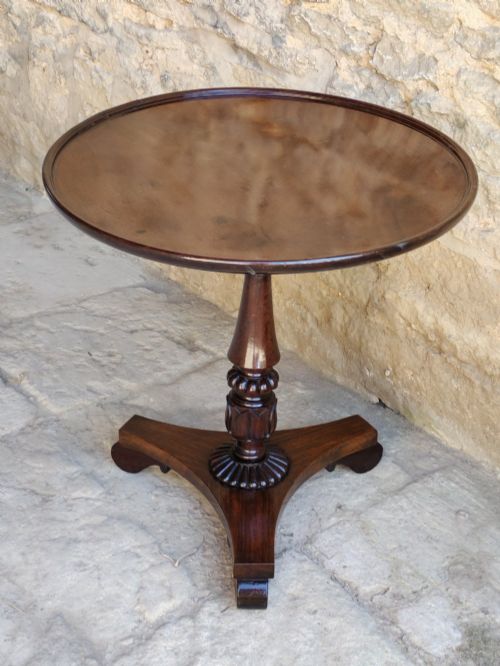


Rosewood Candle Stand
These rosewood candle stand pieces bring rich grain and elegant proportions to a room, offering a sturdy surface for illumination or display.
Rosewood Candle Stand
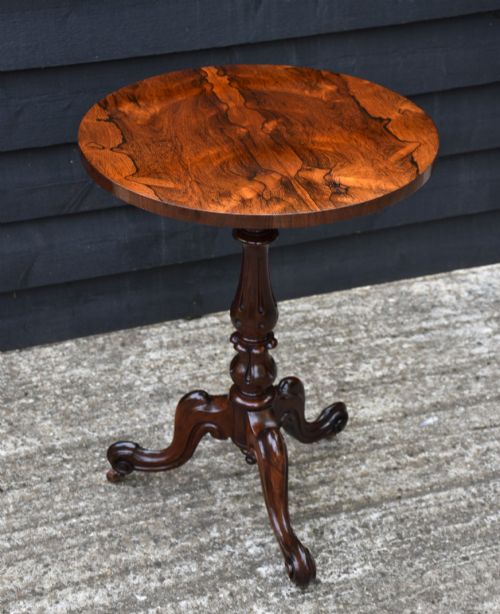
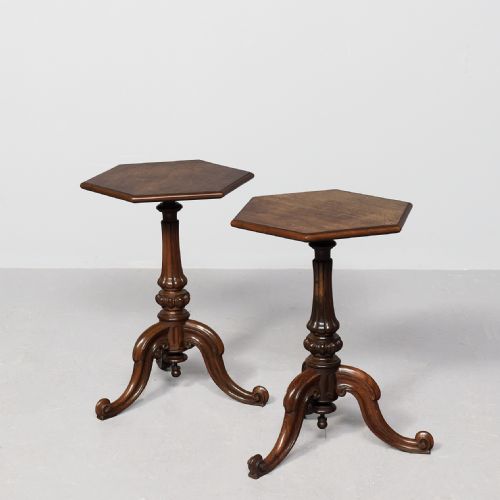
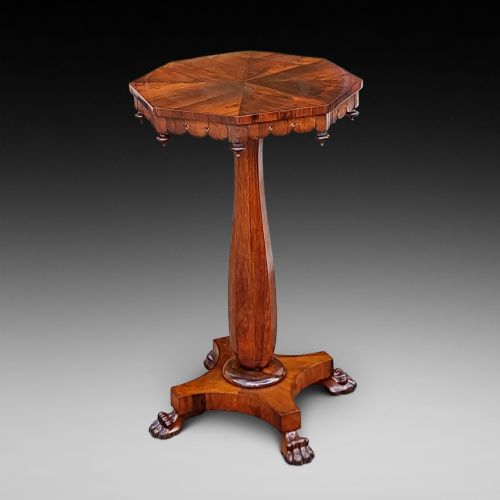
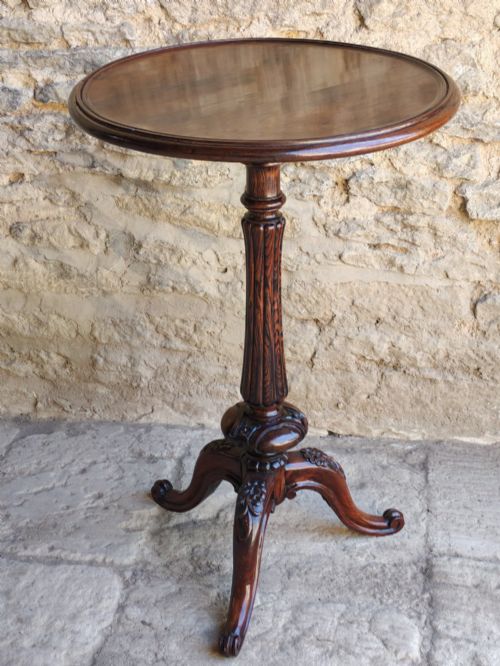
A rosewood candle stand or related occasional table serves as a functional and decorative accent piece within a period interior. These items emerge primarily from the Regency, William IV, and Victorian eras, taking forms such as tripod wine tables, torchers, and occasional side tables.
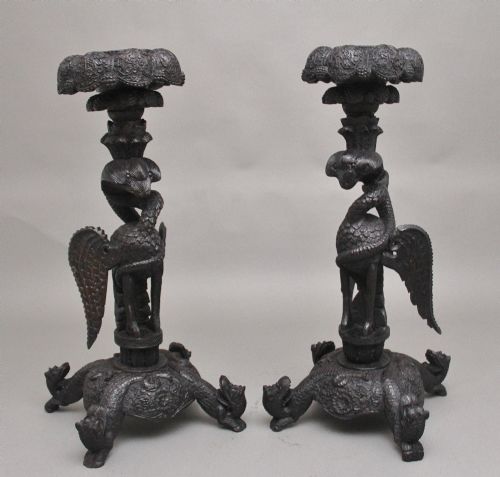
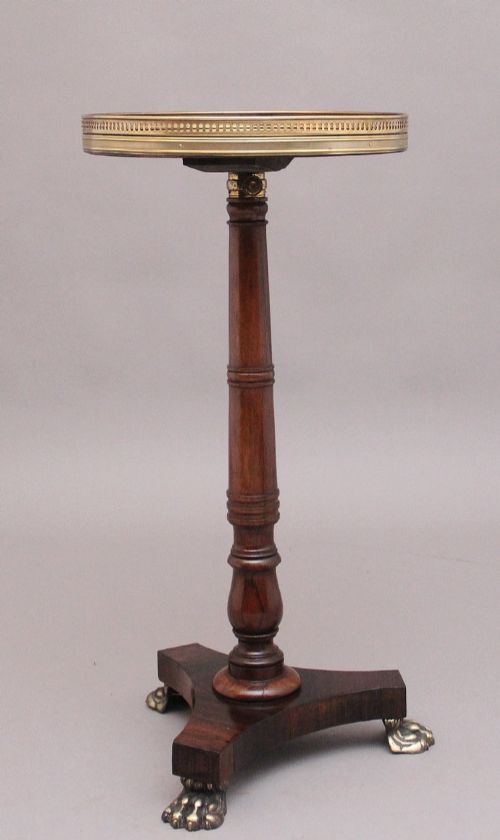
Regional variations span British cabinetmaking styles alongside Anglo-Indian carved work and Chinese Qing style examples in hardwood. Such diversity allows a buyer to select anything from a plain lamp table to a brass-inlaid Regency piece.
How they were made
Cabinetmakers utilised dense rosewood timber, prized for its dark grain and smooth finish, often pairing it with secondary hardwoods like mahogany or walnut. Tops frequently display figured veneer or solid construction supported by turned or carved central pillars.
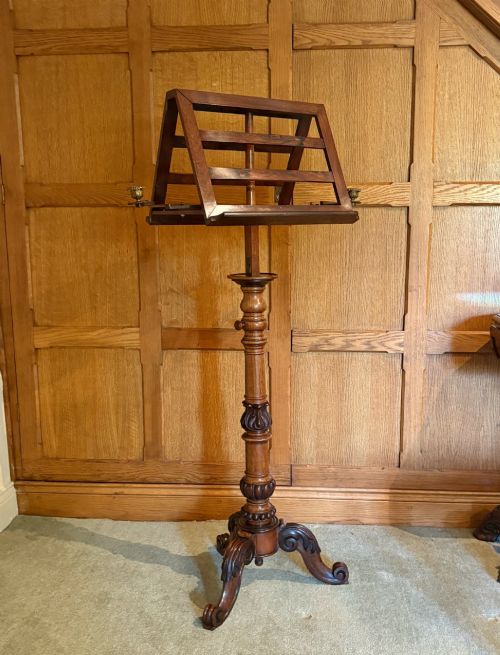
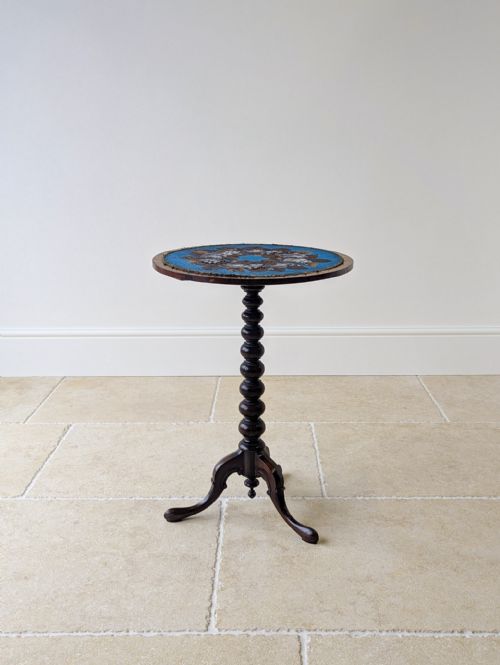
Construction techniques include traditional joinery such as pegged tripod bases and telescopic mechanisms for adjustable height stands. Metal elements like brass inlay and glass beadwork appear on select nineteenth-century examples to enrich the surface design.
Rosewood Candle Stand Retail Price Guide 2026
Typical asking prices for rosewood candle stand among the pieces listed under this phrase on Sellingantiques today, from the lower quarter to the upper quarter. They describe what is for sale here now, not the wider market.
Form variations include tripod wine tables, torcheres, music stands, and Chinese Qing style lanterns.
What varies in quality
The distinction between standard production and top-tier pieces lies in the choice of timber and the precision of the carving. Highly figured rosewood and crisply executed barley twist or turned details elevate the visual weight of an occasional table.
Makers known for exceptional joinery, such as Gillows, distinguish certain stands through refined proportions and sophisticated brass inlay work. The integration of functional elements like smooth-operating tilt-top mechanisms also marks the difference in craftsmanship.
Gillow and Co·George Bullock
The Rosewood Candle Stand Glossary
- Regency
- A British design period spanning the early nineteenth century defined by classical restraint and Greco-Roman influence. Pieces from this era often feature clean lines and brass ornamentation.
- Torcher
- A tall ornamental stand designed to support a light source or decorative object. These vertical pieces typically feature carved wooden shafts and steady tripod bases.
- Tripod table
- A small occasional table supported by three legs radiating from a central pillar. This stable construction prevents rocking on uneven historical floorboards.
- Occasional table
- A movable small table designed for specific, intermittent use within a room. Common forms include wine tables, lamp tables, and side tables.
Rosewood Candle Stand: Frequently Asked Questions
What is a rosewood candle stand?
A rosewood candle stand is a compact nineteenth-century piece designed to elevate a light source or serve as a small display surface.
These items typically feature a circular top, a central turned pillar, and a three-legged base for stability.
How do I date a rosewood table?
Dating relies on observing stylistic markers from periods like the Regency, William IV, or Victorian eras.
Construction methods, such as the type of joinery and timber preparation, further help establish the approximate age of the piece.
How do I style an occasional table?
An occasional table works well beside seating or in corners to hold lamps, small plants, or decorative objects.
The rich grain of rosewood pairs naturally with both traditional period interiors and modern neutral spaces.