


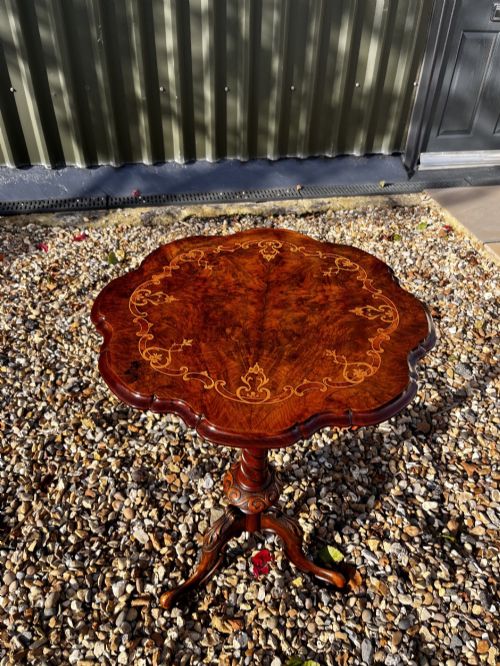
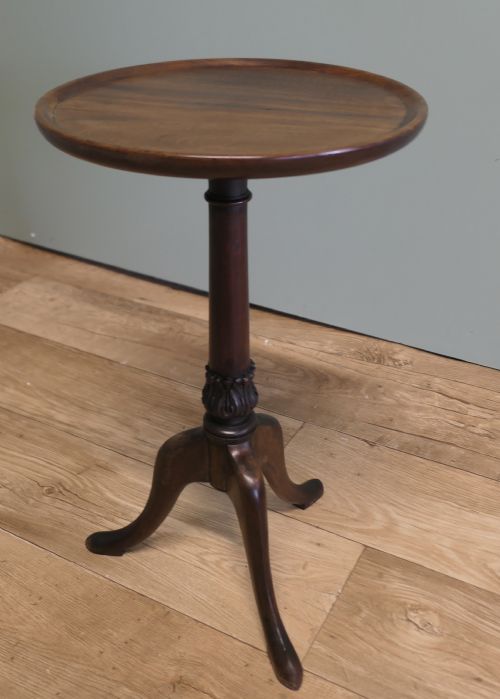
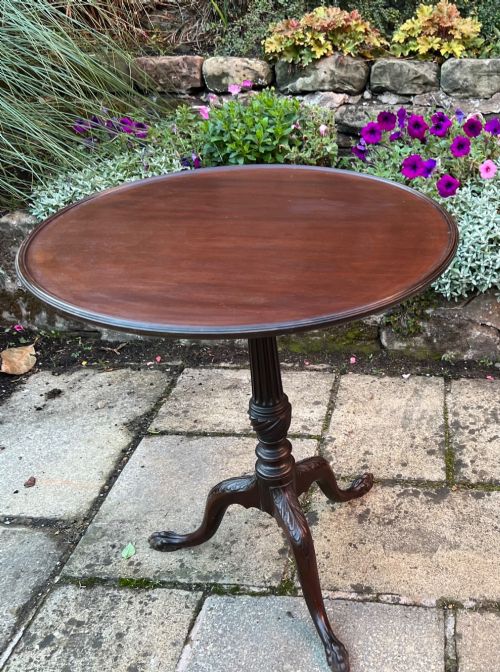
Carved Tripod Stand
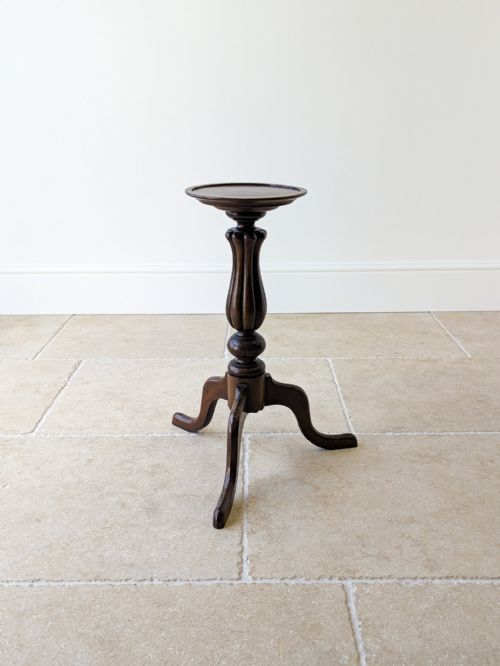
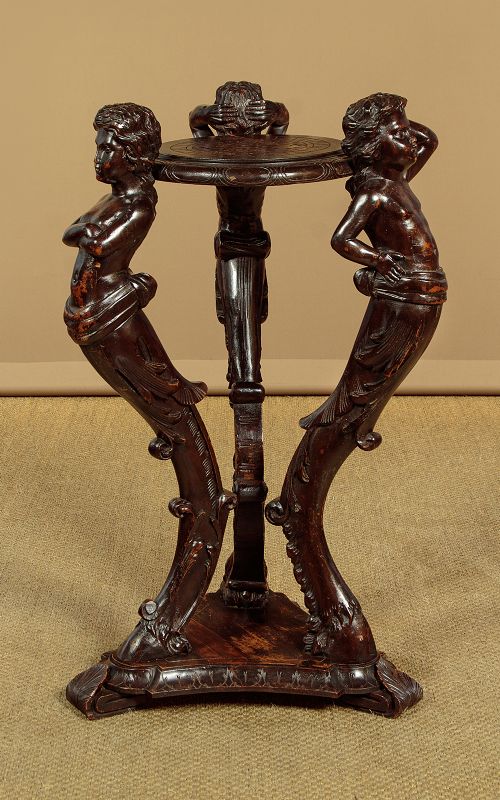
These carved tripod stand designs unite solid timber with three-legged stability, offering compact surfaces for lamps, plants and wine.
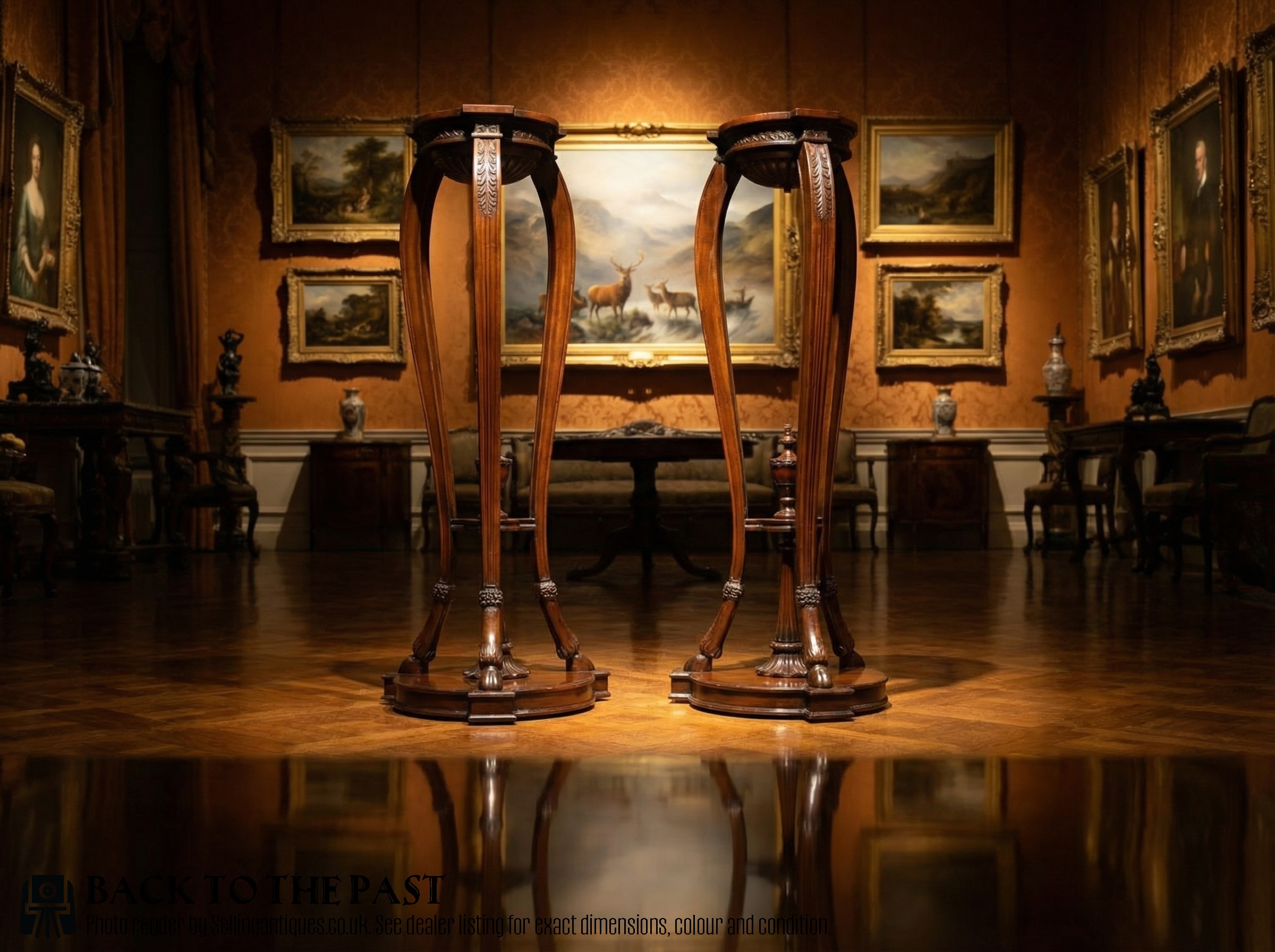
Carved Tripod Stand
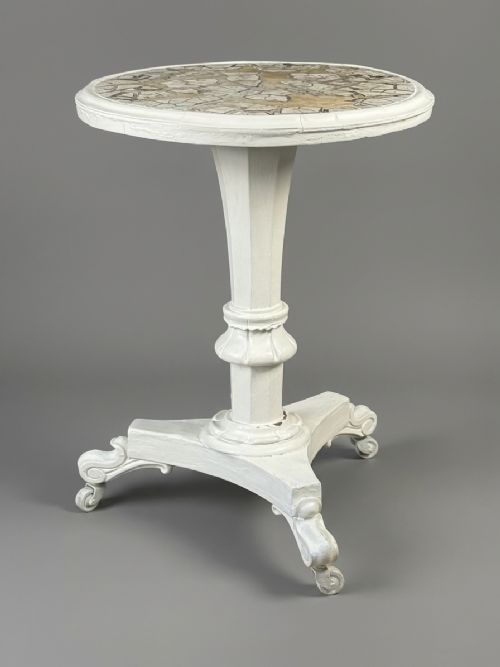
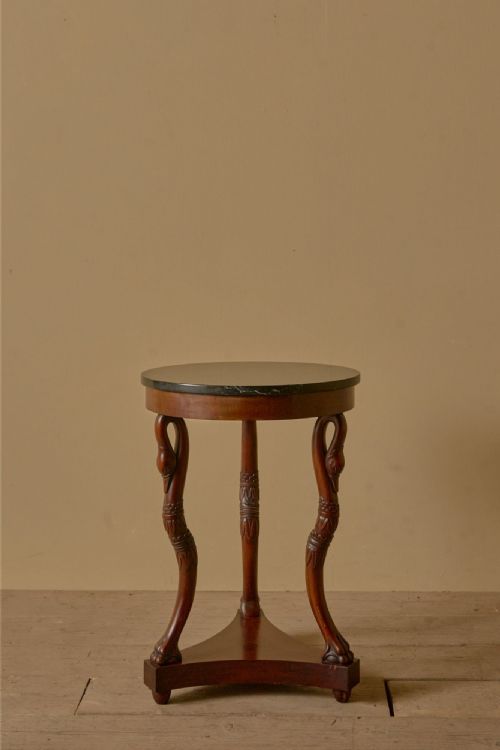
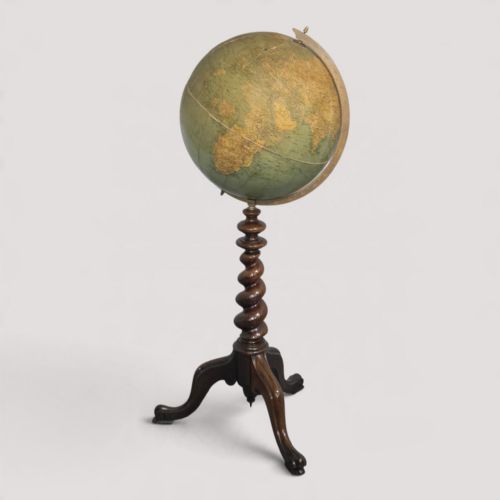
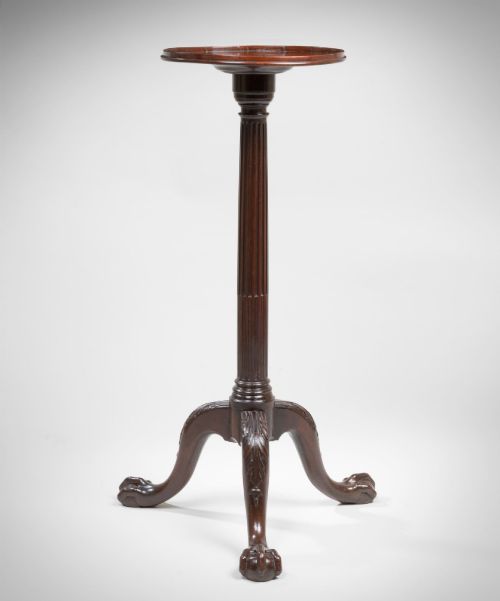
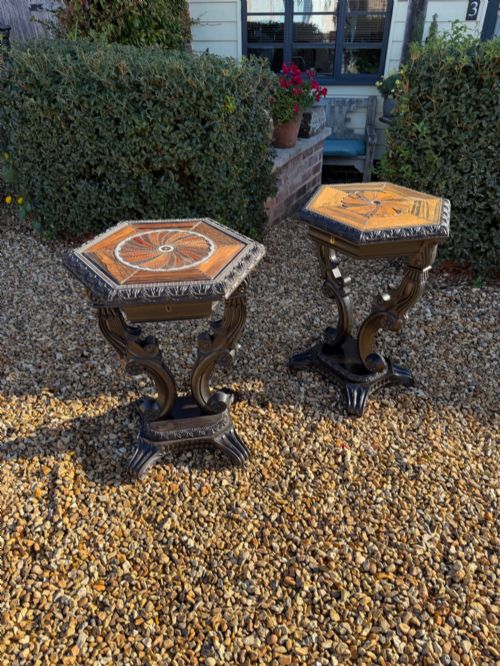
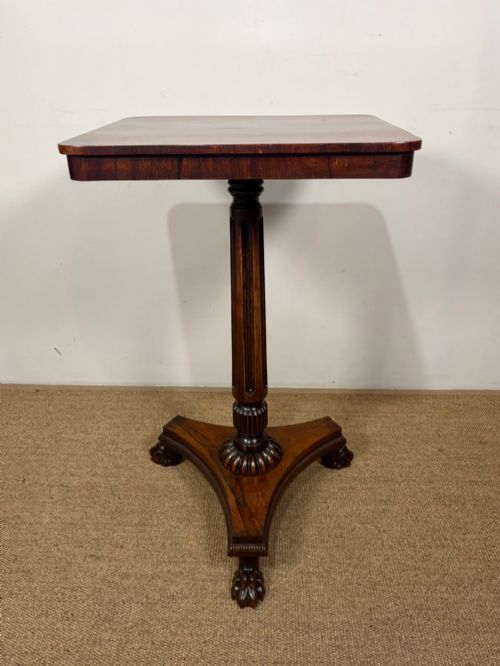
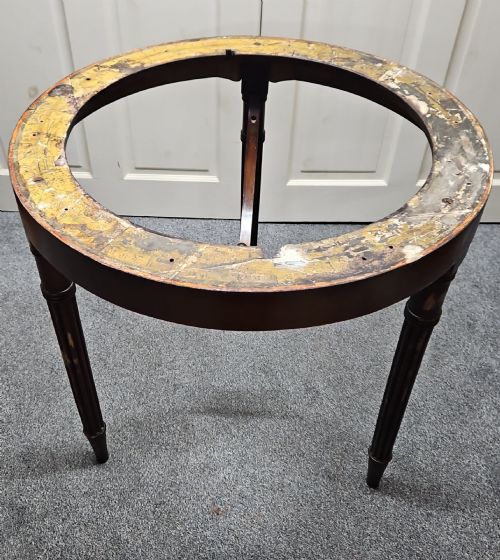
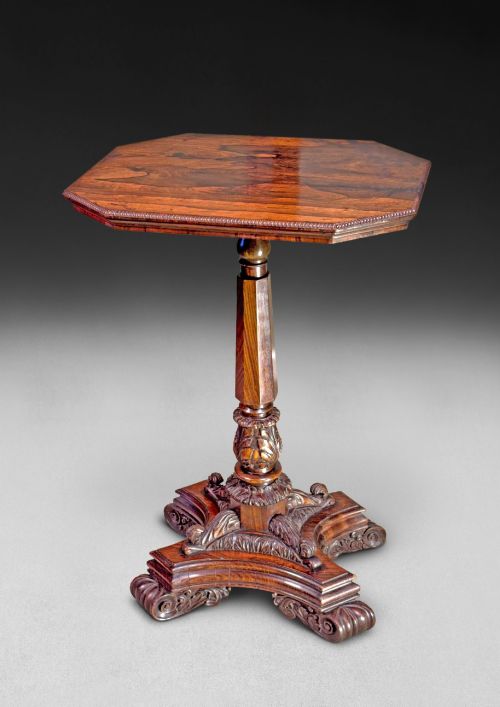
A carved tripod stand serves various domestic roles, appearing frequently across this selection as wine tables, occasional tables, plant stands and torcheres. These pieces emerge from multiple periods, with strong representations from the eighteenth century, the Victorian era and the Edwardian years.
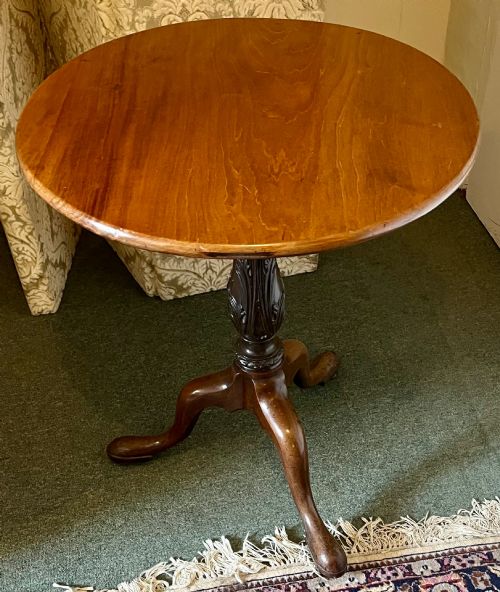
Makers fashioned these supports in diverse timber species and styles, ranging from plain Georgian forms to Gothic Revival and Chippendale Revival interpretations. Buyers encounter compact circular tops, shaped rims and tilt-top mechanisms designed for convenient storage against a wall.
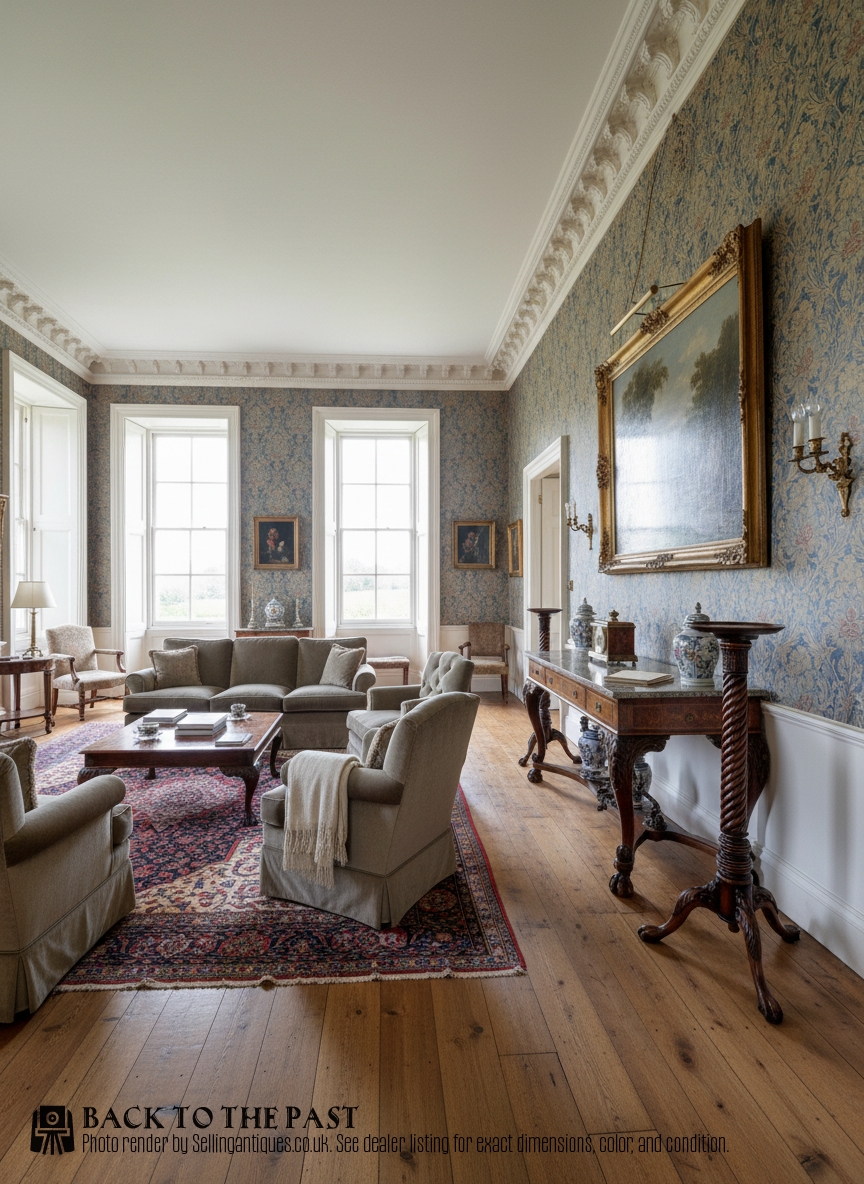
Materials and Technique
Cabinetmakers constructed these supports primarily in mahogany, walnut, oak and rosewood, occasionally incorporating brass details, glass elements and giltwood finishes. Dense hardwoods allowed carvers to execute crisp details along pedestal columns and cabriole legs.
Joinery methods combined turned central pillars with tenoned leg assemblies, frequently secured underneath by iron or wooden brackets. Tilt-top variations relied on robust brass or wooden catches to lock the circular table surface into position.
Carved Tripod Stand Retail Price Guide 2026
Typical asking prices for carved tripod stand among the pieces listed under this phrase on Sellingantiques today, from the lower quarter to the upper quarter. They describe what is for sale here now, not the wider market.
Design influences stretch from classic Georgian proportions through to ornate Victorian revivals and Edwardian simplicity.
Judging Quality
Quality rests upon the crispness of the carving and the selection of timber, such as burr wood veneers or well-figured mahogany grains. Superior examples display balanced proportions between the diameter of the top and the spread of the tripod feet.
Original mechanisms and untampered timber surfaces elevate a piece above standard utility items. Subtle details like pie-crust rims and parcel gilt accents indicate workshop effort and higher production cost.
Gillow
The Carved Tripod Stand Glossary
- Torchere
- A tall stand designed to hold a light or a decorative plant. These slender supports feature prominent carved columns.
- Tilt-top
- A table mechanism allowing the surface to hinge vertically. This feature saved valuable floor space when the furniture was not in use.
- Pie-crust edge
- A decorative raised rim carved with undulating curves. This border mimics pastry work on small occasional tables.
- Cabriole leg
- A furniture support curving outward at the knee and inward at the ankle. It frequently terminates in a pad or claw foot.
- Trifid base
- A three-pronged support resting on three distinct feet. This configuration ensures stability on uneven historical floors.
Carved Tripod Stand: Frequently Asked Questions
What rooms suit a tripod stand?
These compact items fit neatly beside armchairs or sofas to hold small lamps and drinks. They also occupy hallway corners and empty landings without obstructing walkways.
Their narrow footprint makes them useful as plant stands or display pedestals in smaller living spaces.
How do tilt-top tables work?
A pivot block beneath the tabletop connects to the central pillar via a hinge pin. A brass catch or wooden wedge secures the top flat when in use.
Releasing this catch lets the surface fold vertically so the entire object stores flat against a wall.
How do I distinguish eighteenth-century tables?
Early pieces often feature dense, patinated timber with hand-cut joinery and subtle pegging in the pillar assembly. Carved details tend to be sharper and integrated directly into the solid wood.
Later revival items from the Victorian period frequently employ machine-sawn components or applied decorative mouldings.
Are these stands sturdy enough for daily use?
The three-legged design provides natural stability on level floorboards, though heavy downward pressure near the edge can tip a lightweight model. Placing them against walls or in low-traffic zones protects them from accidental knocks.