

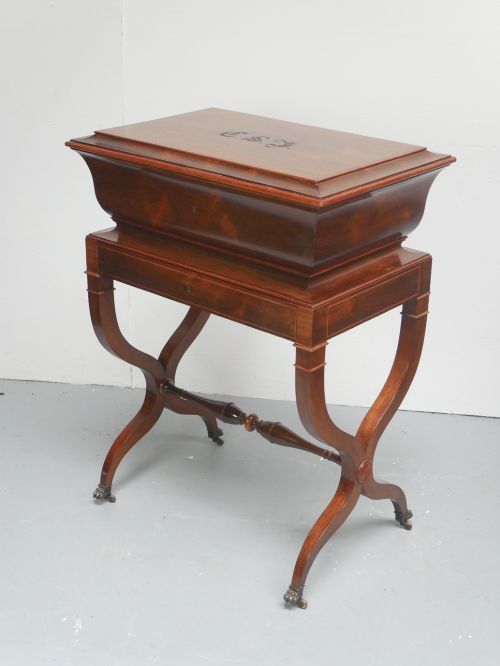


Rosewood Box on Stand
A rosewood box on stand is a refined piece of period furniture designed to hold precious items, bringing rich timber grain and classic craftsmanship into a room.
Rosewood Box on Stand
A rosewood box on stand encompasses a variety of elegant furnishings from the Georgian, Regency, and Victorian periods. You will frequently encounter teapoys, sewing tables, and work tables designed to elevate a lidded box onto dedicated legs or a pedestal base.
The objects serve multiple domestic purposes, ranging from tea storage and writing desks to needlework and music organisation. Pieces span several eras including the 19th Century, William IV, and French Restoration styles, reflecting changing interior tastes over decades.
Many examples incorporate fitted interiors for specific tasks, such as inkwells, velvet linings, or compartments for sewing implements. The fundamental layout combines a secure lidded compartment with a stable supporting stand.
How they were made
Construction relies heavily on rosewood as the primary timber, often selected for its dense grain and deep colour. Cabinet makers enhanced the timber using brass inlay, mother-of-pearl, and tortoiseshell to create striking surface patterns.
Internal components frequently utilise mahogany alongside softer woods for concealed framing and partitions. Textures inside the boxes are finished with velvet or other fine fabrics to protect delicate contents.
Rosewood Box on Stand Retail Price Guide 2026
Typical asking prices for rosewood box on stand among the pieces listed under this phrase on Sellingantiques today, from the lower quarter to the upper quarter. They describe what is for sale here now, not the wider market.
Object forms span teapoys, sewing tables, writing boxes, and canterburys originating in the 19th century.
What varies in quality
The standard of execution in brass inlay and marquetry separates ordinary items from superior examples. Precision in the fit of internal compartments and the condition of original glass or brass fittings also dictate the standing of a piece.
Timber selection plays a major role, with well-figured rosewood grain commanding greater appreciation. The structural integrity of the stand and the survival of original interior elements complete the hierarchy of quality.
Lesage
The Rosewood Box on Stand Glossary
- Teapoy
- A small box or chest designed for holding tea, often mounted on a pillar and claw foot or a dedicated stand. These containers frequently featured internal caddies with lids to separate different tea varieties.
- Canterbury
- A low stand fitted with divisions, used originally for holding sheet music or books. The form typically incorporates a carrying handle and small legs or castors.
- Regency
- An English stylistic period spanning the early 19th century, characterised by classical restraint and neoclassical motifs. Furniture from this era often utilises brass inlay and dark timbers.
- Work Table
- A small table equipped with a drawer or hanging fabric bag intended for sewing and needlework. These items combined storage utility with polite display in nineteenth-century sitting rooms.
- Marquetry
- The art of applying decorative pieces of veneer to a structure to form intricate patterns. Craftsmen utilised various woods and shell materials to ornament box lids and cabinet fronts.
Rosewood Box on Stand: Frequently Asked Questions
What is a teapoy used for?
A teapoy served as a secure container for storing valuable loose tea leaves in the parlour or drawing room. Hostesses kept the box locked to protect the contents from household staff.
Inside, individual caddies held distinct leaf varieties which were blended before serving. The stand allowed the box to sit at a convenient height beside seating areas.
How do I identify a Regency period piece?
Regency items typically display clean neoclassical lines, dark rosewood timbers, and polished brass inlays. Makers of this era drew inspiration from ancient Roman and Greek designs.
Proportions remain balanced, and decorative restraint guides the overall aesthetic. Hardware and feet often incorporate cast brass details.
Where should I place a work table at home?
These tables function well as side surfaces beside a sofa or reading chair in a living space. Their lidded compartments provide concealed storage for small contemporary items.
The compact footprint allows them to fit comfortably in smaller rooms or hallways without dominating the floor plan.
What materials are inside these boxes?
Interiors frequently feature secondary woods like mahogany alongside velvet or fabric linings. Small glass mixing bowls or brass inkwells often occupy dedicated slots within writing and tea boxes.
Compartments usually include fitted lids made from matching timbers to keep contents organised.