





French Worktable
A french worktable brings practical utility and tactile history together, offering robust surfaces and clever storage crafted for hands-on tasks.
French Worktable
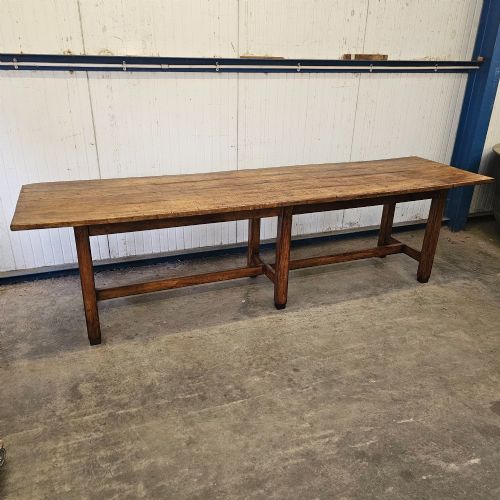
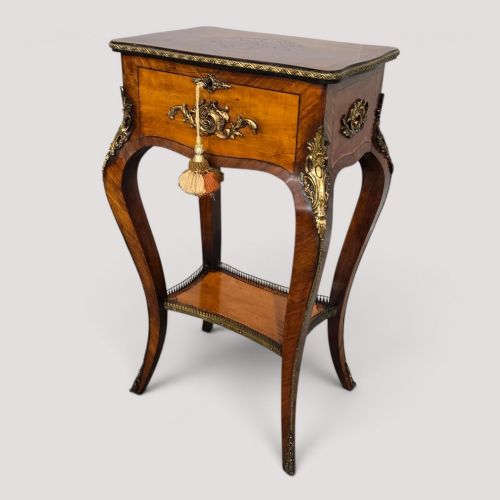
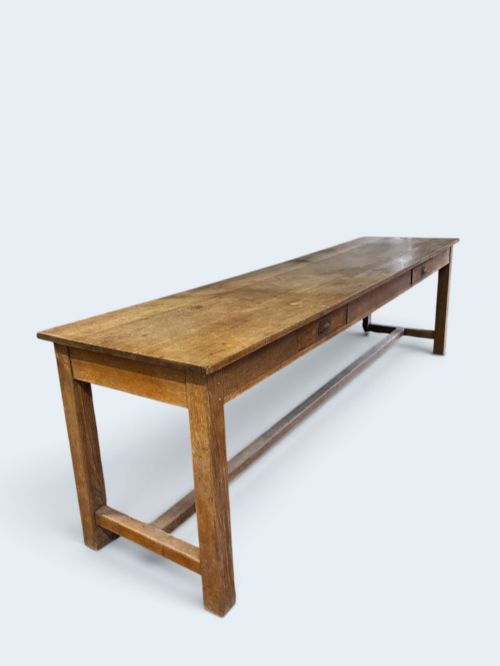
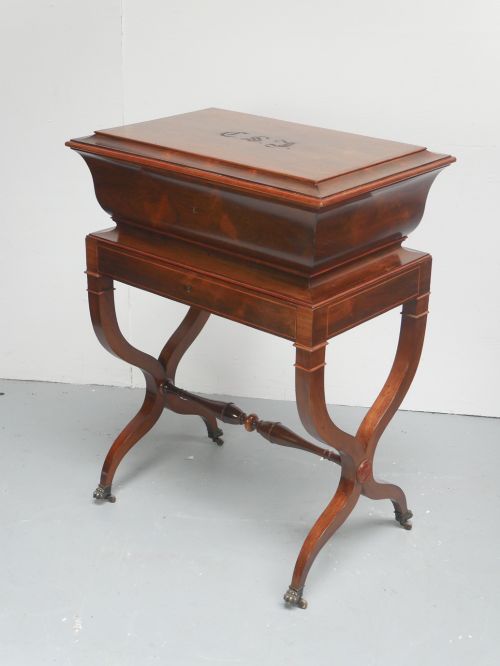
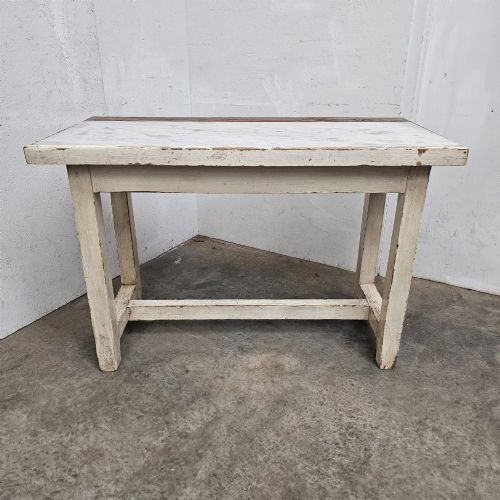
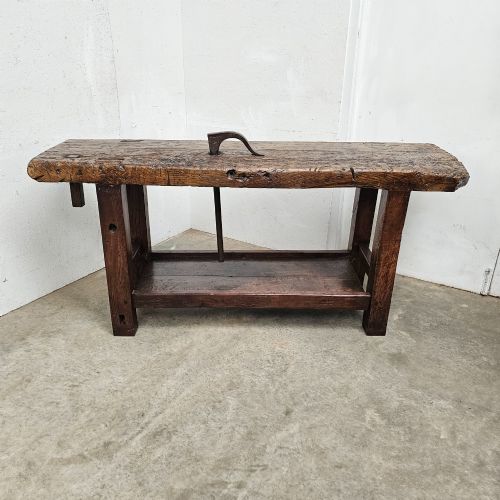
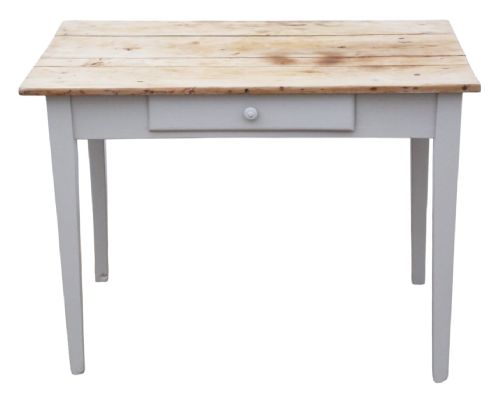
A french worktable encompasses sturdy utilitarian benches, refined sewing cabinets, and versatile prep tables rooted in nineteenth-century and early twentieth-century domestic or artisanal workshops. These pieces range from robust oak and beech craftsmans workbenches fitted with clamping bars to elegant rosewood boxes on stands and marble-topped charcuterie prep tables.
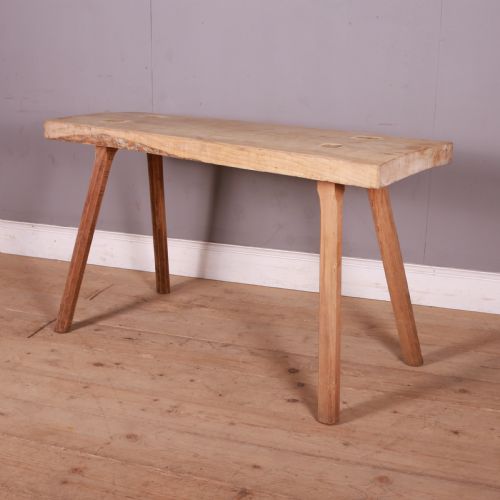
Buyers encountering this selection will frequently find heavy trestle tables in scrubbed sycamore, elm, and bleached oak alongside specialised items like Victorian poudreuse dressing tables and freestanding jewellery boxes. Regional variations stretch from rustic farmhouse and French provincial styles to ornate French Rococo Revival and industrial designs.
The assortment bridges heavy-duty functional utility and decorative household furnishings, offering everything from large drapers tables to compact sewing tables and butcher's blocks with bronzed mounts.
Materials and construction methods
Makers utilised a deliberate selection of native and exotic timbers, pairing dense hardwoods like oak, beech, walnut, and elm with decorative veneers of rosewood and sycamore. Iron hardware, brass fittings, and ormolu mounts provide structural reinforcement and decorative contrast on workbenches and cabinets.
Construction techniques focus on absolute utility, combining heavy trestle bases, integrated clamping bars on artisanal benches, and fitted interiors for sewing or jewellery storage. Surfaces range from scrubbed scrub-tops and plain wood to smooth marble slabs suited for food preparation and display.
French Worktable Retail Price Guide 2026
Typical asking prices for french worktable among the pieces listed under this phrase on Sellingantiques today, from the lower quarter to the upper quarter. They describe what is for sale here now, not the wider market.
Listings feature items spanning the nineteenth century up to nineteen twenty, utilising brass, oak, walnut, ormolu, iron, rosewood, bleached oak, and sycamore.
Assessing quality and character
Quality rests in the integrity of the timber selection and the honesty of the construction, where dense structural woods like oak and beech show deep patination from genuine workshop use. Finer examples integrate decorative elements such as ormolu mounts, bronze hardware, and carefully matched rosewood or sycamore veneers.
The balance between utilitarian durability and refined detailing marks the distinction across the range, separating straightforward industrial workbenches from polished salon pieces like the poudreuse or fitted jewellery boxes.
Lesage·Hennes France
The French Worktable Glossary
- Poudreuse
- A type of vanity or dressing table equipped with a lifting mirror and compartments for cosmetics and grooming implements.
- Trestle table
- A table comprising two or more supports connected by a horizontal beam, commonly seen in scrubbed sycamore and elm.
- Ormolu
- Gilded bronze ornamentation applied to furniture pieces, adding metallic highlights to woodwork and cabinets.
- Charcuterie prep table
- A heavy-topped utility table, often featuring marble, designed for food preparation and culinary tasks.
- Drapers table
- A long, wide display table historically used in textile shops for measuring and folding fabrics.
French Worktable: Frequently Asked Questions
What is a french worktable used for?
These pieces serve as versatile household furniture, functioning variously as kitchen prep spaces, dining tables, sewing desks, and display surfaces.
Their robust construction accommodates daily domestic activities while offering distinct historical character to modern interiors.
How do I care for a scrubbed wood top?
Scrubbed timber surfaces respond well to gentle cleaning with mild soap and water, avoiding harsh chemical varnishes that alter the natural patina.
Applying occasional neutral wax helps protect the dry wood grain from moisture and staining.
Are these tables suitable for modern kitchens?
Sturdy oak and sycamore tables provide excellent durability and generous surface areas for contemporary food preparation and dining.
Marble-topped variants offer cool, wipe-clean surfaces ideal for culinary tasks.
How do I identify a period worktable?
Dating relies on examining timber species, joinery methods, and hardware styles, ranging from nineteenth-century industrial iron to decorative ormolu mounts.
Regional French provincial styles often display characteristic hand-planed tool marks and traditional pegged joints.