




Rosewood Book Table
A rosewood book table brings together rich timber and practical shelving, offering a sturdy surface for volumes alongside accessible storage for daily reading.
Rosewood Book Table
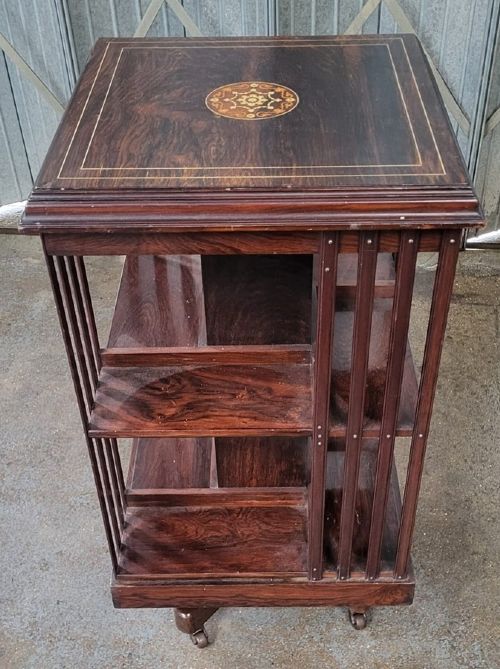
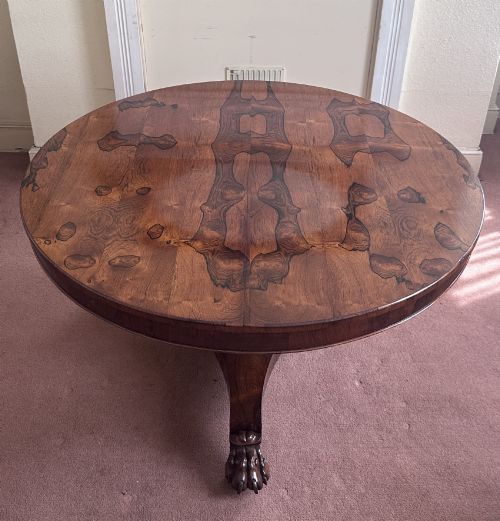
A rosewood book table combines a functional resting surface with integrated storage for volumes, spanning forms from revolving stands to compact freestanding tables. These pieces emerge chiefly across the nineteenth century, encompassing Regency, William IV, Victorian, and Edwardian eras. Buyers encounter open shelf units, revolving table variants, and multi-tiered designs built to keep working libraries close at hand.
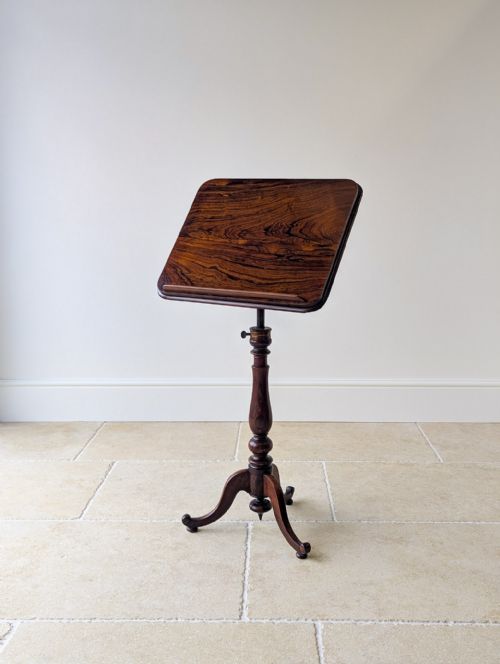
Makers adapted the form to suit various rooms, producing low library bookcases alongside smaller occasional pieces fitted with adjustable shelves or brass galleries. The timber provides a deep, dark grain that suits domestic interiors ranging from formal libraries to quiet drawing rooms. While some examples serve purely as book repositories, others combine reading surfaces with writing drawers or sewing compartments.
Materials and construction
Cabinetmakers built these pieces using dense rosewood veneers applied to secondary woods, often accentuating the surfaces with contrasting boxwood and satinwood inlay. Brass mounts, strung lines, and adjustable shelf mechanisms frequently appear to add both structural refinement and mechanical utility. Fine joinery underpins the stability of revolving tiers and tiered étagères, ensuring the heavy timber supports stacked volumes safely.
Makers occasionally incorporated Tunbridgeware panels or floral marquetry to enrich the outer surfaces of circular book tables and portable carriers. Leather inserts feature on associated writing sections, while tilt-top mechanisms allow occasional tables to save space when not in use.
Some Victorian readers clearly demanded mobility, as evidenced by portable book carriers stamped by makers for travel.
Evaluating craftsmanship and proportion
Quality rests in the crispness of the inlay, the stability of revolving mechanisms, and the depth of the rosewood grain rather than mere ornamentation. Superior examples maintain balanced proportions and smooth action in adjustable shelves or tilting tops, showing careful attention to interior secondary timbers. Lesser pieces often rely on plainer secondary woods or show heavy past repairs to the delicate stringing.
The integration of secondary functions, such as folio stands or brass stringing, distinguishes finer library tables from standard utility pieces. Original surface patination and intact brass hardware further separate workshop standards across the Victorian and Regency periods.
Gillows·Williams Gibton
The Rosewood Book Table Glossary
- Rosewood
- A dense, heavy tropical timber prized for its dark grain and purplish-brown tones. It takes a high polish and forms the primary exterior surface for these tables.
- Etagere
- An open piece of furniture with multiple shelves for displaying or holding books and small objects. These tiered stands often incorporate revolving actions or delicate upright supports.
- Stringing
- Thin inlaid lines of contrasting light wood, such as boxwood, used to edge panels and tabletops. This technique defines the geometric decoration seen on Edwardian and Victorian pieces.
- Tilt-top
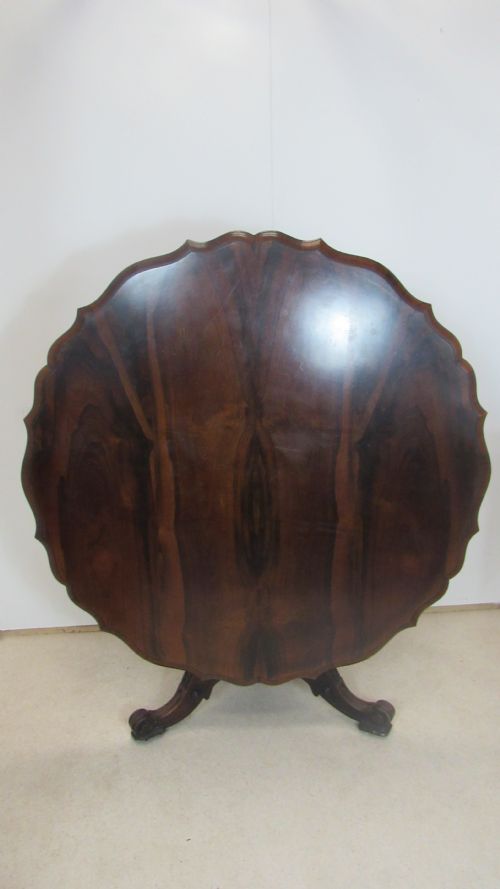
- A tabletop hinged to its pedestal, allowing the surface to fold vertical when not in use. This mechanism appears on breakfast and occasional tables from the Regency era onwards.
- Marquetry
- Decorative veneer work formed by fitted pieces of various woods and materials to create floral or pictorial scenes. It adorns the tops of more elaborate Victorian book tables.
Rosewood Book Table: Frequently Asked Questions
How do I distinguish a Regency table from a Victorian one?
Regency pieces tend to show restrained classical lines with architectural details, whereas Victorian examples often incorporate heavier turned supports, brass stringing, or more ornate marquetry.
Examining the underlying secondary woods and the style of any inlay helps confirm the manufacturing period.
Are the revolving book tables stable enough for daily use?
Most revolving book tables utilise a central pivot mechanism designed to bear the weight of standard volumes without tipping.
Good quality examples maintain a heavy base or wide footprint to ensure steadiness when turning the tiers.
Can I adjust the shelf heights on these bookcases?
Many of the open bookcases and library tables feature adjustable shelf systems supported by brass pins or rackwork strips.
This adaptability allows collectors to house books of varying heights securely within the original cabinetry.
Where should I place a rosewood book table in a modern room?
These compact tables fit well beside seating areas or as freestanding pieces in studies where surface space and accessible book storage are both required.
Keeping them away from direct sunlight protects the rich rosewood polish and delicate inlay from fading.