
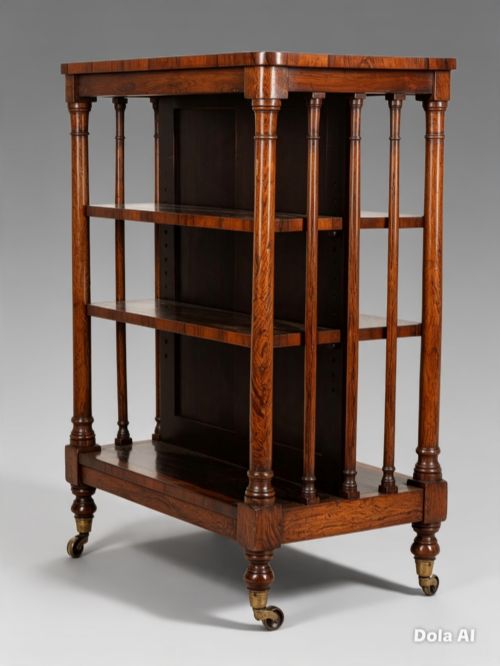


Dark Rosewood Bookstand
These dark rosewood bookstands offer rich wood grains and sturdy construction, holding your volumes with classic British elegance.
Dark Rosewood Bookstand
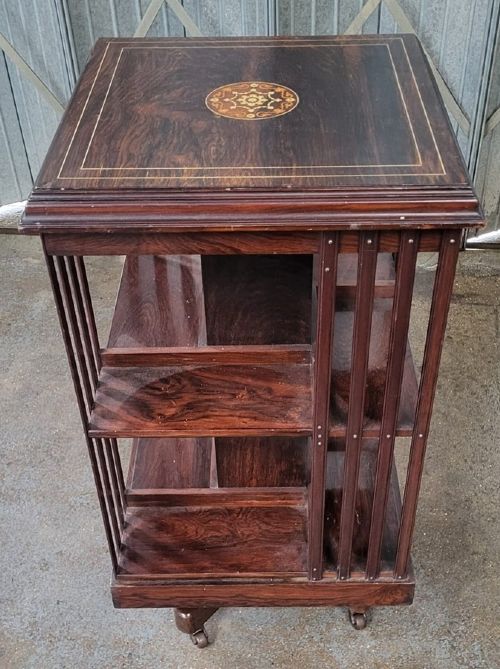
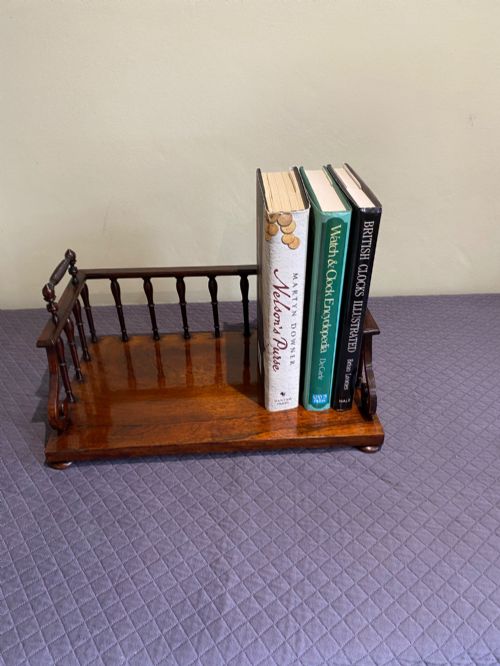
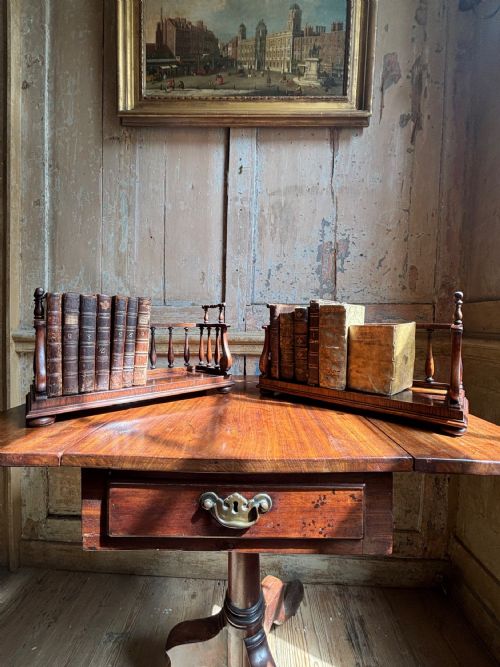
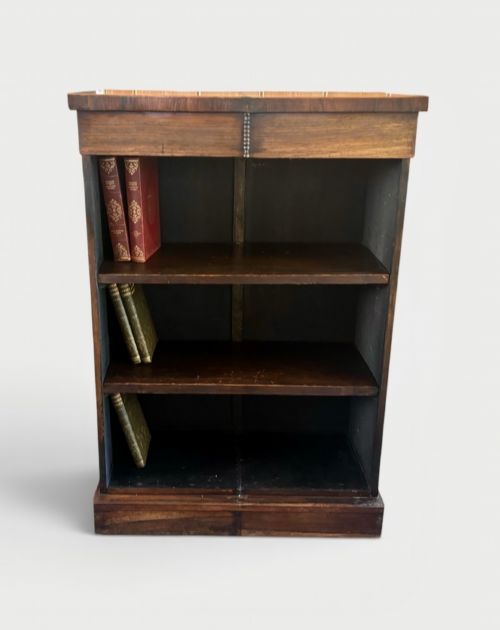
A dark rosewood bookstand serves as a practical surface or desktop rack for organising volumes, appearing across periods such as the Regency era, the nineteenth century, and the Edwardian period. The items listed on this page encompass various forms including revolving bookcases, book racks, book carriers, open bookcases, and book tables.
The selection reflects functional library furniture designed to hold books securely within domestic spaces. Pieces span from the early nineteenth century through to Edwardian interpretations, demonstrating durable forms suited to daily use.
How they were made
Maker construction relies heavily upon solid rosewood and veneers, often accented with contrasting boxwood inlay or gleaming brass fittings. These dense hardwoods provide the structural integrity required to support heavy volumes.
Joinery techniques span the nineteenth and early twentieth centuries, uniting sturdy timber frames with revolving mechanisms or open shelving. Selected pieces incorporate glass elements alongside traditional woodworking methods to form functional book carriers and tables.
A good revolving bookstand gives a gentle, satisfying spin that makes finding your next volume feel like a miniature library game.
What varies in quality
Quality differences emerge in the precision of boxwood inlay work and the smoothness of any revolving mechanisms. Finer examples display meticulous attention to detail in the brass mounts and the selection of figured rosewood timber.
The sophistication of the stylistic design distinguishes standard utilitarian items from pieces possessing distinct period character. Proportions and the crispness of carved or inlaid details dictate the overall refinement of each bookstand.
The Dark Rosewood Bookstand Glossary
- Rosewood
- A dense, dark timber prized for its deep colour and pronounced grain patterns. It forms the primary structural and visual base for these items.
- Boxwood inlay
- Light-coloured wood insertions used to create contrasting geometric or floral patterns on the surface. This technique highlights the skill of the cabinetmaker.
- Revolving bookcase
- A freestanding or tabletop unit designed to rotate on a central pivot for easy access to volumes. Anglo-Indian and Edwardian makers frequently utilised this format.
- Book carrier
- A portable rack or stand fitted with a central handle for moving a small selection of books between rooms. These accessories are typical of the nineteenth century.
Dark Rosewood Bookstand: Frequently Asked Questions
What periods do these bookstands cover?
The pieces span from the Regency era and the early nineteenth century through to the Edwardian period and 1890.
Such a timeline encompasses diverse stylistic influences, including Grand Regency and Anglo-Indian designs.
How were revolving bookcases used?
Revolving bookcases allowed readers to store and select volumes conveniently from a seated position beside a desk or armchair.
Their rotating mechanisms provided practical access in home libraries and studies.
What materials are commonly found?
Rosewood serves as the dominant timber, frequently complemented by brass fittings and boxwood inlay work.
Some examples also incorporate glass or alternative woods like teak within their construction.
Are these items strictly for desks?
While many function as desk accessories or small table stands, larger examples include open bookcases and book tables designed for freestanding placement.
Formats range from portable carriers to substantial revolving units.