
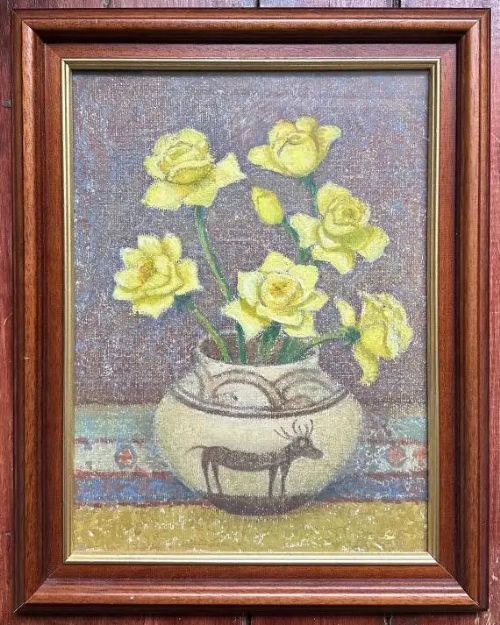
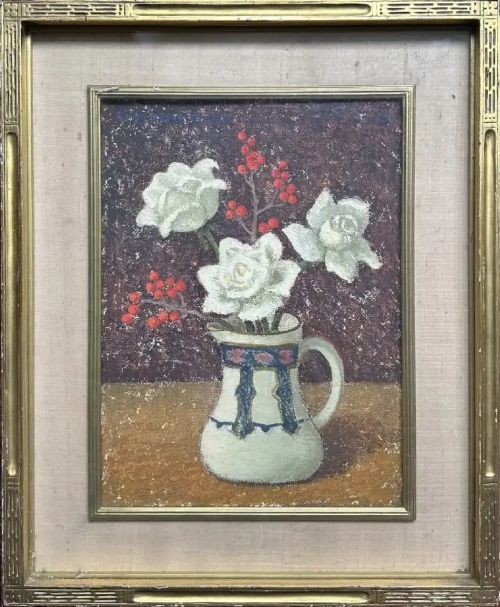
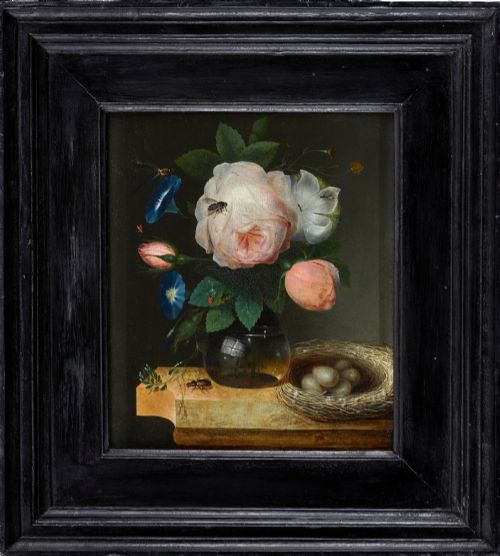
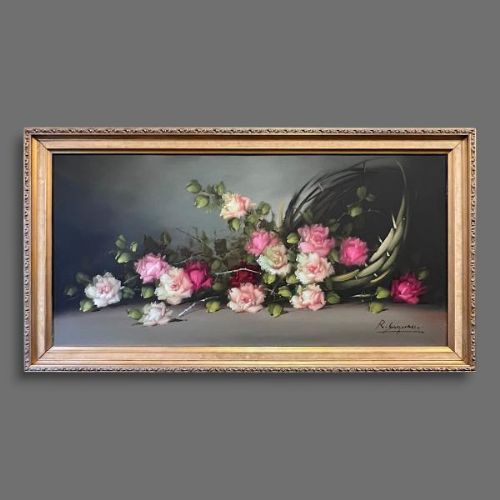
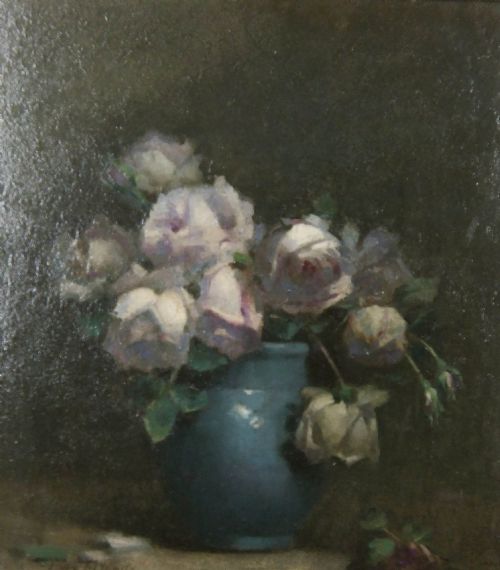


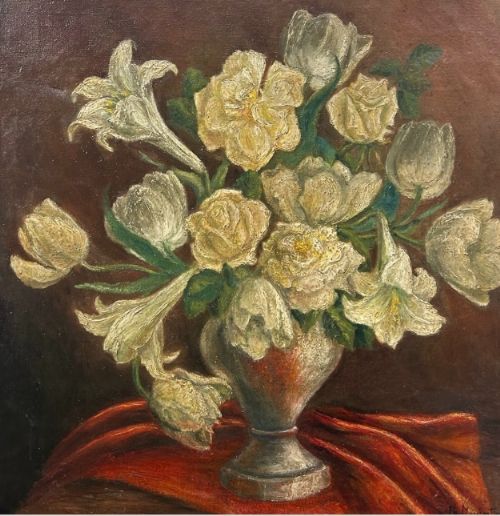


Rose Still Life
A rose still life brings the quiet drama of cut blooms onto canvas, board or paper through the centuries.
Rose Still Life
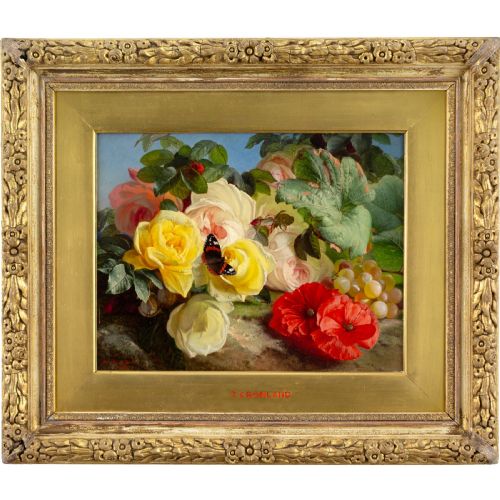
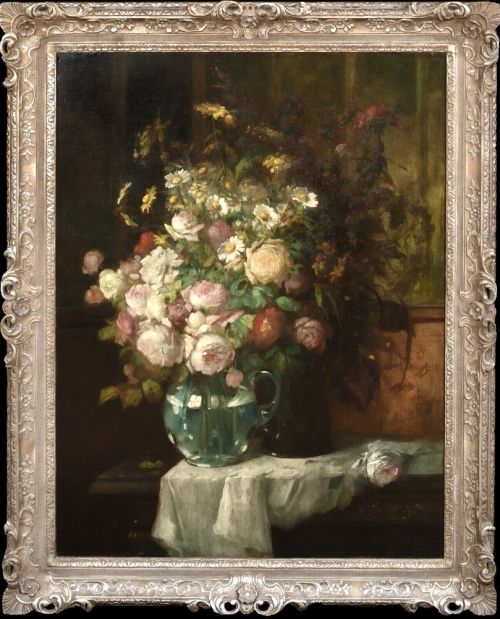
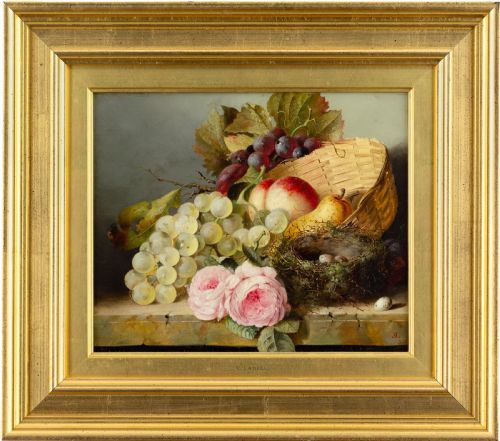
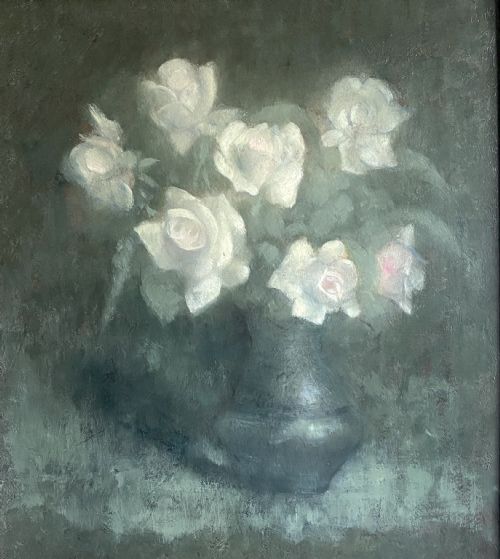
A rose still life captures structured arrangements of floral subjects, often displayed in glass vases, wicker baskets or ceramic bowls alongside fruit and foliage. These works range from tightly detailed Victorian and nineteenth-century realist compositions to looser impressionist, post-impressionist and mid-century modern interpretations.
Buyers encounter oil paintings on canvas and wood panel alongside watercolours, gouache and pastel works on paper. The selection spans British, French, Dutch, German and Austrian schools across the Victorian era into the mid-twentieth century.
How they were made
Artists painted primarily with oil paint or watercolour applied to stretched canvas, prepared wooden panels, paper or board. Some compositions employ impasto techniques to build thick, textured petals, while others rely on translucent watercolours or fine tempera brushwork.
Surviving works frequently feature original wooden frames, sometimes decorated with gold leaf or gilding to complement the painted floral subjects.
Several artists tucked unexpected items like wicker baskets, birds' nests, grapes and peaches right beside the roses.
What varies in quality
Quality rests on the sureness of the draftsmanship, the handling of light across petals and foliage, and the harmony of the overall colour palette. Stronger examples display depth in shadow and naturalism in the arrangement of stems, vessels and surrounding fruit.
The integration of the subject with its background separates accomplished studio works from simpler decorative studies. Framing also contributes, as period gilded wood enhances the visual weight of the painting.
Theude Grönland·Konstantin Stoitzner·Edward Ladell·Emma Fordyce MacRae·Gaspar Peeter Verbruggen·William Thomas Wood·Calzolari·William Hough·Stuart Armfield·Phyllis I Hibbert·Lena M Alexander·James Stuart Park·Ernest Higgins Rigg·Owen Bowen·Jules Felix Ragot·Charles Archer·John Fitz Marshall·Henry George Moon·André Perrachon·Millicent Emily Ayrton·Arthur Dudley·Giovanni Barbaro·Vincent Clare·Olive Higginbottom·Jean Laudy
The Rose Still Life Glossary
- Impasto
- Paint applied thickly to a canvas or board so that it stands out from the surface. This technique gives physical texture to rose petals and highlights.
- Board
- A rigid flat substrate used instead of stretched canvas as a support for oil or tempera painting. Artists frequently utilised wood or pressed panels during the nineteenth and twentieth centuries.
- Gilded wood
- Timber frames or decorative elements coated with a thin layer of gold leaf or metallic paint. These finishes were designed to frame and elevate fine art oil paintings.
- Watercolour
- Paint consisting of transparent pigment suspended in a water-soluble binder, worked on paper. It requires precise control to capture delicate floral forms.
Rose Still Life: Frequently Asked Questions
What periods do these paintings cover?
The available selection spans from the nineteenth century through the Victorian era and into the mid-twentieth century, including works from the 1920s, 1930s and 1950s.
Earlier nineteenth-century examples often lean towards detailed realism, whereas mid-century pieces reflect impressionist and modern approaches.
What materials were used for these artworks?
Artists utilised oil paint on canvas, wood panel and board, alongside watercolours and gouache on paper. Gilded wood frames frequently accompany the paintings.
The choice of support often helps indicate the period and style of the piece.
How should I display a rose still life?
These paintings suit traditional living spaces, dining rooms and studies where their botanical subjects can be viewed closely. Adequate wall space allows the original frames and canvas textures to stand out.
Protecting the works from direct sunlight preserves the pigments in both oil and watercolour paintings.
How do I distinguish regional schools?
British, French, Dutch and Austrian schools each brought distinct approaches to colour, lighting and arrangement within a rose still life. Dutch and Flemish influences often emphasise dark backgrounds and rich detail, while French and British works vary from impressionist studies to precise botanical watercolours.
Signatures, framing styles and canvas stamps often provide further clues to origin.