




Rose Canton Urns
Rose canton urns are hand painted porcelain vessels from nineteenth century China, bringing vibrant enamel palettes and intricate motifs into period interiors.
Rose Canton Urns
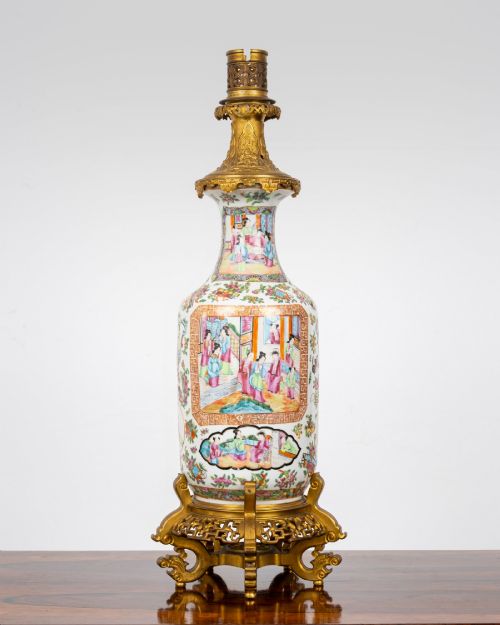
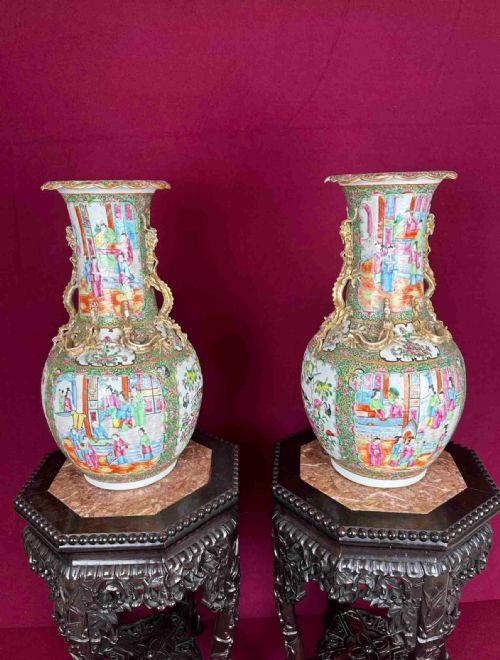
When buyers search for rose canton urns, they encounter nineteenth century Chinese export porcelain vessels that display distinct polychrome enamel decoration. These pieces frequently appear as large floor vases, lidded containers, moon flasks, or mounted table lamps.
The objects span periods from the Qing dynasty through the Victorian era, reflecting both traditional domestic manufacture and items made for Western export markets. Forms range from monumental pairs to single decorative jars, occasionally resting upon wooden stands.
Within these listings, the aesthetic centres on dense floral patterns, figural panels, and gilded highlights characteristic of Cantonese craftsmanship. Buyers most commonly meet pairs of vases, some subsequently adapted with electrical fittings for domestic lighting.
Materials and Techniques
The foundation of these pieces is white porcelain, shaped into substantial bodies and fired before receiving detailed overglaze enamel painting. Artisans applied pigments by hand, building up complex scenes of figures, birds, and flowers in compartments.
Gold leaf and gilt pigments were frequently added to accent borders, handles, and panel surrounds, catching the light across the glazed surface. Some examples incorporate later brass or gilt bronze mounts added during nineteenth century European adaptation.
Listings feature nineteenth century porcelain, gilt bronze, and brass, spanning periods from the Victorian era to the Qing dynasty.
Evaluating Quality and Execution
Distinction across these pieces lies in the precision and density of the hand painted enamel work, where finer examples display crisper outlines and more disciplined figural composition. The handling of the gilt highlights also indicates the tier of production, with superior works maintaining clean application over time.
Scale and proportion separate standard decorative items from monumental presentation pieces, particularly in pairs where symmetry is paramount. The integrity of the porcelain body and the preservation of the original glaze without excessive wear define the upper echelon of surviving examples.
The Rose Canton Urns Glossary
- Famille rose
- A major palette of Chinese ceramic glazes introduced in the eighteenth century, distinguished by opaque pink or purple enamel derived from colloidal gold.
- Canton export
- Porcelain manufactured in China specifically for Western markets, decorated locally in the port city of Canton.
- Moon flask
- A flattened circular ceramic vessel with a narrow neck and small loop handles, derived from ancient nomadic leather canteen forms.
- Gilt bronze
- Metal mounts cast in bronze and treated with gold leaf or mercury gilding, commonly utilised for European lamp conversions on nineteenth century porcelain.
- Qing dynasty
- The final imperial dynasty of China, ruling from sixteen forty four until nineteen twelve, encompassing the primary production periods seen here.
Rose Canton Urns: Frequently Asked Questions
How do I care for my porcelain?
Dust the glazed surface gently with a dry, soft cloth to prevent particulate buildup on the enamel. Avoid harsh chemical cleaners that can degrade the delicate overglaze enamel and gilt highlights.
Keep the vessels away from direct sunlight and areas prone to heavy moisture fluctuations. If fitted as a lamp, ensure the electrical components are inspected by a qualified professional.
Were these made for export?
The vast majority of nineteenth century Cantonese porcelain was produced specifically for trade with European and American markets. These export wares often combined traditional Chinese motifs with forms tailored to Western domestic interiors.
Items such as moon flasks, lidded jars, and monumental vases proved particularly popular among Victorian collectors. This dual heritage influences how these pieces are categorised today.
Can I convert lamps back to vases?
Converting mounted table lamps back into standard vases depends entirely on how the original porcelain body was altered during the fitting process. Many nineteenth century pieces were drilled or fitted with brass hardware that permanently affected the base or neck.
Consulting a professional ceramic restorer helps determine whether the mounting can be safely reversed without compromising structural integrity. Often, collectors choose to preserve the lamp conversion as part of the object's period history.
What defines the nineteenth century style?
Nineteenth century Cantonese design relies heavily on compartmentalised panel decoration filled with figures, birds, and insects surrounded by dense floral grounds. This bustling aesthetic reflects the industrial and artistic output of the Daoguang period and later Victorian demand.
The integration of rich pink enamel and abundant gilding creates a visually heavy, opulent effect. These characteristics help separate nineteenth century export works from earlier monochrome or minimalist dynasties.