




Rose Canton Porcelain Lamps
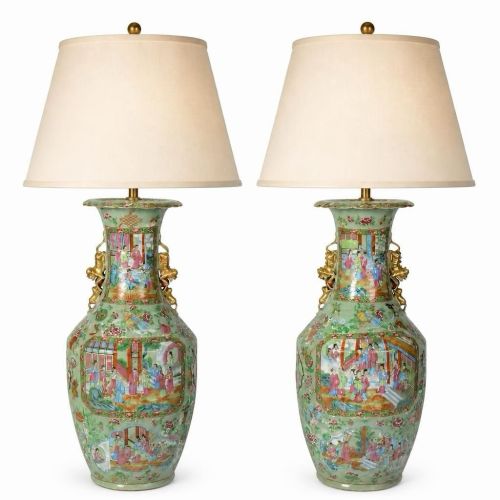
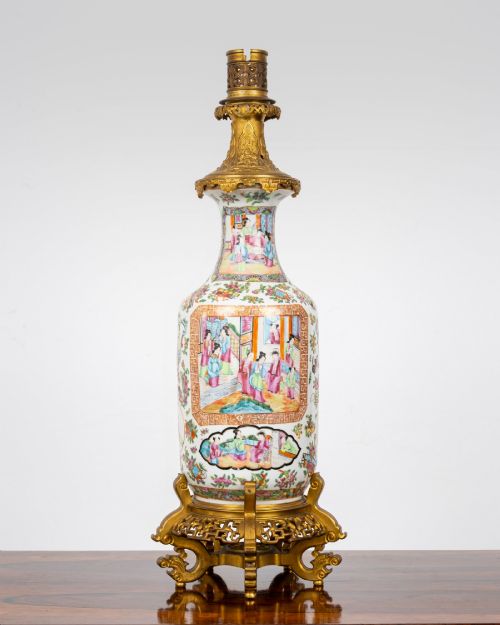
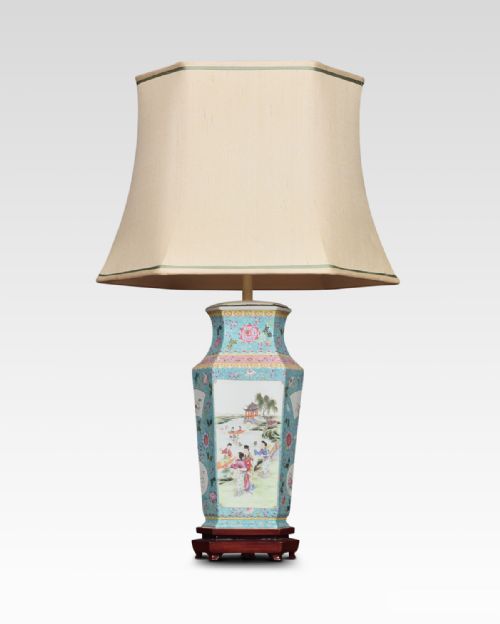
These rose canton porcelain lamps bring hand-painted narrative panels and rich floral enamel into domestic spaces with distinct nineteenth-century presence.
Rose Canton Porcelain Lamps
When searching for rose canton porcelain lamps, you encounter nineteenth-century Chinese export ceramics adapted into lighting forms. These pieces originate primarily from the nineteenth century, including specific dates such as 1870, 1880, 1890, 1900, and 1920.
The dominant forms on this page are table lamps and vases mounted for electrical use or oil burning. Many survive as matched pairs, combining Cantonese porcelain bodies with fitted bases and shades.
Materials and Construction
The foundation rests on hard-paste porcelain painted with polychrome enamel pigments. Artisans applied detailed floral borders and figural panels by hand before firing.
Metal mounts in brass, gilt bronze, and ormolu secure the ceramic bodies to weighted bases. Fabric elements, including silk shades, complete the conversion from vessel to lamp.
Many a Victorian parlor gained an unexpected ambassador of Cantonese trade when a dusty vase sprouted a brass neck and a silk shade.
Assessing Quality and Execution
The finesse of the hand-painted enamel work determines the visual strength of each piece. Finer examples display crisp detail in the figural scenes and vibrant separation of the rose medallion motifs.
The integration of metal mounts also dictates standard. Superior specimens utilise heavy ormolu or cast brass fittings that complement rather than crowd the porcelain body.
The Rose Canton Porcelain Lamps Glossary
- Canton
- A major port in southern China from where export porcelain was shipped to Western markets. Pieces from this region often feature distinct palette choices and dense panel decoration.
- Famille Rose
- A palette of opaque enamel colours dominated by rose pink introduced in the eighteenth century. This colour scheme defines the painted surfaces of these lamps.
- Ormolu
- Gilt bronze mounted onto furniture and ceramics to provide structural support and decorative enrichment. This technique appears on nineteenth-century examples to elevate the status of the object.
- Rose Medallion
- A specific style of Chinese export porcelain decoration featuring alternating panels of birds, flowers, and figures. This pattern forms the primary visual motif across the listed lamps.
Rose Canton Porcelain Lamps: Frequently Asked Questions
Are these lamps originally wired for electricity?
Most nineteenth-century examples started life as vases or oil lanterns before later conversion into electric table lamps. This adaptation usually involves drilling the base or mounting the ceramic with collars.
Buyers should inspect the wiring and fitments to ensure compatibility with modern electrical standards while preserving the antique body.
How do I identify nineteenth-century dating?
Dating relies on stylistic markers such as the density of the enamel palette, the weight of the porcelain, and the character of the metal mounts. Ormolu and brass components often reflect Victorian manufacturing methods.
Comparing the hand-painted details against documented export pieces helps confirm the nineteenth-century period.
Do these lamps come in pairs?
A significant portion of the listings consists of matched pairs intended for sideboard or mantle placement. Symmetrical painting and matching mount dimensions identify these cohesive sets.
Single lamps also appear for individual desk or table use.
How do I care for antique porcelain lamps?
Dust the porcelain and metal mounts gently with a dry, soft cloth to prevent abrasion to the enamel surface. Avoid commercial liquid cleaners that might damage the gilt bronze or ormolu.
Check the stability of the mountings periodically to ensure the ceramic body remains secure.