



Romantic Era Landscape Art
Romantic era landscape art captures dramatic scenery, tranquil lakes and historic ruins through the expressive brushwork of the nineteenth century.
Romantic Era Landscape Art
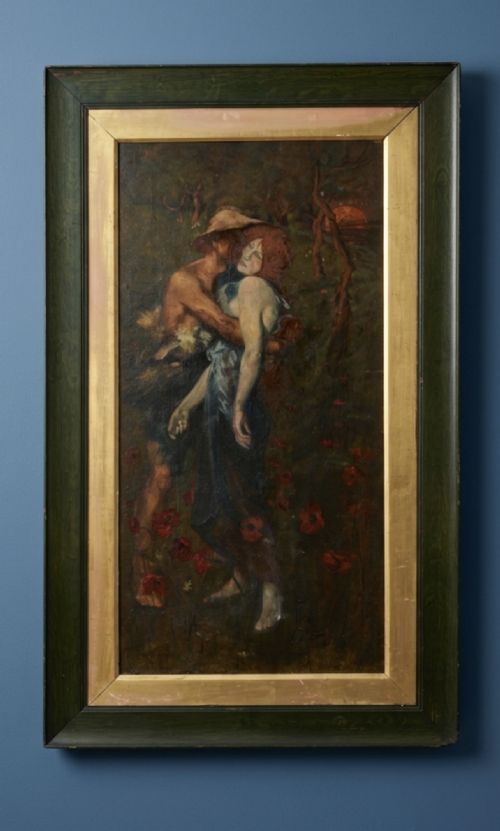
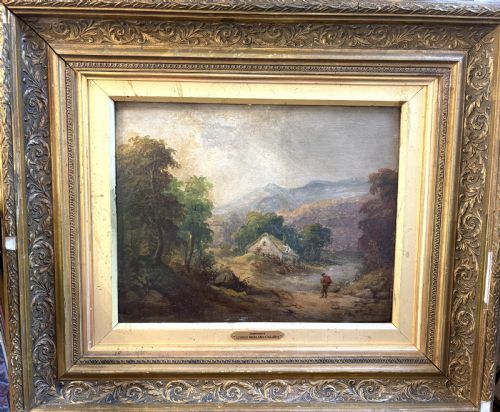
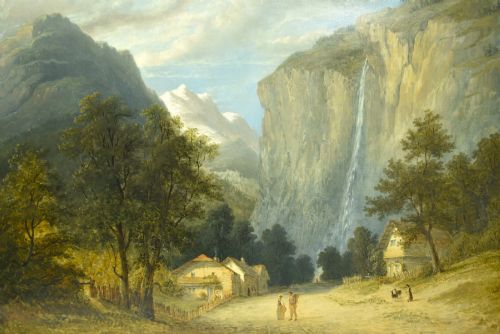
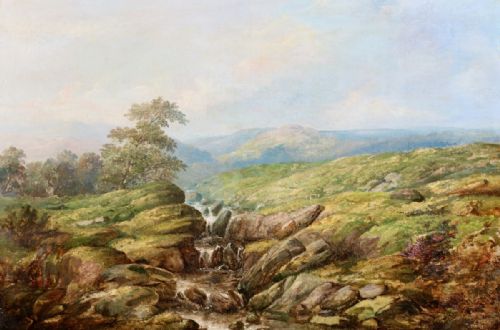
Romantic era landscape art centres on depictions of the natural world, ranging from majestic alpine peaks and rushing waterfalls to calm coastal waters and pastoral scenes. These works capture the nineteenth-century fascination with the sublime, often placing small human figures or livestock within vast, atmospheric settings.
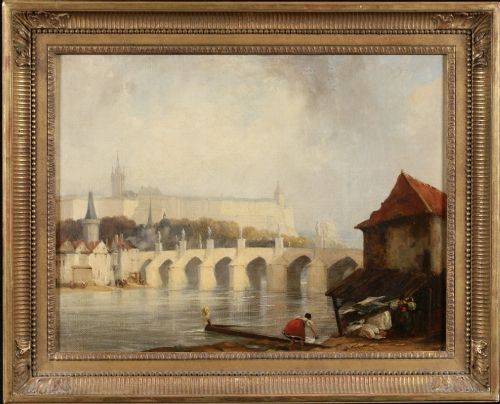
The pieces on this page appear predominantly as oil paintings on canvas or board, alongside delicate watercolours and charcoal drawings on paper. Viewers frequently encounter framed works displaying historic vistas such as Swiss valleys, Scottish castles, and Dutch coastal views.
Makers and schools represented span the Georgian, Victorian, and Edwardian periods, including British and continental European artists. Many compositions feature recognisable landmarks like Prague Castle, Tintern Abbey, or Lake Salzkammergut rendered in romantic or pastoral styles.
Materials and technique
Artists built these compositions primarily using oil paint on stretched canvas or wooden panels, allowing for rich colour depth and layered glazing. Watercolours on paper offered a more fluid, luminous medium suited to capturing atmospheric light and weather effects.
Many surviving examples retain their original gesso and giltwood frames, which provide structural support and complement the visual drama of the canvas. Canvases are frequently secured within heavy, decorative wooden frames designed to enhance the perspective of the scene.
Several canvases feature stubborn sheep and thirsty farmers refusing to leave the foreground of otherwise dramatic alpine vistas.
Assessing quality
The standard of a piece rests heavily on the confidence of the brushwork and the artist's ability to handle atmospheric light and scale. Stronger examples demonstrate precise control over perspective, depth, and the natural interaction of figures with their environment.
Framing plays a significant role in overall quality, as original period giltwood and gesso frames contribute substantially to the historical integrity of the artwork. The condition of the canvas or paper surface, free from excessive intervention, distinguishes superior survivals from lesser copies.
Benjamin Barker of Bath·George Morland·Eugene Joseph Verboeckhoven·Abraham Hulk Snr·James Bell Anderson·Frederick Richard Lee·James Ward·Ludwig Hermann·Robert Thomas Buttery·Julius Caesar Ibbetson
The Romantic Era Landscape Art Glossary
- Oil on canvas
- A painting technique where pigmented oil paint is applied to a woven fabric support stretched over a wooden frame. This method allows for extensive blending and rich texture.
- Giltwood
- Wood that has been coated with a thin layer of gold leaf or gilt powder. It is commonly found on decorative nineteenth-century picture frames.
- Gesso
- A traditional paint mixture consisting of a binder mixed with chalk, gypsum, or pigment. It served as a smooth base for gilding on wooden frames.
- Watercolour
- A painting method where water-soluble pigments are suspended in a water-based solution. It produces transparent washes of colour on paper.
- Pastoral
- A style of art depicting rural life, shepherds, and idealized countryside scenes. These works emphasise peaceful coexistence between humans and nature.
Romantic Era Landscape Art: Frequently Asked Questions
What subjects appear in these paintings?
The subjects include mountainous alpine views, waterfalls, historic abbeys, castles, coastal shipping scenes, and quiet pastoral landscapes with animals.
Artists frequently drew inspiration from travels across Britain and continental Europe, recording specific locations alongside imagined romantic compositions.
How do I care for an antique oil painting?
Keep the artwork away from direct sunlight, excessive moisture, and rapid temperature fluctuations to protect the canvas and paint layers.
Dust the surface very gently with a dry, soft brush and avoid using water or chemical cleaning agents on the paint.
Are watercolours framed differently from oils?
Watercolours on paper are typically set behind glass with card mounts to protect the delicate paper surface from atmospheric damage.
Oil paintings on canvas are exposed directly to the air, relying on a sturdy wooden stretcher and frame for physical support.
How can I tell a Victorian painting from a Georgian one?
Georgian landscape works often exhibit a restrained, classical pastoral approach influenced by eighteenth-century ideals, while Victorian pieces lean towards heightened drama and atmospheric symbolism.
Checking the artist's recorded dates, framing styles, and canvas stamps can help narrow down the period of production.