
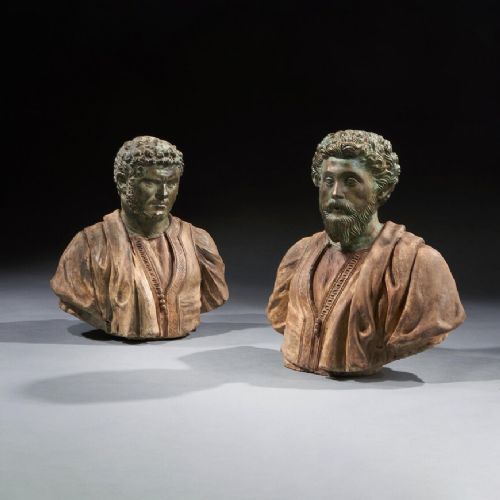


Roman Portrait Bust
A roman portrait bust brings classical imperial presence into a room, capturing figures like Caesar and Augustus in marble, bronze, and stone.
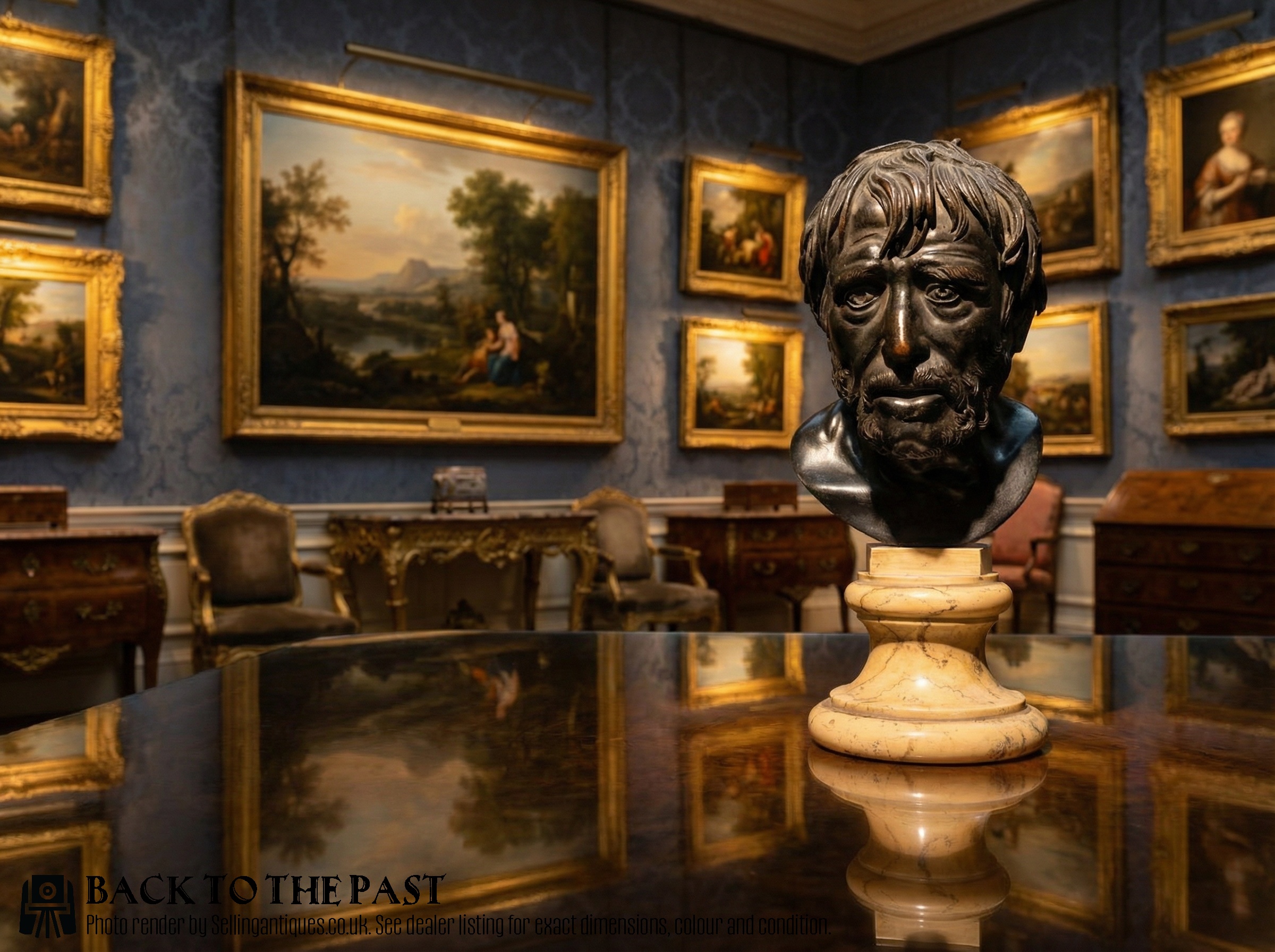
Roman Portrait Bust
A roman portrait bust portrays classical emperors, philosophers, and deities, drawing on subjects such as Marcus Aurelius, Julius Caesar, and Augustus. Buyers hunting for a roman portrait bust often encounter pieces ranging from nineteenth-century Grand Tour souvenirs to earlier carved marble heads.
The selections on this page span several centuries, including seventeenth-century Italian Baroque works, eighteenth-century carvings, and nineteenth-century library busts. Forms vary from full three-dimensional sculptures and busts to relief plaques and cameo profiles.
Grand Tour souvenirs form a prominent strand among these listings, reflecting the tradition of travellers collecting classical likenesses across Italy. Alongside these, library busts and sculptural pairs offer alternative ways to bring classical portraiture into an interior.
Materials and Construction
Alternative mediums appear in the evidence, including stone, terracotta, cast stone, plaster, and glass paste. These varied substances allow for different textural qualities, from the crisp lines of carved bas-relief cameos to the heavier presence of cast stone.
Even Roman emperors occasionally ended up cast in glass paste.
Factors of Quality
The choice of material alters the character of the piece, with solid marble and patinated bronze representing the higher tiers of production. Lesser tiers utilise plaster or cast materials, where surface finish and patination determine visual success.
Mathurin Moreau
The Roman Portrait Bust Glossary
- Grand Tour
- A traditional travel itinerary undertaken by European nobility through Italy to collect art and antiquities. Souvenirs from these journeys often included miniature or reduced-scale bronze and marble busts.
- Glass paste
- A material formed by crushing glass and fusing it in a mould, sometimes used for small portrait plaques or heads. This technique captures fine detail reminiscent of ancient cameos.
- Bas-relief
- A sculptural technique where figures project only slightly from a flat background. This method appears on carved marble cameo profile portraits.
- Verdigris patina
- A green layer that forms on copper, brass, or bronze through natural weathering or chemical treatment. Makers apply this finish to mimic the appearance of ancient buried bronze.
- Baroque
- An artistic style originating in Italy during the seventeenth century, characterised by dramatic movement and deep emotional intensity. Italian Baroque sculpture often imparts greater theatricality to portrait subjects.
Roman Portrait Bust: Frequently Asked Questions
What is a Grand Tour bust?
A Grand Tour bust is a souvenir sculpture purchased by travellers touring Italy during the eighteenth and nineteenth centuries. These pieces replicated famous classical antiquities seen in museums and excavations.
They allowed collectors to bring classical history back to their home libraries and studies.
How do I identify a marble bust?
Marble busts are heavy, cold to the touch, and often display subtle natural veining within the stone. Sculptors valued marble for its ability to take a fine polish and render realistic flesh tones.
Over time, genuine older marble develops a soft surface lustre through handling and dusting.
Where were library busts displayed?
Library busts sat atop bookcases, mantelpieces, or dedicated pedestals within nineteenth-century homes. Victorians used these scholarly likenesses to signal an educated and cultivated interior.
Plaster and bronze versions were especially popular for this domestic setting.
What subjects are most common?
Roman emperors such as Augustus, Julius Caesar, Marcus Aurelius, and Caracalla appear most frequently in portrait sculpture. Philosophers and mythological figures like Juno also feature among the surviving works.
These recognisable historical figures provided moral and intellectual weight to a room.