
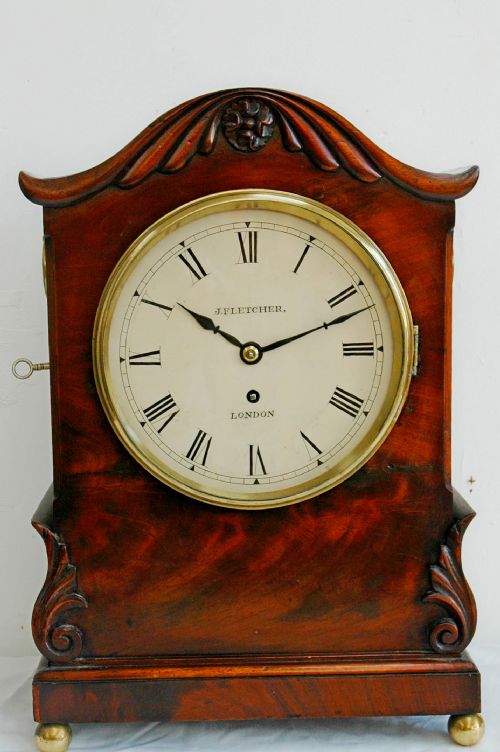


Roman Numeral Bracket Clock
A roman numeral bracket clock brings reliable timekeeping and classic timber to a desk or mantelpiece.
Roman Numeral Bracket Clock
A roman numeral bracket clock sits on furniture surfaces, telling the time with traditional figures on the dial. These pieces range from compact desk examples to larger mantel designs.
The selection includes specimens from the Regency and Victorian eras alongside Edwardian and later pieces. Mahogany, walnut, oak, and ebonised wood form the primary housing for these mechanisms.
Makers such as Garrards, Connell of London, Piggin Norwich, Jas Whitelaw, Luxor, Perigal & Duterrau, D Robertson, Baldwin of Loughborough, and Armstrong of Manchester appear across the collection.
Materials and Construction
Cases utilise dense hardwoods like mahogany and walnut, frequently finished with figured veneers or ebonised treatments. Glass protects the white or cream enamel dials where dark numerals indicate the hours.
Metal components in brass and gilt provide internal movement support and exterior decorative mounts. Inlaid details appear on select Edwardian balloon-shaped examples.
One listed clock witnessed maritime history aboard the SS Ethiopia in 1874 before finding its way to land.
Markers of Quality
Finishing on the timber case separates standard production from superior examples, particularly where figured walnut or well-matched mahogany veneers are employed. Crisp lettering on the enamel dial and careful engraving on backplates indicate higher workshop standards.
Retaining original bezels, glass, and movement components maintains the integrity of the piece. The prestige of the original retailer or maker, such as London or provincial watchmakers, influences desirability.
Garrards·Connell of London·Piggin Norwich·Jas Whitelaw·Luxor·Perigal & Duterrau·D Robertson·Baldwin of Loughborough·Armstrong of Manchester
The Roman Numeral Bracket Clock Glossary
- Bracket clock
- A portable clock originally designed to sit on a wall bracket or furniture surface. These pieces typically feature mechanical movements and substantial wooden cases.
- Enamel dial
- A metal face coated with fused glass powder to create a smooth, durable surface. Black roman numerals are usually fired directly onto this white or cream background.
- Ebonised wood
- Timber treated with a dark finish to imitate expensive ebony. This technique was popular in Victorian and later cabinet making for contrast.
- Timepiece
- A clock that indicates the time without striking on the hour or half-hour. These mechanisms focus purely on motion rather than acoustic signals.
- Balloon-shaped
- A case profile featuring a rounded top tapering down to a narrower base, popular during the Edwardian period.
Roman Numeral Bracket Clock: Frequently Asked Questions
Where should I place a bracket clock?
These clocks suit stable surfaces like mantelpieces, desks, or sturdy side tables where the movement remains level. Keeping them away from direct sunlight and damp environments protects the wooden case and internal brass components.
Position the clock at a comfortable viewing height to read the roman numerals clearly. Ensure the surface does not experience excessive vibrations from footfall or doors.
How do I wind a mechanical bracket clock?
Use the appropriate key gently on the winding holes in the dial, turning until you feel firm resistance. Do not overwind, as this can damage the internal springs.
Consult the specific movement type, as some require weekly attention while others run for shorter periods. Regular winding helps keep the mechanical parts lubricated and functioning properly.
How do I identify the period of a clock?
Examine the wood selection, case silhouette, and dial style for period characteristics. Regency and early Victorian models often feature heavy mahogany or simpler architectural lines, while Edwardian versions introduce inlaid details and balloon shapes.
Maker signatures or retailer names inscribed on the dial or movement backplate offer precise historical clues. Comparing the construction methods inside the case also helps confirm the era of manufacture.
Are these clocks suitable for daily use?
Many mechanical clocks function reliably for daily timekeeping when serviced correctly by a professional. Regular care ensures the gears and springs operate smoothly without excessive wear.
Treating antique movements with patience and avoiding rapid adjustments preserves their operational life. They serve as both practical timepieces and decorative focal points in a room.