

Rolled Top Bureau
A rolled top bureau brings enclosed security to your papers, concealing your working life behind smooth timber tambour or cylinder slides.
Rolled Top Bureau
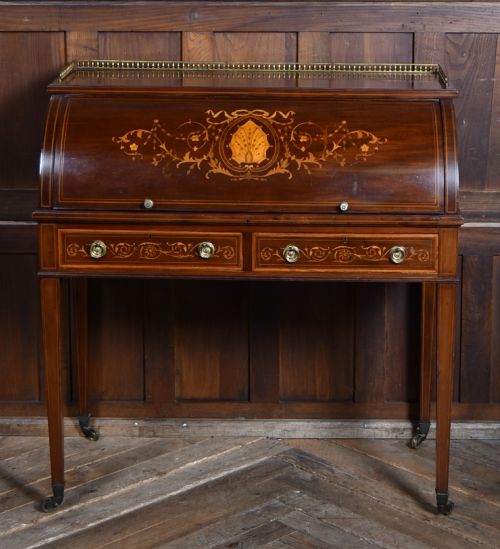
When you search for a rolled top bureau, you are looking at sophisticated writing furniture designed to keep correspondence private and tidy without folding away the contents. The examples gathered here span several distinct periods including Georgian, Regency, Victorian, and Edwardian eras, executed in various formats.
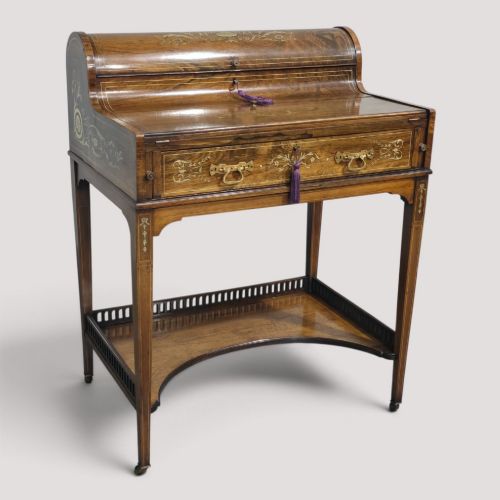
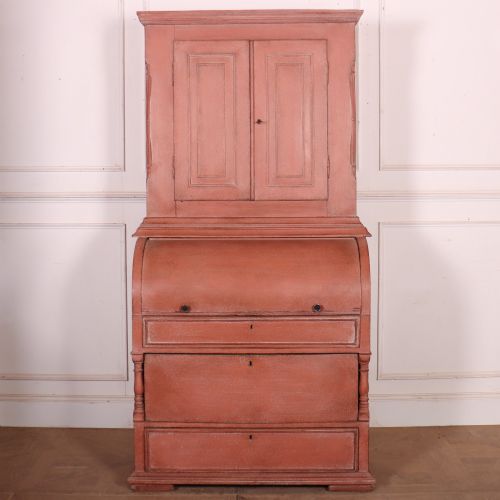
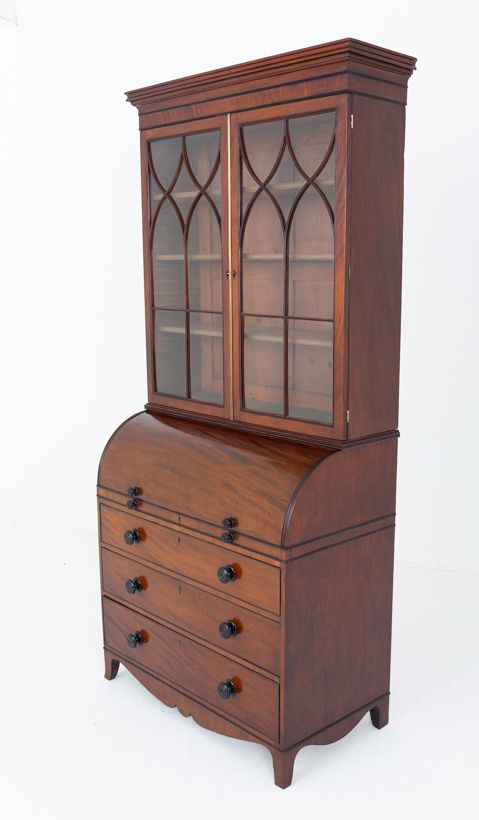
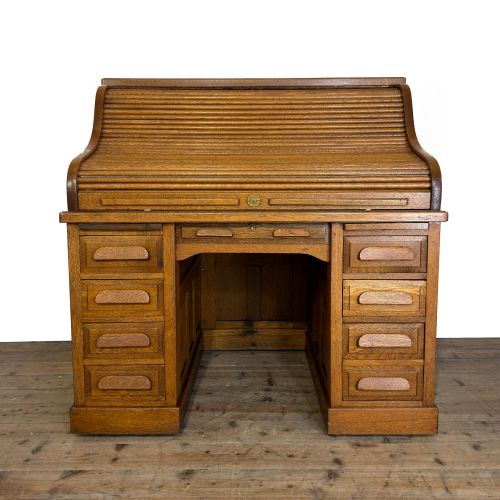
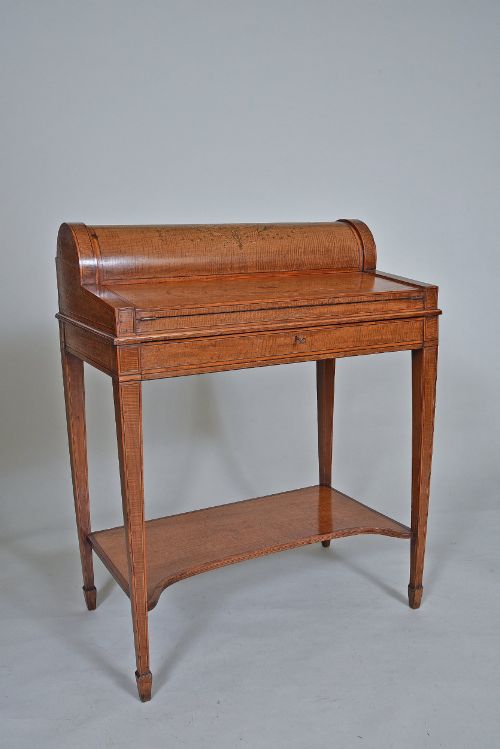
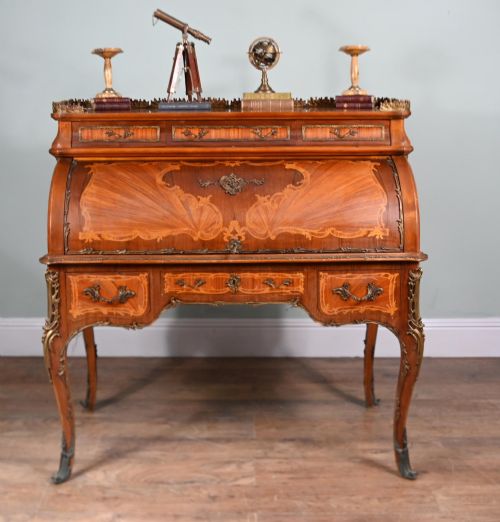
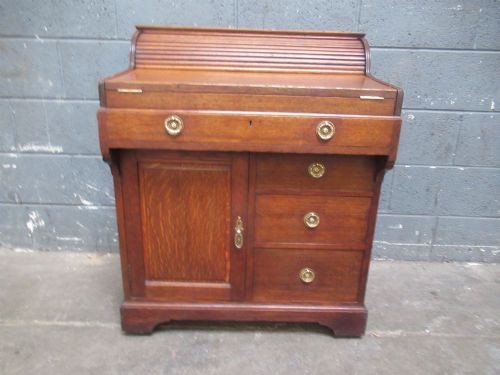
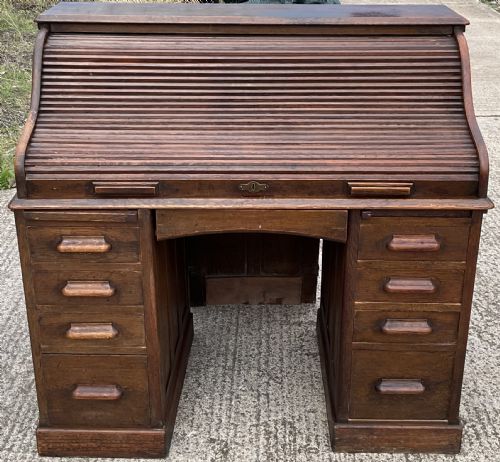
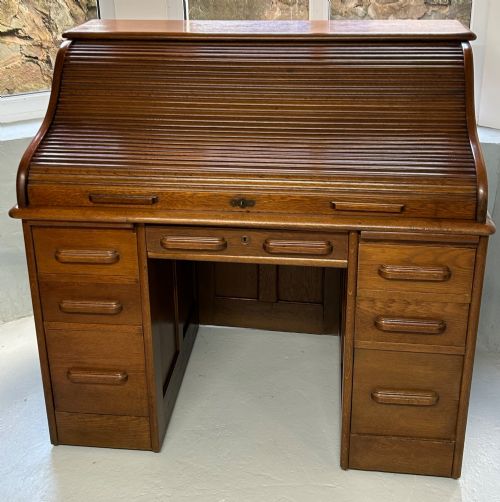
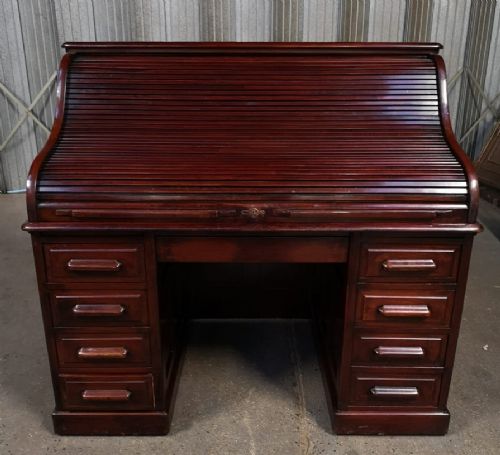
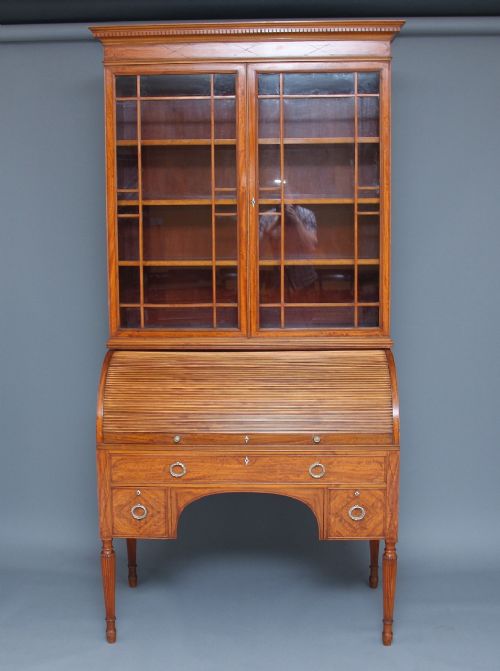
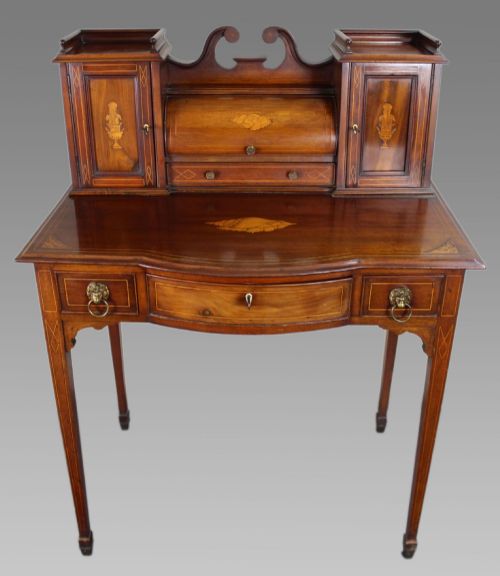
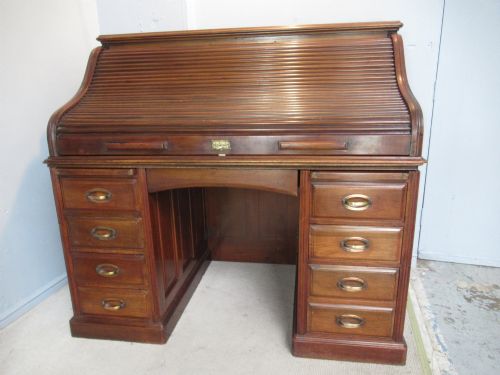
The most common version you will encounter on this page is the Edwardian or late nineteenth-century oak or mahogany desk featuring a slatted tambour shutter that retracts into the body. Alongside these standard pedestals, the selection includes grander cylinder bookcases, French-influenced parquetry pieces, and compact satinwood ladies writing desks.
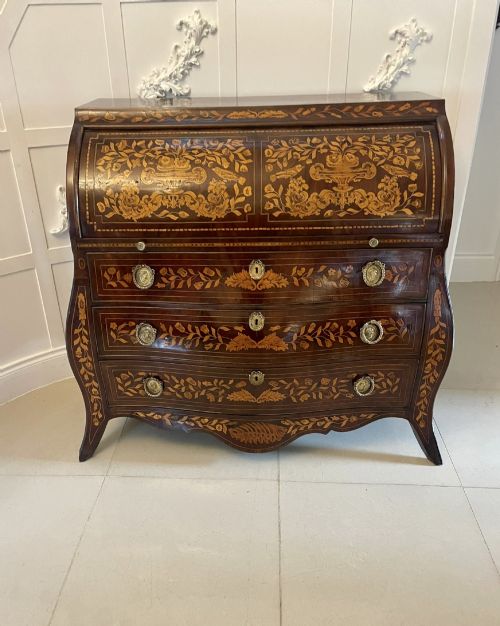
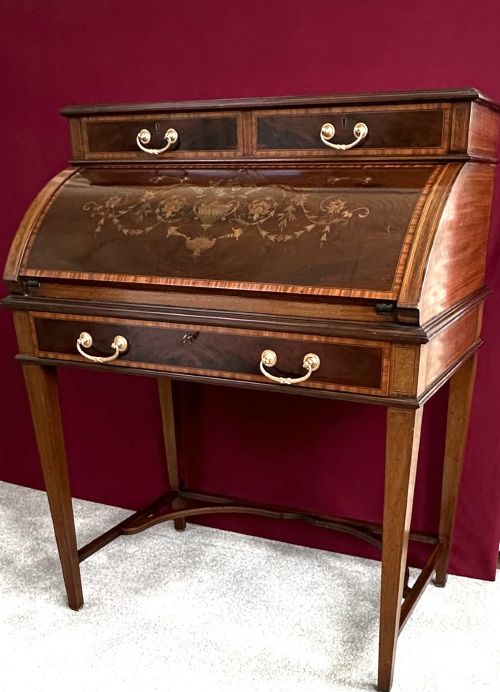
These writing places range from simple panelled oak office furniture to highly decorative inlaid satinwood and partridgewood creations intended for formal reception rooms. Each iteration serves the same fundamental purpose of housing writing materials behind a curved wooden closure while offering drawers or pigeonholes within.
How they were made
Timbers such as mahogany, oak, satinwood, and walnut form the primary structural body of these desks, often enhanced by intricate floral marquetry, parquetry, or contrasting string inlay. Cabinetmakers constructed the curved roll tops either from solid tambour slats glued to a linen or canvas backing, or from single solid pieces of bent cylinder wood.
Fine brass handles, ormolu mounts, and fitted leather writing surfaces complete the construction, providing durability alongside tactile elegance. Drawer linings typically employ secondary timbers assembled with traditional dovetail joints, reflecting the high standard of craftsmanship expected in period cabinetmaking.
Rolled Top Bureau Retail Price Guide 2026
Typical asking prices for rolled top bureau among the pieces listed under this phrase on Sellingantiques today, from the lower quarter to the upper quarter. They describe what is for sale here now, not the wider market.
Some nineteenth-century models conceal ingenious spring-loaded release buttons that pop open secret document drawers when pressed in exact sequence.
What varies in quality
The distinction between ordinary utility desks and exceptional pieces lies primarily in the selection of timbers and the precision of the mechanics. Superior examples feature figured mahogany, burr walnut, or exotic satinwood matched across the front panels, paired with a tambour mechanism that glides silently and evenly within its grooves.
Fittings also dictate standing, with top-tier creations incorporating secret compartments, fine ormolu mounts, well-executed floral marquetry, and maker signatures from established firms. Lesser pieces rely on heavier mechanical construction with simpler oak carcases and plain finishes designed strictly for commercial or office use.
Edwards & Roberts·Maple & Co. London·Tudor & Burrey
The Rolled Top Bureau Glossary
- Tambour
- A flexible shutter made of narrow vertical wooden strips glued to a fabric backing. This ingenious mechanism allows the writing surface to be covered by sliding around a curved track into the back of the desk.
- Cylinder desk
- A writing desk featuring a solid, quarter-circle wooden drum that rotates upwards on pivots to reveal the desk interior. Unlike tambour shutters, a cylinder is formed from a single curved panel rather than slats.
- Marquetry
- The art of forming decorative patterns by fitting together thin veneers of different coloured woods, ivory, or shell. This technique frequently adorns the drawer fronts and cylinder panels of Georgian and Edwardian furniture.
- Pedestal desk
- A heavy freestanding desk supported by two separate stacks of drawers flanking a central opening. Many roll top variations utilise this dual-pedestal layout for maximum storage capacity.
- Pigeonhole
- A small, open compartment built into the upper interior of a bureau for sorting letters and documents. These compartments are often flanked by miniature drawers and secret panels.
Rolled Top Bureau: Frequently Asked Questions
Were these desks used at home or in offices?
These desks served both domestic and commercial environments depending on their scale and decoration. Elaborate satinwood and marquetry versions belonged in private drawing rooms and libraries for managing personal correspondence.
Sturdier oak and walnut pedestal variants were built for business offices, legal chambers, and banking houses where paperwork required daily security. The lockable cylinder or tambour kept sensitive ledgers safe from prying eyes.
How do I tell an Edwardian desk from a Georgian one?
Georgian examples generally exhibit richer, dense mahogany timbers with hand-cut dovetailing and understated classical proportions. Their interiors often feature arched pigeonholes and subtle cockbeaded drawer edges reflecting eighteenth-century taste.
Edwardian revivals frequently incorporate lighter satinwood crossbanding, machine-made components, and wider variations of imported woods. They tend to reflect a revival of Sheraton or Jacobean styles combined with late nineteenth-century comfort.
What is the difference between a tambour and a cylinder?
A tambour shutter consists of multiple thin wooden slats joined together on a flexible canvas backing, enabling it to bend around tight internal curves. This was the preferred method for standard office desks requiring simple operation.
A cylinder top uses one large, solid curved piece of wood that rotates on pivot arms. This requires greater carpentry skill and is typically found on higher-status formal library desks.