

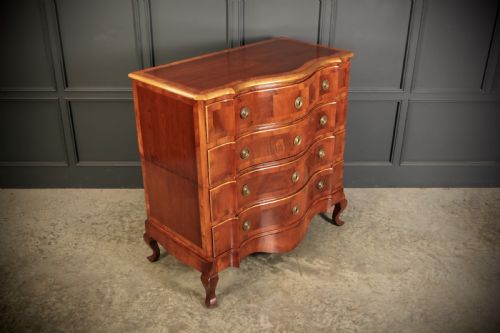


Rococo Walnut Dresser
A rococo walnut dresser brings serpentine curves, rich timber grain and sculptural mounts into a room.
Rococo Walnut Dresser
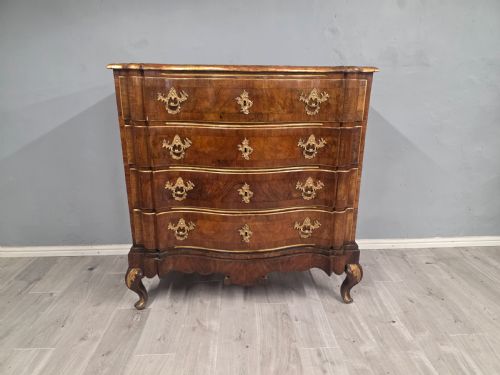
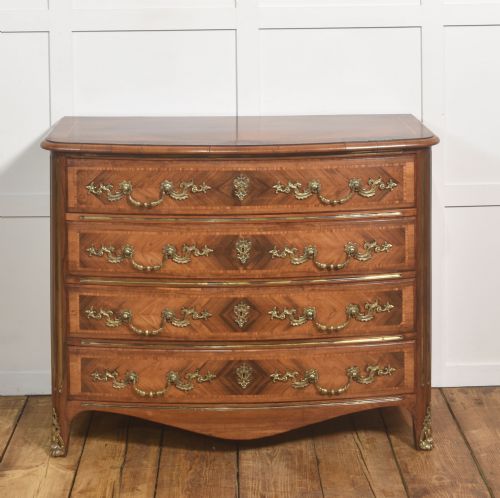
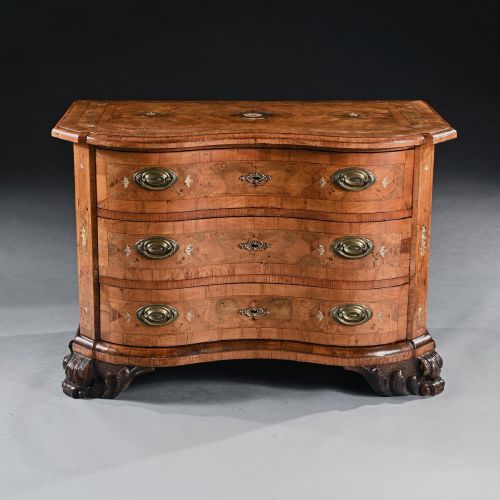
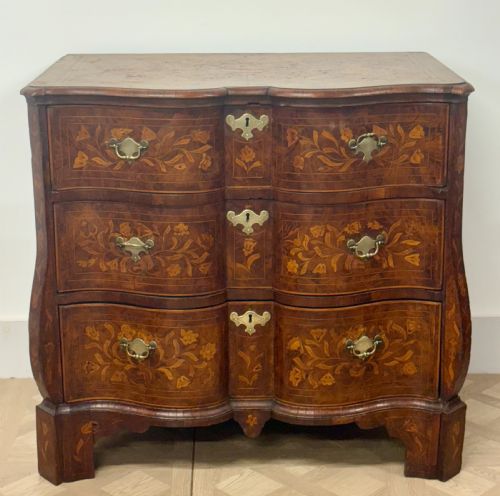
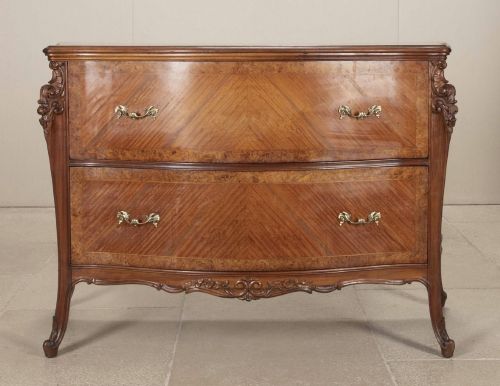
A rococo walnut dresser is fundamentally a commode or chest of drawers constructed with sweeping serpentine outlines, bombe profiles and asymmetric decorative lines. These pieces serve as practical storage furniture whilst functioning as major decorative statements within a domestic interior.
The pieces on this page span several centuries, predominantly originating in the eighteenth century alongside nineteenth-century revivals and later twentieth-century interpretations. Buyers encounter forms ranging from country commodes to elaborate marquetried examples from French, Dutch, German, Italian and Swedish workshops.
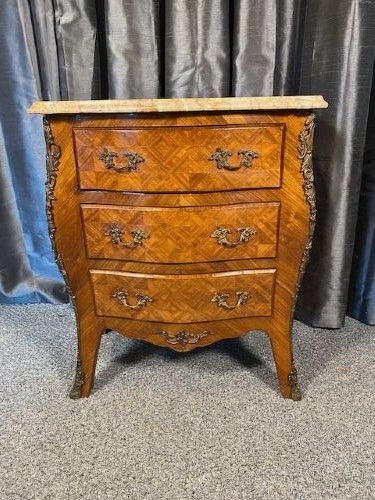
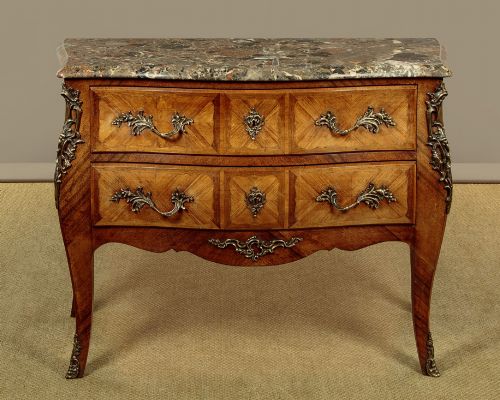
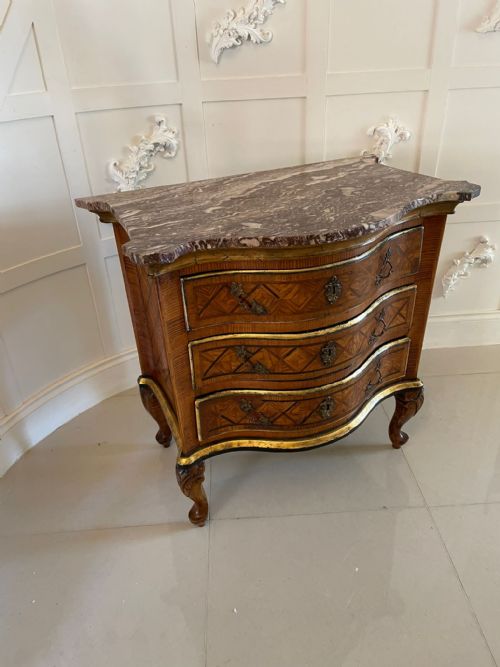
The most common formats utilise multiple drawer configurations housed within a shaped carcass, frequently topped with marble or detailed with intricate wood inlays. Walnut and burr walnut remain the dominant timbers, often enhanced by contrasting fruitwoods or satinwood.
Materials and construction methods
Makers utilised solid walnut and decorative burr walnut veneers applied over secondary woods like oak and fruitwood to build the curved carcasses. This technique allowed artisans to shape the distinctive bombe and serpentine fronts without compromising the structural integrity of the furniture.
Surface ornamentation relied heavily on marquetry and parquetry, incorporating ivory, pewter and contrasting woods to form floral or geometric patterns. Metal elements such as cast ormolu and brass mounts were fitted to drawer pulls, corners and feet to accent the flowing lines.
Many examples incorporated fitted marble slabs to the upper surface, requiring precise stone-cutting to match the complex undulating contours of the wooden chest below.
Rococo Walnut Dresser Retail Price Guide 2026
Typical asking prices for rococo walnut dresser among the pieces listed under this phrase on Sellingantiques today, from the lower quarter to the upper quarter. They describe what is for sale here now, not the wider market.
Listings feature periods spanning from the early 1700s through the Victorian era to 1930, utilising walnut, burr walnut, marble, ormolu, brass, kingwood, oak and fruitwood.
Factors determining quality
Quality rests significantly on the selection of the timber and the mastery of the veneer work, particularly how symmetrically the burr walnut grain follows the curves of the drawers. Superior pieces display seamless transitions across the serpentine fronts where the pattern of the wood remains uninterrupted.
The sophistication of the bronze or ormolu mounts and the precision of the marquetry inlay distinguish high workshops from provincial production. Finer items integrate hand-chased metalwork and intricate multi-wood pictorial details that sit completely flush with the surrounding surface.
The Rococo Walnut Dresser Glossary
- Serpentine
- A furniture front or top shaped with a central convex curve flanked by two concave curves. This contour defines the undulating movement characteristic of the style.
- Bombe
- A swollen, outward-curving profile in the sides and front of a chest of drawers. This dramatic bulging shape requires advanced joinery to maintain stability.
- Marquetry
- Decorative veneer work arranged in pictorial or geometric patterns using various coloured woods, ivory or metal. Artisans cut these delicate pieces to fit together precisely within a veneered background.
- Ormolu
- Gilded bronze used for decorative mounts and hardware on high-status furniture. The metal is cast and chased to add relief detail before receiving a gold finish.
- Parquetry
- Geometric wood inlay forming repetitive patterns such as cubes or chequers. It differs from marquetry by sticking strictly to geometric arrangements rather than figurative scenes.
Rococo Walnut Dresser: Frequently Asked Questions
How do I identify a revival piece?
Revival pieces, often dating from the nineteenth or early twentieth century, emulate the forms and decorative vocabulary of the eighteenth century. Examining the interior construction timbers, secondary woods and the ageing of the finish helps clarify the date of manufacture.
Makers working during later revival periods utilised similar marquetry and serpentine shaping techniques, making careful observation of the materials essential for accurate dating.
Where were these chests made?
These pieces originate from workshops across Europe, including France, Italy, Germany, the Netherlands and Sweden. Each region developed distinct regional characteristics in timber selection and mount design.
French and Italian examples frequently incorporate elaborate ormolu and floral marquetry, whereas Dutch and German variants often feature dense burr walnut and pewter inlay.
Are marble tops original?
Many eighteenth and nineteenth-century commodes were constructed to receive heavy marble slabs cut specifically to follow the serpentine or bombe contours of the carcass. These stones provided a durable, decorative surface for daily use.
Checking the fit between the stone edge and the wooden moulding helps determine whether the top has remained with the piece over its lifetime.