


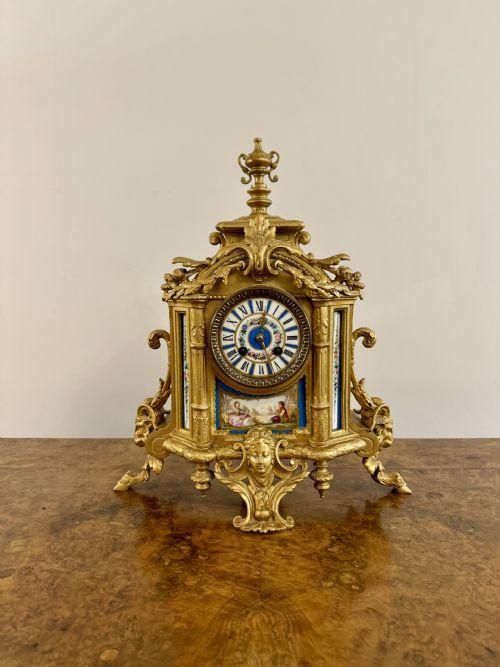

Rococo Table Clock
When you search for a rococo table clock, you find ornate French metalwork and porcelain designed to command attention on a mantelpiece.
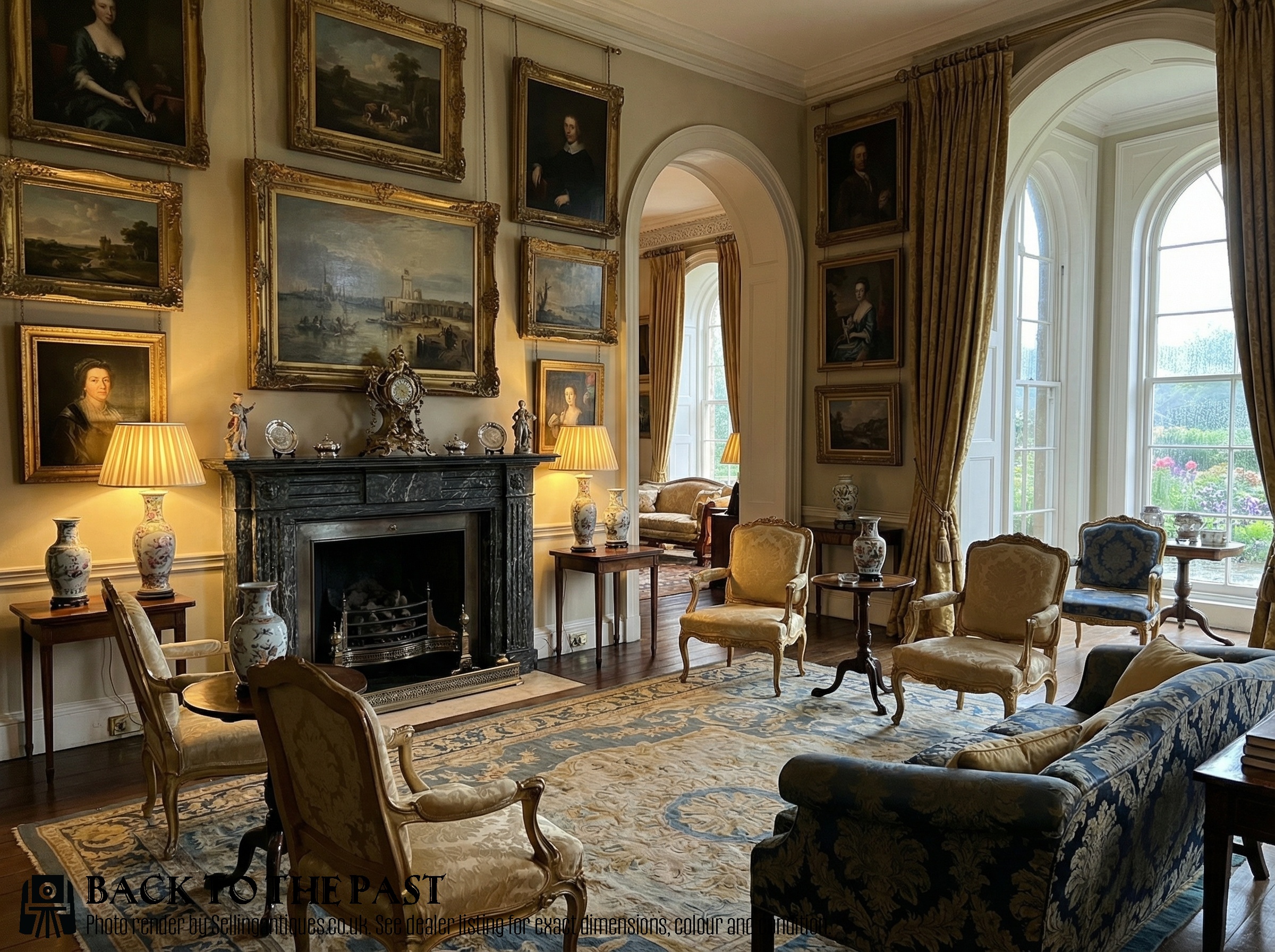
Rococo Table Clock
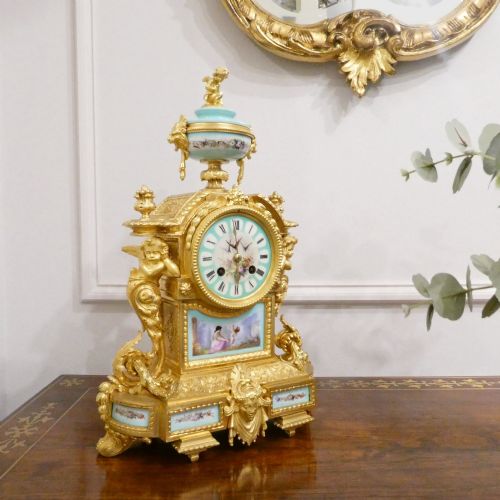
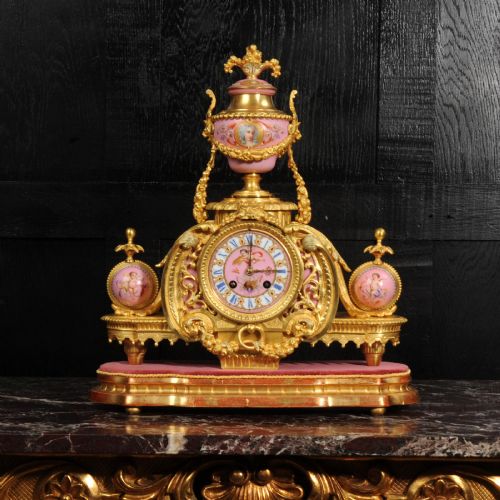
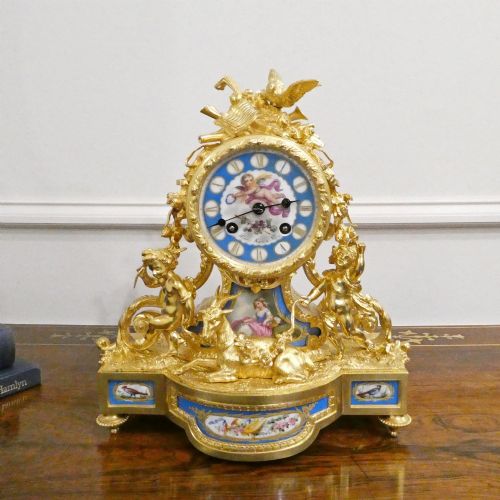
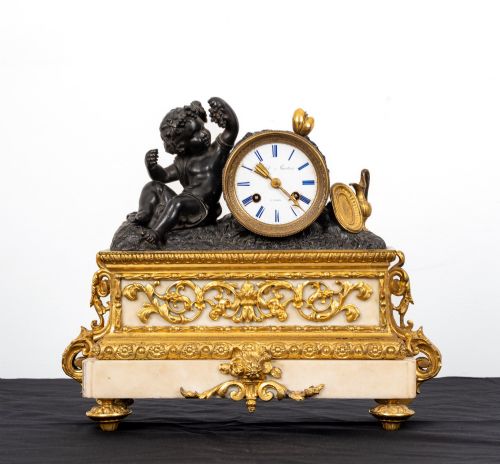
A rococo table clock brings together asymmetrical scrollwork, naturalistic floral motifs and figurative elements rooted in nineteenth-century French design. The pieces available here span from the mid-nineteenth century through to the early twentieth century, reflecting sustained enthusiasm for revival styles across multiple decades.
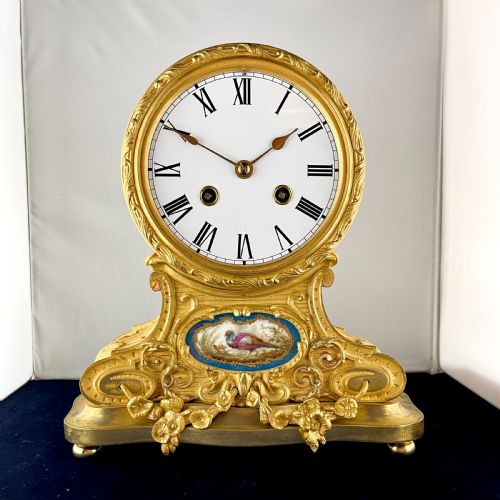
Most examples function as mantel clocks or boudoir table clocks, housed in cases of gilt bronze, ormolu, brass or porcelain. Makers frequently integrated hand-painted ceramic panels and dials depicting pastoral scenes or floral bouquets to enhance the decorative impact.
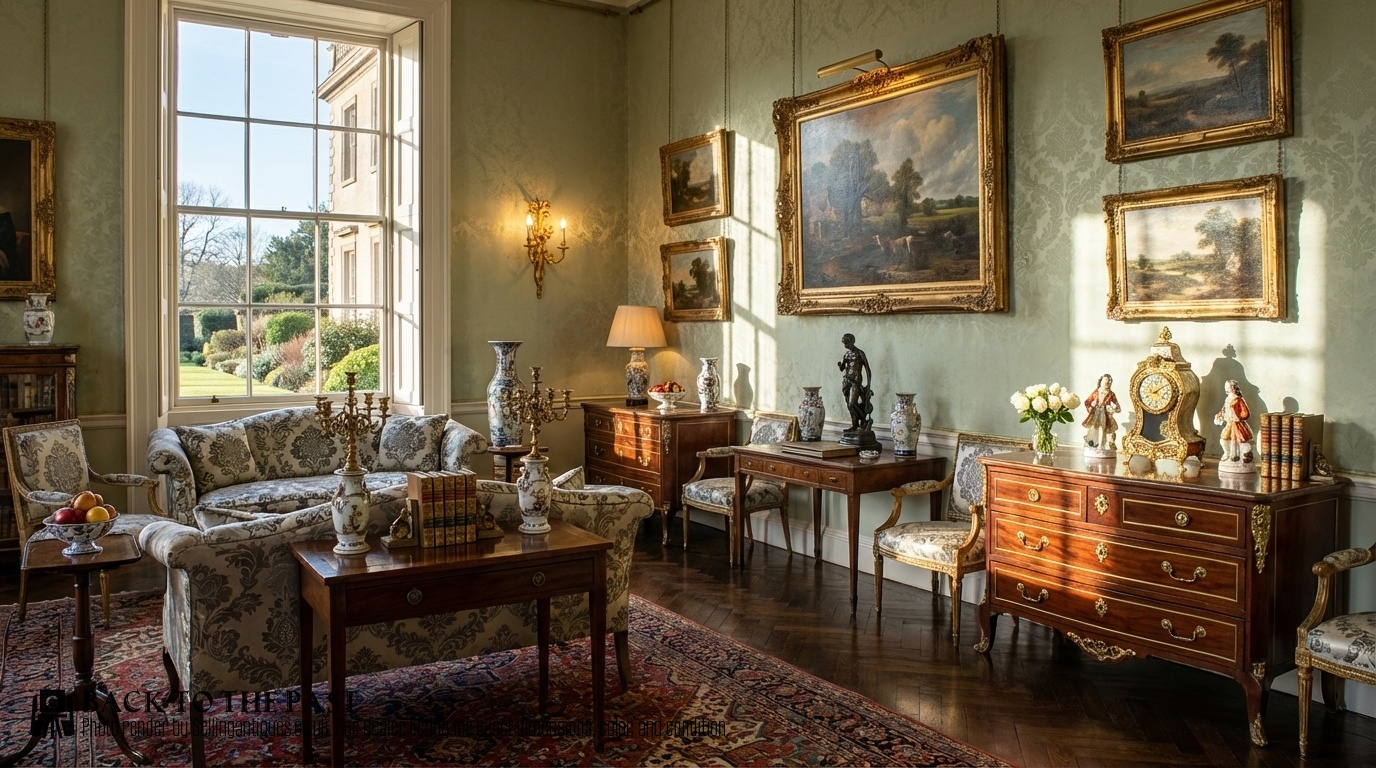
Materials and construction
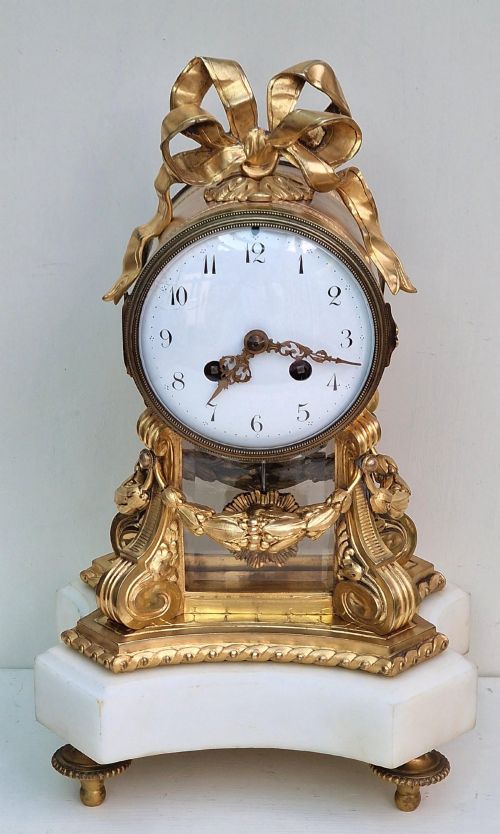
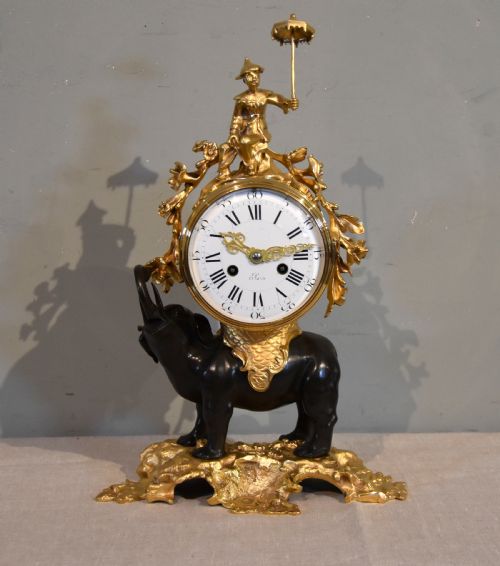
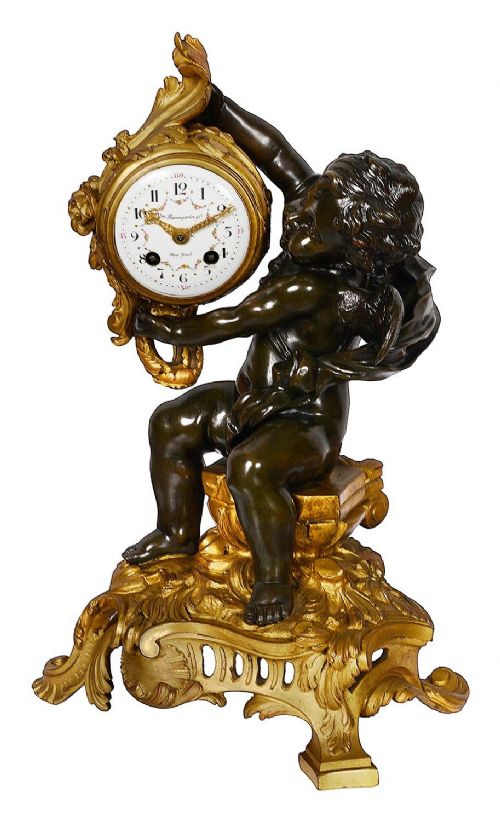
Foundry-cast gilt bronze and ormolu form the structural and decorative basis for the majority of these pieces, allowing artisans to achieve deeply sculpted, fluid scrollwork. Workshops combined these metal mounts with glazed porcelain panels, marble bases and intricate brass movements.
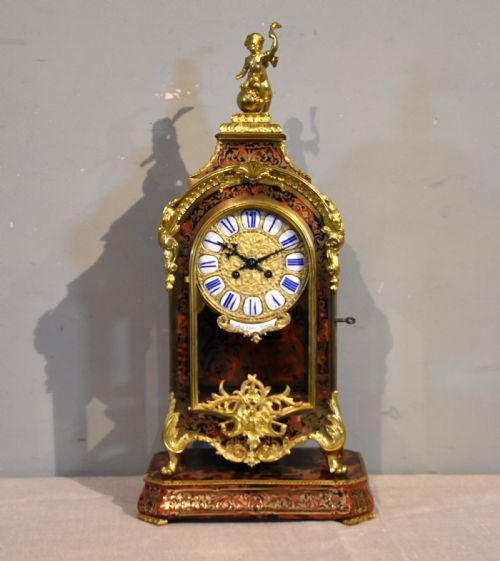
Movements were typically produced by established French horological houses and housed within heavy cast cases that required precise mounting of glass panels and ceramic dials. Cabinetry elements such as tortoiseshell veneer and walnut also appear in specific regional variations.
Several clocks double as musical boxes, proving that nineteenth-century artisans believed telling time should also involve a cheerful tune.
Distinctions in quality
Quality reveals itself in the crispness of the bronze casting and the depth of the gilding, where superior examples exhibit sharp, hand-chased details rather than soft, rounded edges. The integration of signed mechanical movements by recognised makers further elevates a piece.
The hand-painted detail on porcelain dials and panels distinguishes higher-grade items, alongside the structural weight and stability of the marble or metal housing. Finer specimens maintain original components and integrated garniture elements where applicable.
Achille Brocot·Samuel Marti·Henry Marc·Japy Freres·PH Mourey·A. D. Mougin·Raingo Freres·Charpentier Paris·Leon Message
The Rococo Table Clock Glossary
- Ormolu
- A technique of applying finely ground high-carat gold to a bronze base using mercury amalgamation. This finish creates the characteristic rich, warm golden lustre seen on nineteenth-century French clock cases.
- Champlevé
- An enamelling technique where troughs or cells are carved into the metal surface and filled with vitreous enamel before firing. It adds vibrant colour and pattern to the brass or bronze clock mounts.
- Four glass clock
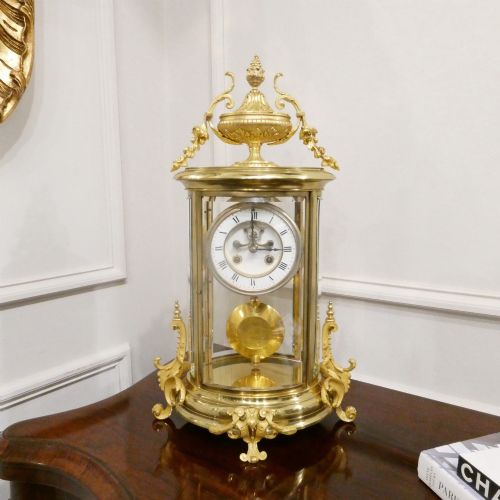
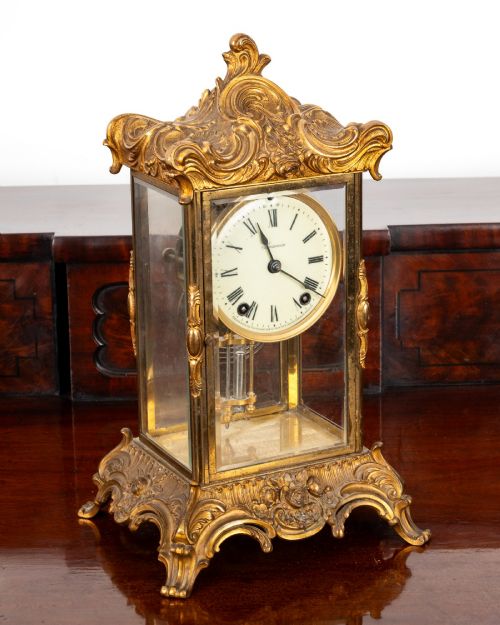
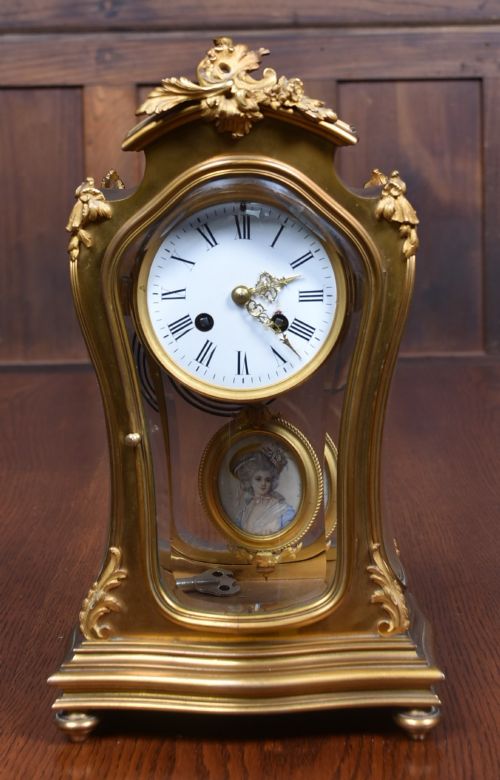
- A mantel clock featuring glass panels on the front, back and both sides, allowing an unobstructed view of the mechanical movement and pendulum within. These designs gained popularity during the late Victorian period.
- Boulle
- A method of marquetry using brass and tortoiseshell inlaid in contrasting patterns, named after the cabinetmaker André-Charles Boulle. Pieces utilising this technique display elaborate metallic ornamentation against dark organic backgrounds.
Rococo Table Clock: Frequently Asked Questions
How do I wind a mechanical French clock?
Most nineteenth-century mechanical movements require a key inserted into the winding arbors on the dial face. Turn the key gently until you feel resistance, taking care not to overwind the mainspring.
Regulating the pendulum speed is achieved by adjusting the small nut at the bottom of the pendulum bob to ensure accurate timekeeping.
Where should I place my mantel clock?
Select a stable, level surface such as a mantelpiece, sideboard or heavy desk away from direct sunlight and moisture. A solid foundation prevents vibrations that can disrupt the pendulum beat.
Ensure there is adequate clearance around the piece so that the striking mechanism and door access remain unobstructed during operation.
How do I identify the period of a clock?
Examine the style of the cast bronze work, the materials used for the dial, and any maker signatures stamped on the movement backplate. French clocks from the mid-nineteenth century frequently favor heavy ormolu and classical figural elements.
Later Victorian and turn-of-the-century pieces often incorporate champlevé enamel or lighter crystal regulator designs influenced by evolving aesthetic movements.
What is a crystal regulator clock?
A crystal regulator is a type of mantel clock featuring heavy bevelled glass panels on all sides held within a brass or gilt bronze framework. This design lets light pass entirely through the case, highlighting the suspended pendulum and intricate escapement.
These clocks became particularly fashionable in France during the late nineteenth century as technological precision allowed for more transparent housing.