




Rococo Swept Frame
A rococo swept frame delivers ornate, curved moulding that frames mirrors and oil paintings with dramatic flourish.
Rococo Swept Frame
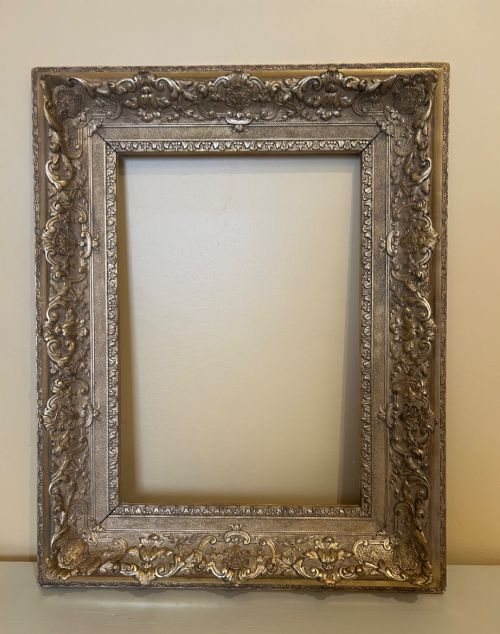
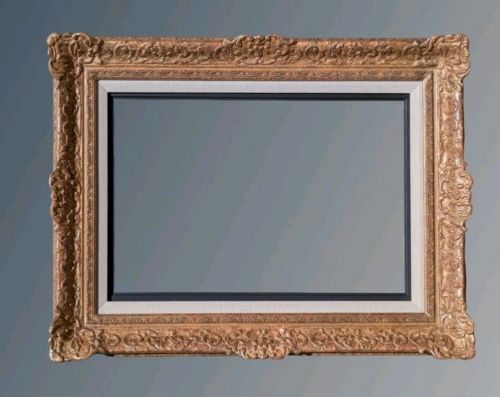
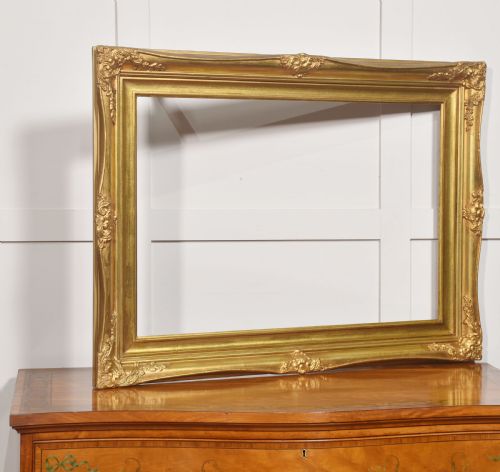
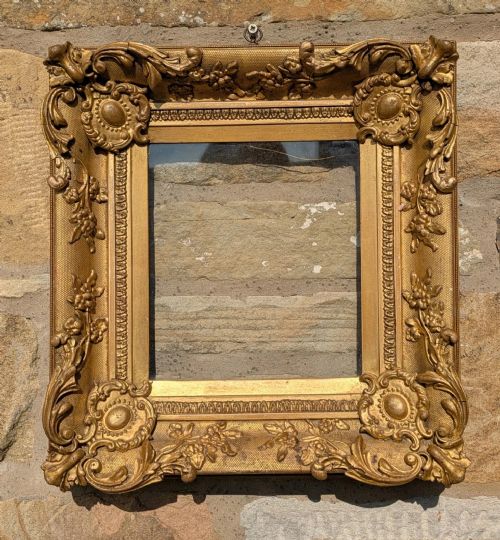
A rococo swept frame brings together intricate curves and flowing scrollwork designed to house oil paintings and wall mirrors. These pieces emerge in formats ranging from small portrait surrounds to large Victorian overmantel mirrors.
The version most commonly met on this page is the nineteenth-century Victorian gilt gesso frame, often carrying deep moulded profiles and pierced decoration. Mid-century Italian variants and French Montparnasse examples also appear alongside landscape and portrait paintings.
How they were made
Makers constructed the foundational structure using carved wood before applying layers of gesso to build up the complex, flowing relief. This plaster-like mixture allowed artisans to model intricate scrolls and asymmetric flourishes by hand.
Finishing involved the application of gold leaf or oil gilding over the prepared gesso surface to create a brilliant metallic sheen. Some pieces combine gilded sections with painted wooden elements to accentuate the depth of the swept profile.
Several frames come complete with original Scottish and Italian oil paintings still tucked securely inside.
What varies in quality
Depth of moulding and crispness of carved detail separate standard production from finer work, as deeper profiles require superior skill in both wood shaping and gesso application. The weight and consistency of the gold leaf layer also dictate the visual richness of the surface.
The integrity of the underlying gesso determines structural longevity, since thick preparation layers can become brittle over time. Better examples retain sharp undercut scrollwork without the heavy filling or smoothing that obscures original hand-tooling.
The Rococo Swept Frame Glossary
- Swept frame
- A picture frame or mirror surround featuring a curved, ogee-shaped profile that sweeps outwards from the rebate towards the outer edge. This design creates a sense of movement and draws the eye inward toward the artwork.
- Gesso
- A plaster mixture applied to wood frames to provide a smooth, mouldable surface for subsequent gilding. Artisans carved and incised this material to achieve fine decorative details.
- Giltwood
- Timber that has been coated with gold leaf or metal leaf. It differs from paint by reflecting light with a warm metallic lustre.
- Rococo Revival
- A nineteenth-century design movement that revived the ornate, asymmetrical scrolls and natural motifs of the eighteenth-century French Rococo style. It heavily influenced Victorian mirror and frame production.
- Montparnasse frame
- A style of artist's frame associated with early twentieth-century French workshops, often characterised by simpler swept wooden profiles. These frames typically frame landscape and portrait oil paintings.
Rococo Swept Frame: Frequently Asked Questions
What fits inside a swept frame?
These frames house oil paintings, portraits, landscapes and wall mirrors. Many accommodate standard rectangular canvases while others suit custom picture dimensions.
Overmantel variants provide substantial surrounds designed specifically for placement above domestic fireplaces.
How are these frames dated?
Dating relies on examining the construction of the wooden corners, the composition of the gesso, and the style of the gilding. Victorian examples often display heavier timber construction and distinct moulding profiles.
Archival pieces from the nineteenth century frequently show specific backboard construction and traditional gold leaf application methods.
Were these made for mirrors or paintings?
Makers produced swept frames for both oil paintings and wall mirrors interchangeably. Many surviving examples served as picture frames originally before being adapted to hold mirror glass.
Large formats often functioned as overmantel mirrors in nineteenth-century interiors while smaller versions held landscape and portrait canvases.
How do I care for giltwood?
Giltwood surfaces require gentle dusting with a soft dry cloth to prevent the accumulation of abrasive particles. Avoid liquid cleaners and moisture, which can damage the delicate gold leaf and gesso layers underneath.
Keeping frames away from direct heat sources prevents the wooden substrate from expanding and cracking the plaster ornament.
What is cross-hatching on a frame?
Cross-hatching involves incising intersecting lines into the gesso or wood surface prior to gilding. This technique adds texture and catches ambient light differently across the swept profile.
Decorators used this method during the Victorian period to create contrasting matte and bright areas on the frame.