


Rococo Style Side Chairs
Rococo style side chairs bring exuberant carved ornament and flowing asymmetrical lines into a room, offering both decorative presence and practical seating.

Rococo Style Side Chairs
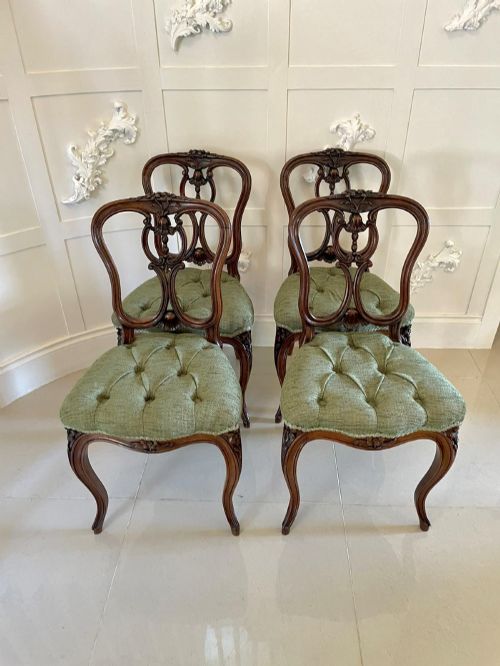
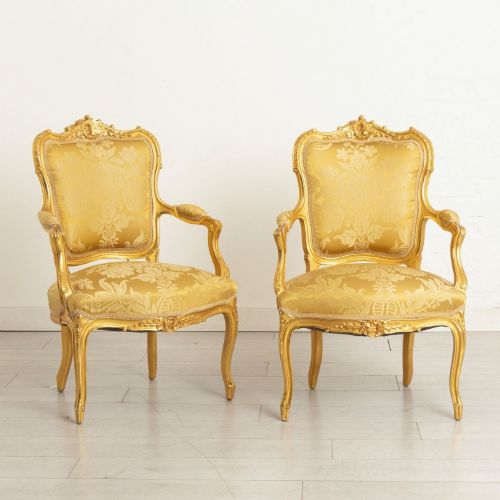
Rococo style side chairs represent a design lineage spanning from the eighteenth century into the twentieth century, encompassing Victorian revivals and continental interpretations. Buyers encounter walnut and giltwood examples shaped with distinctive scroll arms and carved details, originating from periods such as the Victorian era and the eighteenth century.
The selections available range from single occasional seats to matched sets of dining chairs and salon chairs. French and Dutch influences appear frequently alongside British Victorian interpretations, showing the broad geographic spread of this spirited design vocabulary.
How they were made
Cabinetmakers shaped these frames primarily from hardwoods like walnut, mahogany, and oak, alongside softwood timber destined for paint or giltwood finishes. Skilled carvers executed the characteristic scrolls, foliage, and asymmetrical motifs directly into the solid timber substrates.
Surface decoration involved meticulous gilding, hand painting, or the application of marquetry details on select high-back dining chairs. Upholstery traditionally utilised natural webbing and stuffing covered in silk or contemporary fabric selections.
Walnut is the predominant timber recorded across these listings, appearing alongside giltwood, mahogany, and oak frames.
What varies in quality
The refinement of the hand carving separates standard production from exceptional examples, with crisp undercut foliage and balanced proportions demonstrating superior maker skill. The choice of primary timber, such as figured walnut or dense mahogany, dictates the structural integrity and aesthetic weight of the frame.
Original surface treatments, whether aged gilding or historical paint layers, hold greater distinction than later refinishing efforts. The integrity of the joinery and the retention of matching suites elevate specific sets above individual occasional chairs.
Morison & Co of Edinburgh
The Rococo Style Side Chairs Glossary
- Giltwood
- Wood that has been coated with a thin layer of gold leaf or metal powder. This finish appears frequently on formal salon and occasional seating.
- Marquetry
- The art of applying pieces of veneer to a structure to form decorative patterns. Dutch examples often display intricate floral designs executed in this manner.
- Rococo Revival
- A nineteenth-century design movement that reinterpreted eighteenth-century asymmetrical motifs and naturalistic curves. This aesthetic dominates the Victorian pieces seen in these listings.
- Salon chair
- An upholstered seat designed for use in a formal reception room rather than at a dining table. These pieces often feature decorative open frames and scroll arms.
- Side chair
- A chair without arms, intended primarily for dining or occasional use around a room. These form the majority of the matched sets recorded in the inventory.
Rococo Style Side Chairs: Frequently Asked Questions
Are these chairs comfortable for daily use?
These seating options were originally built for formal parlours and dining rooms rather than lounging. Their upright posture suits them well for use at a desk or around a dining table.
Modern comfort depends entirely on the internal webbing and padding applied during upholstery work. Many surviving frames have been updated with contemporary cushioning while retaining their historic timber structures.
How do I identify the period of a rococo style chair?
Dating relies heavily on timber selection, tool marks, and the specific characteristics of the revival movement involved. Eighteenth-century originals show distinct hand-tooling and structural joinery methods compared to nineteenth-century interpretations.
Revival pieces often utilise denser Victorian hardwoods and machine-assisted preparation alongside hand carving. Examining the underside and joinery reveals clues about the era of manufacture.
Can I mix these chairs with modern furniture?
The expressive carving and gilded or painted surfaces provide a strong focal point when contrasted with contemporary interiors. Pairing a single occasional chair with modern pieces adds historic character to a room.
Matching sets of dining chairs create a more formal appearance around a modern table. The unifying element is often the finish, whether natural walnut or distressed paint.
What is the difference between salon and dining chairs?
Salon chairs generally feature more decorative open frames, lower seats, and ornate carving intended to impress guests in a reception space. They prioritize visual elegance over continuous seating comfort.
Dining chairs are constructed to withstand regular movement around a table and often feature firmer upholstered pads. Both types share the characteristic scrollwork and cabriole legs of the design tradition.