


Rococo Style Porcelain Ornaments
Rococo style porcelain ornaments bring theatrical curves and painted figures into a room.
Rococo Style Porcelain Ornaments
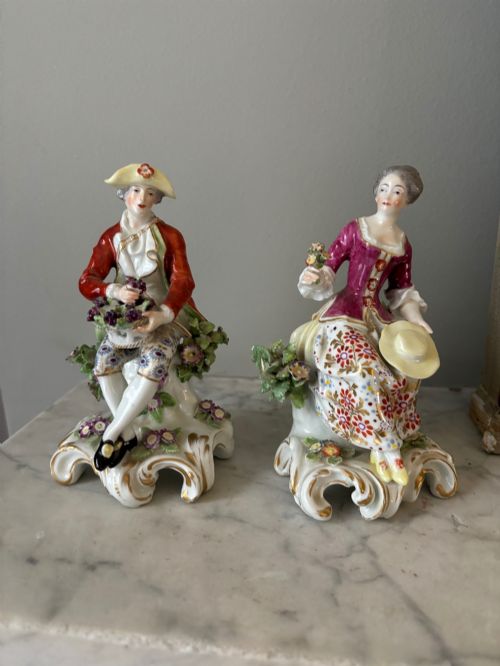
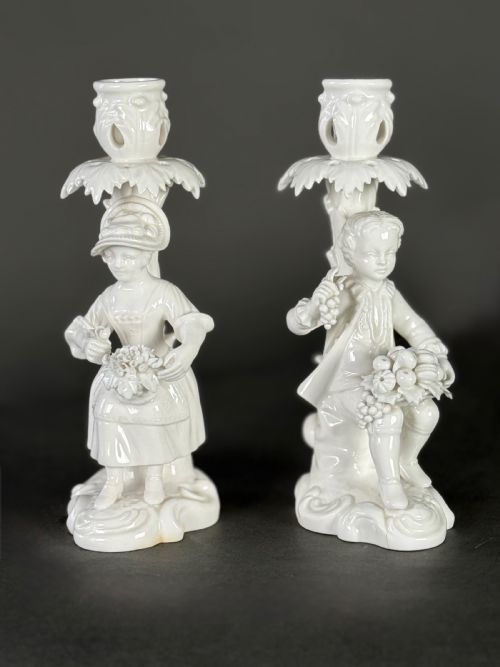
Rococo style porcelain ornaments capture the ornate, theatrical spirit of the eighteenth and nineteenth centuries through figures, ewers, and candlesticks. When searching for rococo style porcelain ornaments, collectors encounter delicate groupings of lovers, shepherds, and allegorical subjects produced by major European factories and later revivalists.
The selection ranges from eighteenth-century Meissen and Derby originals to nineteenth-century continental interpretations by makers such as Samson of Paris and Sitzendorf. Figurines and centrepieces dominate the selection, often modelled as pastoral scenes, children, or musicians decorated with enamel and gold leaf.
Most items on this page date from the nineteenth century, reflecting a strong Victorian enthusiasm for rococo revival design. These pieces adapt earlier forms into decorative items intended for mantelpieces and display cabinets.
How they were made
Potters shaped these objects using hard-paste porcelain and ceramic bodies, sometimes employing biscuit porcelain for an unglazed, marble-like finish. Moulds captured intricate drapery and scrolls, which artisans then refined by hand before firing.
Decoration relied on hand-painted enamel colours combined with gilding and gold leaf highlights. Factories applied these pigments over or under the glaze depending on the desired finish and period conventions.
Several eighteenth-century shepherds retain surprisingly cheerful expressions despite endless romantic pursuits.
What varies in quality
Quality rests in the crispness of the modelling and the precision of the hand-painted enamel work. Finer examples display subtle facial expressions, cleanly defined fingers and foliage, and careful application of gold leaf.
Later or lesser studio copies can exhibit heavy moulding, muddy palette choices, and coarse glaze pooling in recessed folds. The distinction lies in whether the surface decoration enhances the sculptural form or obscures it.
Edme Samson·Meissen Porcelain·Royal Crown Derby·Sitzendorf Porcelain·Volkstedt Factory·Helena Wolfsohn·KPM Berlin·Royal Capodimonte
The Rococo Style Porcelain Ornaments Glossary
- Hard-paste porcelain
- A durable ceramic composition fired at high temperatures using kaolin and petuntse. This material forms the sturdy base for many European figures.
- Biscuit porcelain
- Unfired or once-fired porcelain left unglazed to produce a matte, white texture. It resembles carved marble.
- Enamel
- Vitreous pigments applied to the fired porcelain surface and fixed through a secondary kiln firing. These colours provide the rich decoration on robes and landscapes.
- Gilding
- The application of gold or gold leaf to highlights, bases, and garment borders. It emphasises the scrollwork typical of rococo design.
- Blanc de Chine
- A French term for white Chinese porcelain, later adopted to describe European white-glazed figures without enamel colour. It highlights pure sculptural form.
Rococo Style Porcelain Ornaments: Frequently Asked Questions
How do I clean antique porcelain?
Dust these items gently with a soft, dry brush to prevent accumulation in delicate crevices.
Avoid using water or chemical cleaners, particularly on areas with exposed gold leaf or delicate enamel.
How do I spot a reproduction?
Examine the crispness of the painted details and the weight of the ceramic body.
Fakes often display modern transfer printing rather than careful hand-painted enamel work.
What is rococo revival?
Rococo revival is a nineteenth-century design movement that reinterpreted the asymmetrical curves and pastoral themes of the eighteenth century.
Victorian makers utilised these motifs to produce decorative figures and centrepieces.