

Rococo Style Desk
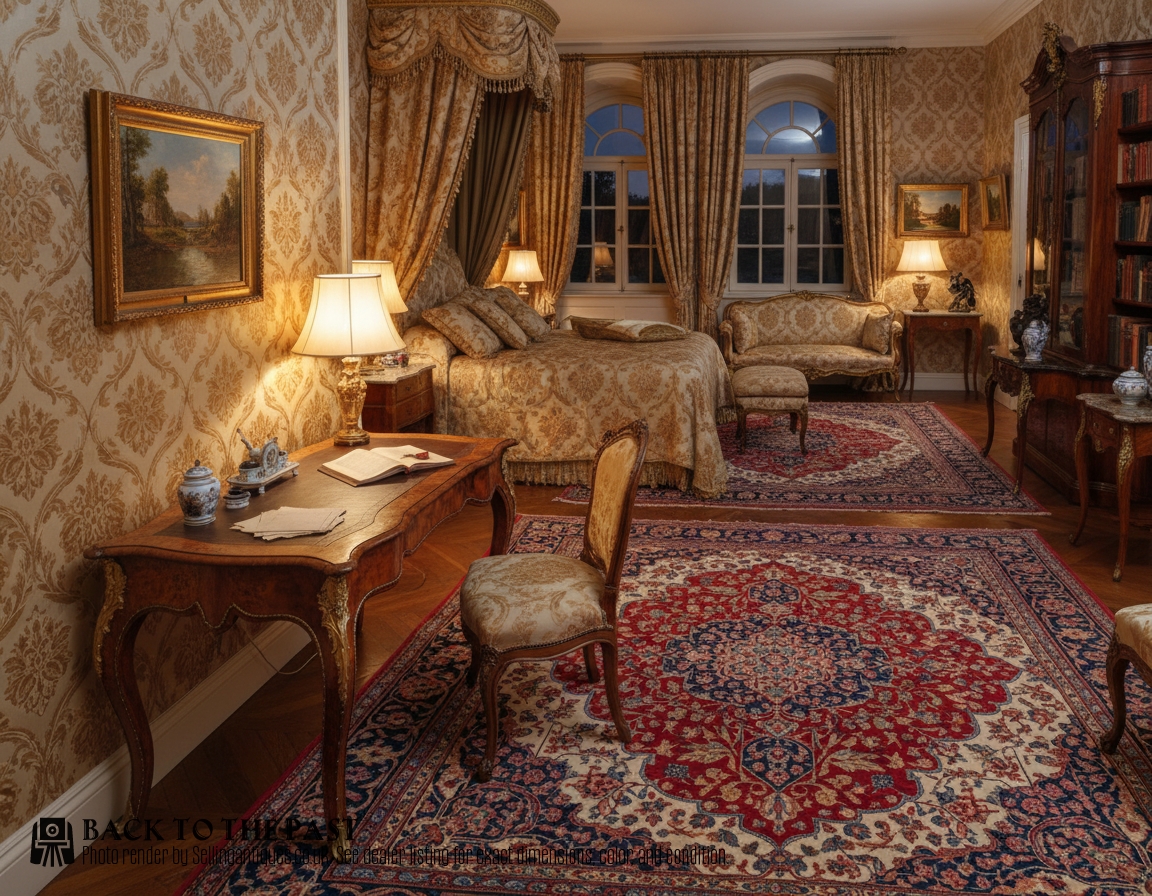
A rococo style desk brings fluid lines and gilt mounts into a room, offering a surface for correspondence.
Rococo Style Desk
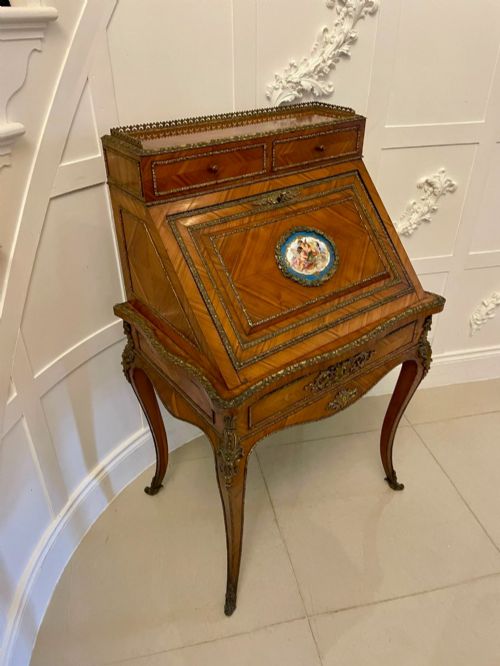
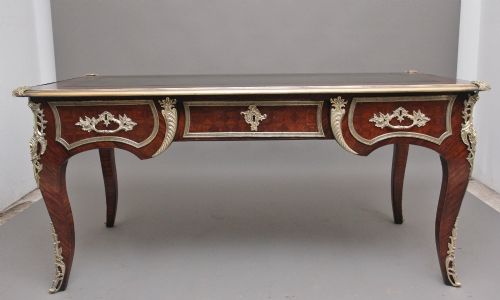
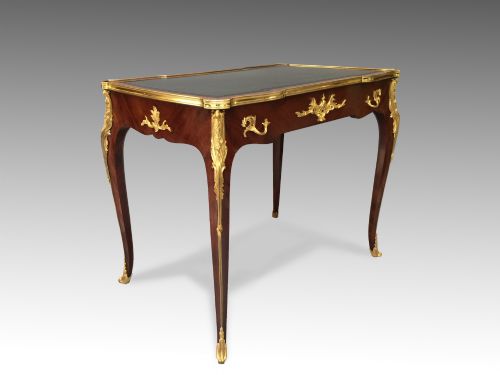
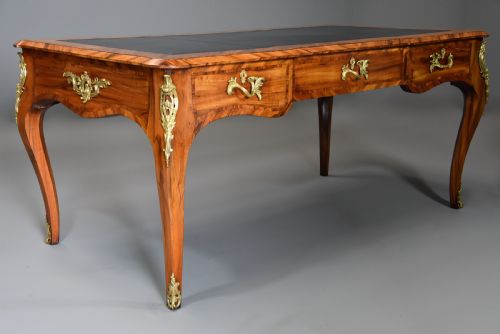
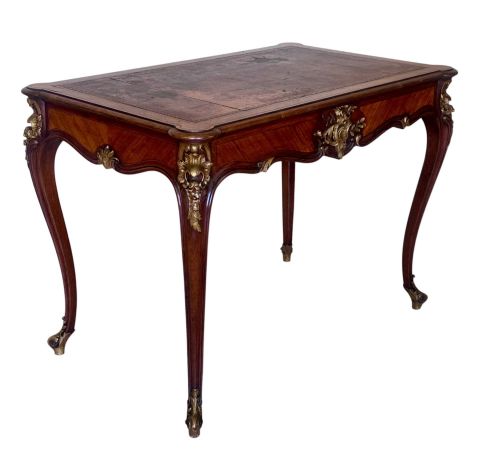
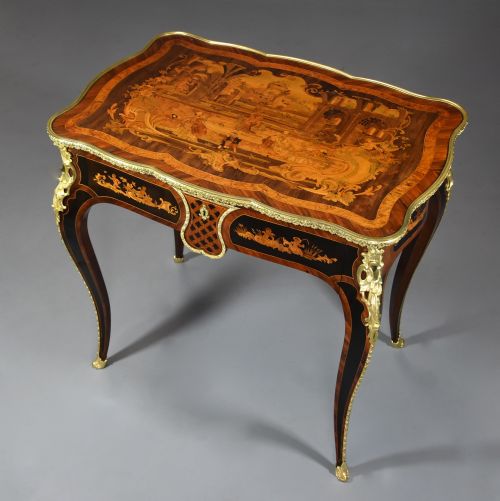
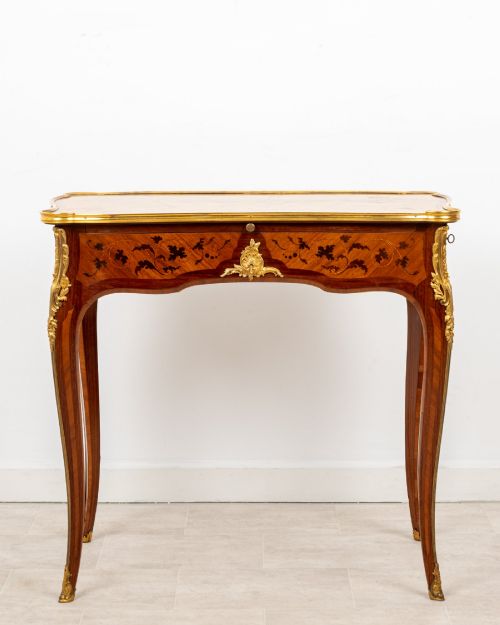
The term rococo style desk covers writing tables, bureau plats, and freestanding desks originating largely in the nineteenth century, drawing upon earlier French design. These pieces often exhibit serpentine forms, cabriole legs, and elaborate mounts that echo the eighteenth-century aesthetic of the Louis XV period.
The standard writing table or bureau plat is the most frequent form encountered on this page. These examples typically combine a finished reverse so they can stand in the centre of a room, paired with inset leather writing surfaces and concealed drawers.
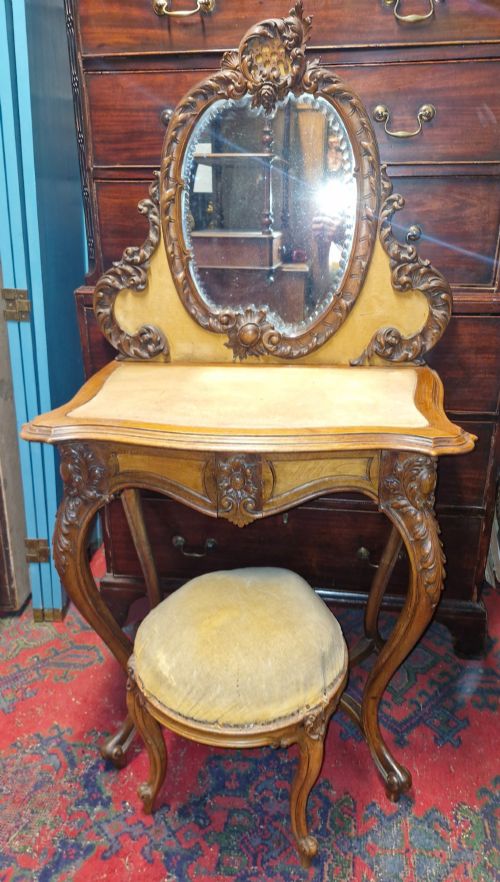
Variations extend to writing cabinets and kidney-shaped writing tables dated across the Victorian era and into the early twentieth century. Each variation maintains the characteristic asymmetrical scrollwork and ornamental cast metal associated with the revival periods.
Materials and Technique
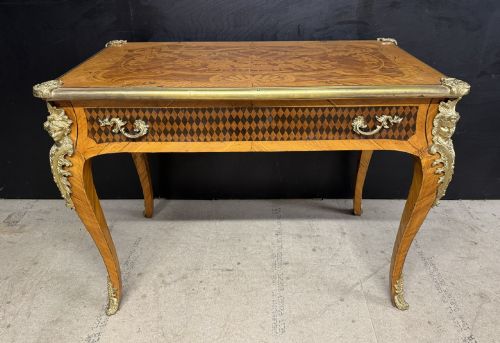
Construction relies heavily on timbers such as kingwood, walnut, and satinwood, often laid as marquetry veneers across the carcass. Cabinetmakers shaped these woods to follow sweeping, curved outlines rather than strict rectilinear geometry.
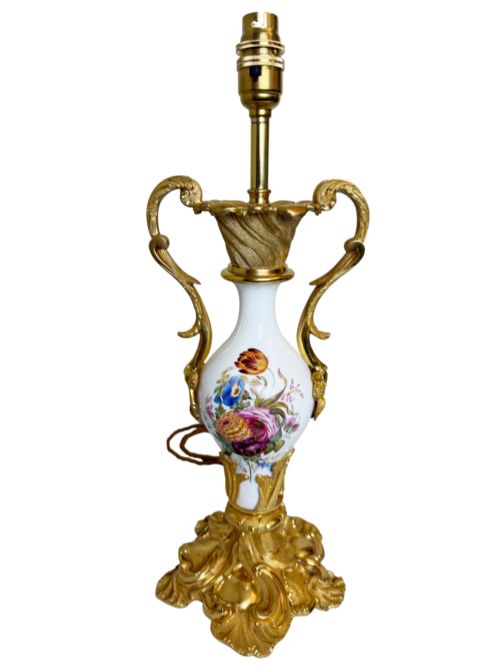
Cast ormolu and gilt bronze mounts define the aesthetic, secured at the corners, aprons, and legs to accentuate the contour. Leather inserts provide the working writing surface, while brass and porcelain elements complete the decoration.
An elephant once lent its shape to a bronze mantel clock, standing ready among the desks and writing tables.
Evaluating Execution
Quality rests in the crispness of the ormolu casting and the precision of the marquetry inlay. Superior examples demonstrate finely chased bronze mounts that sit flush against the timber, alongside carefully matched veneer grains following the curves of the desk.
The integrity of the structural joinery and the movement of the drawers separate workshop standards. A well-made bureau plat maintains rigidity across its serpentine frame without relying on the mounts for stability.
François Linke·Edwards & Roberts·CH. Jeanselme & Co·Durand·Achille Brocot
The Rococo Style Desk Glossary
- Ormolu
- Gilded bronze used for decorative mounts and accents on furniture. The technique involves applying finely ground gold amalgam to a bronze base.
- Marquetry
- Decorative veneer patterns formed from pieces of wood, shell, or ivory. Craftsmen assemble these elements to create pictorial or geometric designs on the surface.
- Kingwood
- A dense, heavily figured timber prized for its rich brown and violet hues. It appears frequently in nineteenth-century French cabinetwork.
Rococo Style Desk: Frequently Asked Questions
How do I care for the leather top?
The leather writing surface benefits from occasional dusting with a dry cloth and gentle conditioning to prevent cracking. Avoid using harsh chemical cleaners or excess moisture near the surrounding wood.
Protecting the leather from direct sunlight preserves the colour and the gilt tooling often found around the edges.
Where should I place a freestanding desk?
These desks are finished on all sides, making them suitable for positioning in the middle of a study or living space rather than against a wall. This placement showcases the rear marquetry and mount details.
Ensure there is adequate clearance around the piece for chairs and movement, as the curved cabriole legs extend slightly beyond the main body.
How do I distinguish nineteenth-century revival pieces?
Revival pieces from the nineteenth century show machine-sawn timber elements alongside hand-chased mounts, reflecting the manufacturing standards of the period. Secondary woods inside the drawers often include oak or pine.
Stylistic cues draw heavily from Louis XV designs, yet the construction methods and hardware fastenings indicate a later Victorian or continental workshop origin.