
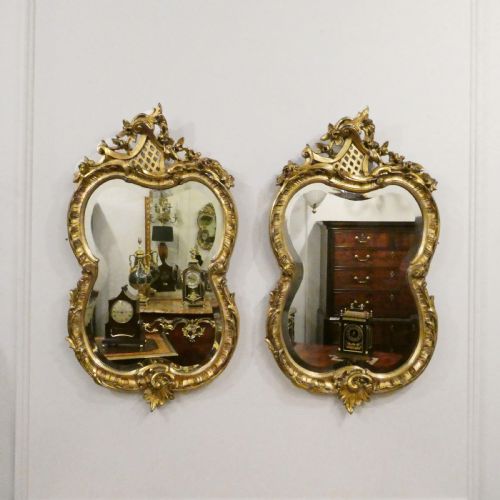


Rococo Scrollwork Wall Mirror
These rococo scrollwork wall mirrors bring asymmetrical movement and gleaming gilt surfaces into a room, catching the light with eighteenth-century flair.
Rococo Scrollwork Wall Mirror
A rococo scrollwork wall mirror takes the exuberant, curving forms of the mid-eighteenth century and reinterprets them across later periods. When searching for a rococo scrollwork wall mirror, you encounter pieces spanning from the eighteenth century through Victorian revivals and into the early twentieth century.
The dominant forms on this page include large wall mirrors, pairs of carved giltwood pieces, and brass or gesso frames. Origins stretch from English workshops to French chateaux and Italian studios, offering substantial decorative presence.
Materials and construction
Carved wood provides the structural foundation for many frames, overlaid with gesso and gold leaf to create reflective, metallic surfaces. Gilding techniques apply thin sheets of gold over prepared grounds, while other examples utilise cast brass for heavier, more industrial frames.
The glass plate sits within or behind the carved and moulded borders, secured by traditional backing methods suited to the period. Giltwood and carved mahogany dominate the heavier decorative items, contrasting with polished brass alternatives.
The listings span from the eighteenth century to 1920, incorporating giltwood, cast brass, gesso, and carved mahogany wall mirrors.
Indicators of quality
Depth and sharpness of the carving distinguish finer examples from simpler production pieces, particularly where acanthus leaves and C-scrolls twist in high relief. Deep undercutting in carved giltwood demonstrates the skill of the carver.
The quality of the gilding and the preservation of the original gesso surface dictate visual richness. Finer plates show age through minor oxidation rather than disruptive damage, maintaining clarity within ornate borders.
The Rococo Scrollwork Wall Mirror Glossary
- Giltwood
- Wood that has been coated with gold leaf or powder. This finish ages to a warm, muted tone rather than bright modern gold.
- Gesso
- A plaster-like mixture applied to wood frames to create a smooth surface for gilding. It holds crisp decorative detail before the gold leaf is laid.
- Rococo Revival
- A nineteenth-century style mimicking the ornate, curving ornamentation of the mid-eighteenth century. It emphasises asymmetry and natural motifs.
- Cast Brass
- Molten metal poured into a mould to form rigid frame structures. This technique allows for repeating ornamental patterns and crests.
- Acanthus
- A carved ornamental motif based on the foliage of the Mediterranean plant. It frequently caps the corners and crests of these frames.
Rococo Scrollwork Wall Mirror: Frequently Asked Questions
How should I clean an antique gilt surface?
Dust gently with a dry, soft ostrich feather duster to remove surface particles without disturbing delicate gold leaf layers.
Avoid all liquid cleaners, damp cloths, and chemical sprays, which strip historic gesso and gilding.
Are these mirrors French or English?
The listings include pieces attributed to French, Italian, and English workshops, each showing distinct regional carving traits.
Italian pieces often feature deep Florentine scrollwork, while English variants lean towards Chippendale influences.
How do I date a rococo style mirror?
Examine the timber behind the frame, the composition of the gesso, and the manufacturing marks on the glass or metal.
Revival pieces from the nineteenth and twentieth centuries often use machine-cut backing boards and brighter modern brass alloys.
What is a mask crest?
A mask crest is a sculpted human, grotesque, or mythological face incorporated into the top apex of the mirror frame.
This sculptural element draws the eye upward and anchors the asymmetrical scrollwork design.