
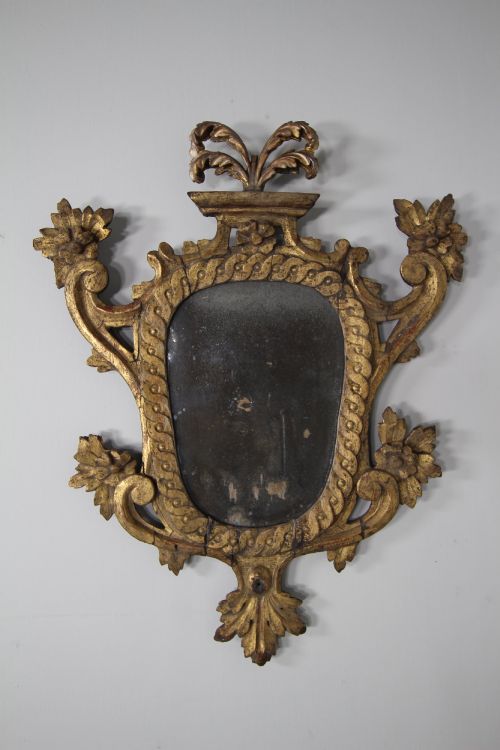
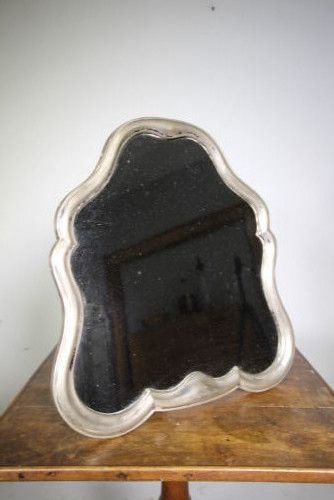
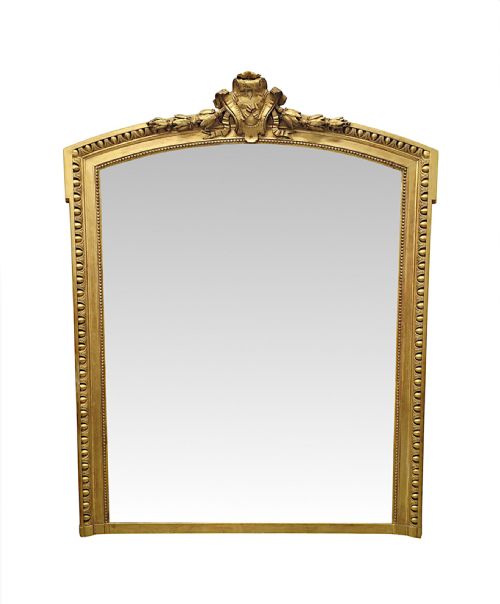


Cartouche Gilt Wall Mirror
A cartouche gilt wall mirror brings fluid, asymmetric 18th-century movement and brilliant reflective depth to a room.
Cartouche Gilt Wall Mirror
A cartouche gilt wall mirror is an ornamental looking glass framed by an asymmetric, scrolling shield-like border that draws directly from Rococo design. When you search for a cartouche gilt wall mirror, you encounter pieces originating from the 18th century, the Regency era, and the 19th century revival periods.
The dominant forms on this page include grand overmantel mirrors, hall mirrors, and smaller wall-hung pieces of Italian or French origin. Many examples feature carved wooden structures defined by C-scrolls, foliage, and the characteristic central cartouche motif.
Italian and French makers shaped the tradition of these mirrors, producing variations that range from compact 18th-century Italian rococo examples to large 19th-century French chateau and rococo revival pieces. The glass plate itself is frequently original, often displaying characteristic foxing that marks its age.
How they were made
Makers constructed the foundational framework of a cartouche gilt wall mirror using carved wood or gesso applied over a wooden base. Carvers shaped deep scrolls and organic motifs by hand before applying layers of size and gold or silver leaf.
Gilding techniques involved laying thin metallic leaf over a prepared gesso ground, which was then burnished to achieve a brilliant reflective sheen or left with a matte texture. Silver leaf and silver gilt also appear, offering a cooler metallic tone compared to traditional yellow gold.
Listings feature 18th-century, Regency, and 19th-century periods, utilising glass, giltwood, gesso, and silver leaf in Italian Rococo and French styles.
What varies in quality
The crispness and depth of the carved woodwork define the visual merit of the piece, separating master carvers from routine workshops. Sharp, undercut scrolls and balanced asymmetry demonstrate a surer hand than flat, mechanical moulding.
The integrity of the original gilding and the character of the mirror plate itself contribute heavily to the standing of the piece. Surviving 18th-century mercury plates or early glass with natural foxing hold greater historic weight than later replacement glass.
The Cartouche Gilt Wall Mirror Glossary
- Cartouche
- An ornamental frame or tablet resembling a rolled-up piece of parchment or a scrolled shield, often forming the central crest or outline of the mirror.
- Giltwood
- Wood that has been coated with gold leaf or metal leaf, creating a rich metallic finish that catches interior candlelight or daylight.
- Gesso
- A plaster-like mixture applied to wood frames to provide a smooth, absorbent surface for subsequent gilding and fine carving detail.
- Foxing
- The age-related spots, speckles, and discoloration that develop naturally within the silvering of antique mirror glass over decades.
- Overmantel mirror
- A large horizontal or arched looking glass specifically designed to hang on the wall directly above a fireplace mantel.
Cartouche Gilt Wall Mirror: Frequently Asked Questions
What is a cartouche mirror?
A cartouche mirror is an ornate looking glass enclosed within a frame shaped like an asymmetric scroll, shield, or rolled parchment. These pieces originated during the height of the Rococo movement in Europe.
They serve as decorative wall centerpieces, historically hung in salons, halls, and above mantelpieces to amplify light and space within grand interiors.
How do I date a gilt mirror?
Dating relies on examining the construction of the wooden frame, the composition of the gesso, and the manufacturing characteristics of the glass plate. 18th-century examples often display hand-carved depth and heavy manual tooling.
Later 19th-century revival pieces mimic these earlier Rococo forms but frequently use machine-prepared components or different backing techniques, helping to distinguish their period of manufacture.
Are original mirror plates common?
Original mirror plates do survive in many antique examples, often identifiable by slight distortions in the reflection and natural age spots known as foxing. These blemishes confirm the historical continuity of the glass.
Many mirrors from the 18th and 19th centuries retain their initial plates, though some have received replacements over generations of domestic use and maintenance.
Where should I hang a gilt wall mirror?
These mirrors suit principal living areas, dining rooms, and entrance halls where their reflective properties and sculptural frames can function as primary focal points. Overmantel positions above fireplaces remain the traditional placement.
Ensure the wall structure can support the weight of a heavy carved wood and gesso frame, and hang the piece securely using appropriate hardware rated for antique mirrors.