


Small Ornate Gilt Mirror
These small ornate gilt mirror examples bring brilliant reflected light and intricate historic character into compact spaces.
Small Ornate Gilt Mirror
When you search for a small ornate gilt mirror, you encounter compact reflective pieces spanning the eighteenth century through to the early twentieth century. The selection typically includes wall mirrors, vanity mirrors, console tables with matching mirrors, and pairs originating from British, French, Italian, and Spanish workshops.
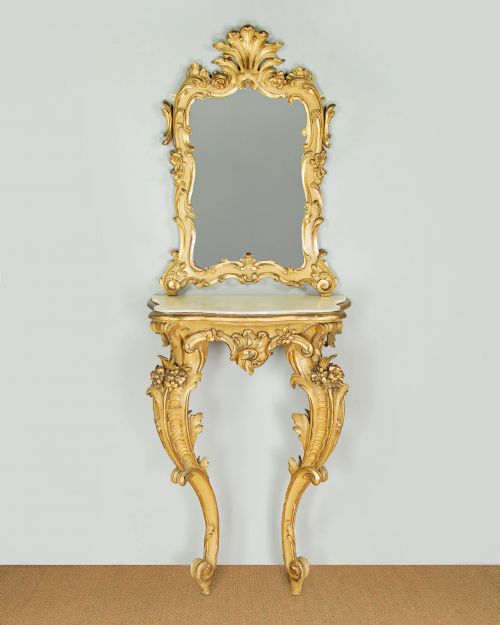
The most common formats you meet on this page are wall-hanging pieces displaying revival aesthetics, particularly Rococo Revival, French Chateau, and Florentine styles. These items range from simple gilt frames to deeply carved wooden structures adorned with gesso and gold leaf.
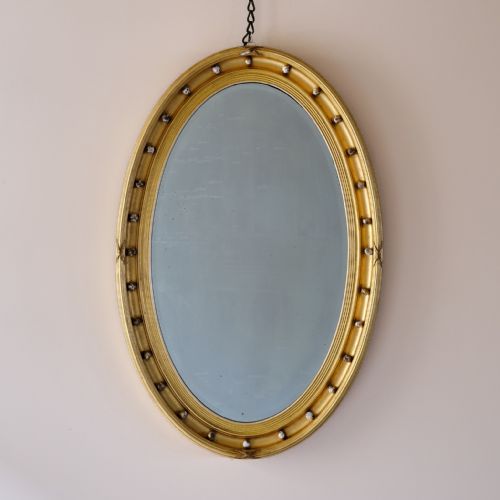
Makers and artisans across these periods produced both rectangular and oval variations designed to enhance smaller rooms, hallways, and dressing areas. Their compact proportions make them versatile additions to period and eclectic interiors alike.
How they were made
The construction of these pieces relies on carved wood foundations built from timber substrates. Artisans applied layers of gesso to these wooden frames to create smooth surfaces suitable for intricate relief carving and detailing.
Guilders then applied gold leaf to the prepared gesso and wood surfaces to achieve the characteristic metallic brilliance. Alongside these gilded wooden frames, selected examples incorporate materials such as brass, marble, and velvet elements.
One clever nineteenth-century pairing matches two distinct gilt mirrors, proving that even antique reflections enjoy good company.
What varies in quality
The primary distinction across the range lies in the depth and precision of the carving work on the frame. Pieces featuring hand-carved giltwood display crisper relief and finer detail than those relying purely on moulded gesso ornamentation.
Quality also shows in the handling of the gold leaf application and the preservation of the original reflective glass panel. Superior examples maintain crisp definition in their decorative motifs, reflecting the skill of the period workshop.
The Small Ornate Gilt Mirror Glossary
- Giltwood
- Wood that has been coated with gold leaf or gold paint. This technique provides the rich metallic surface seen on traditional decorative frames.
- Gesso
- A plaster-like mixture applied to wood frames to create a smooth base for carving and gilding. It allows artisans to shape intricate ornamental details.
- Rococo Revival
- A nineteenth-century design style inspired by the asymmetrical C-scrolls and natural motifs of the French Rococo period. It dominates many ornate mirror frames from this era.
- Florentine
- A style originating from Florence, Italy, characterised by ornate, deeply carved foliage and scrolls. These frames often feature dense surface ornamentation.
- Console Table
- A table designed to stand against a wall, frequently paired with a matching wall mirror. The listings include combined console and mirror sets from the early twentieth century.
Small Ornate Gilt Mirror: Frequently Asked Questions
Where should I hang a small ornate gilt mirror?
These compact mirrors suit smaller wall spaces, hallways, or above dressing tables where they add light and focal interest without dominating the room.
Their varied shapes, including oval and rectangular formats, allow them to fit narrow architectural gaps or complement existing furniture arrangements.
How do I identify a Rococo Revival mirror?
Rococo Revival pieces feature characteristic asymmetrical scrolls, shell motifs, and naturalistic plant forms carved into the frame. This style draws on eighteenth-century aesthetics but was widely reproduced during the nineteenth and early twentieth centuries.
The presence of dynamic, flowing curves rather than strict symmetry typically signals this decorative approach.
What is the difference between giltwood and gesso?
Giltwood refers to solid wood that has been gilded with gold leaf, whereas gesso is the plaster base applied beneath the gold leaf to form relief decorations.
Many frames combine both materials, using a carved wood structure coated in gesso before the final gilding process takes place.
Are these mirrors heavy to hang?
Despite their smaller dimensions, frames constructed from solid wood, gesso, and glass carry noticeable weight and require secure wall fixings.
Checking the fixing points on the back of the frame ensures safe installation on standard interior walls.