




Georgian Style Rococo Mirror
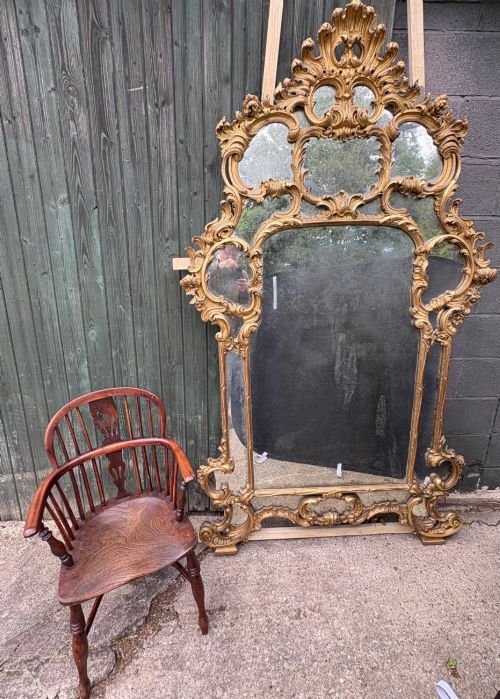
A georgian style rococo mirror brings organic fluidity and carved theatricality to a room, channelling eighteenth-century opulence through ornate frames.
Georgian Style Rococo Mirror
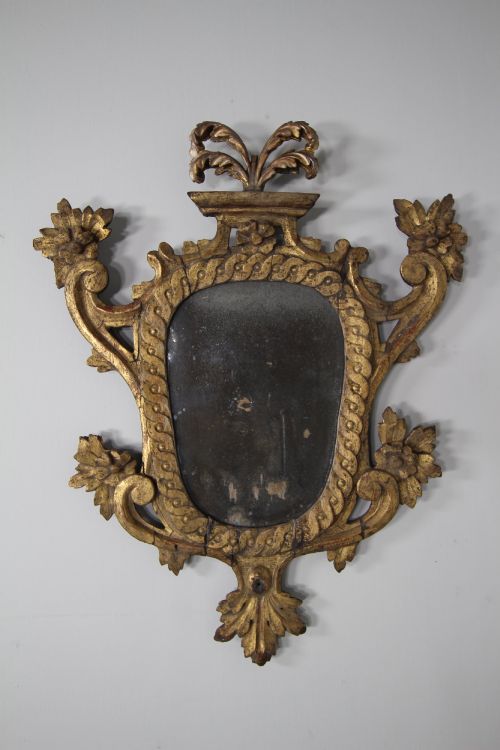
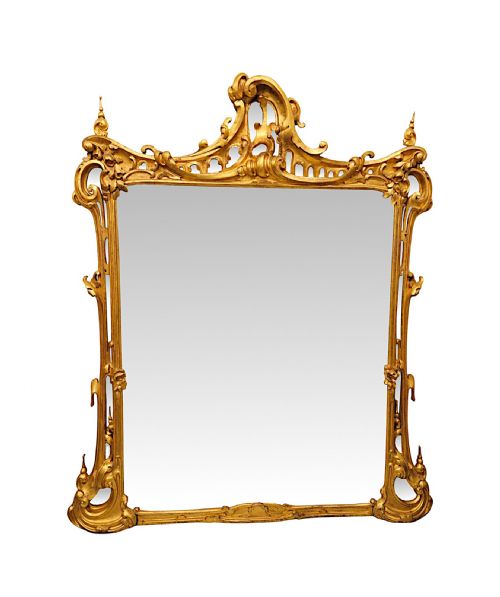
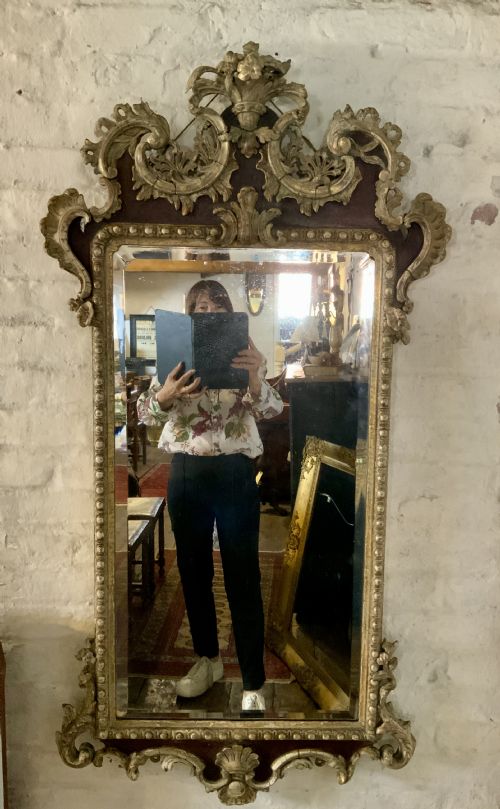
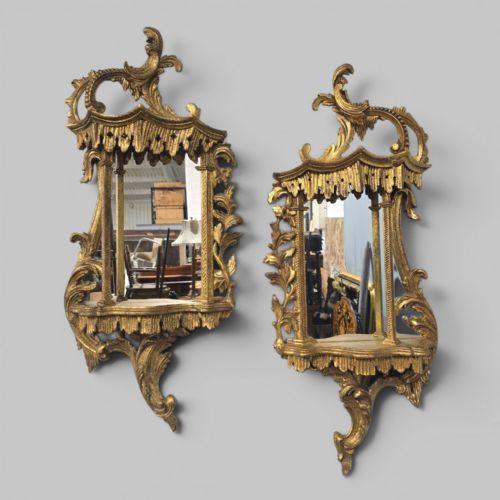
A georgian style rococo mirror combines the asymmetry and C-scrolls of the mid-eighteenth century with the architectural proportions favoured during the Georgian era and later revival periods. These pieces appear as wall mirrors and larger overmantel formats, shaped by the decorative vocabulary of Chippendale and Italian design.
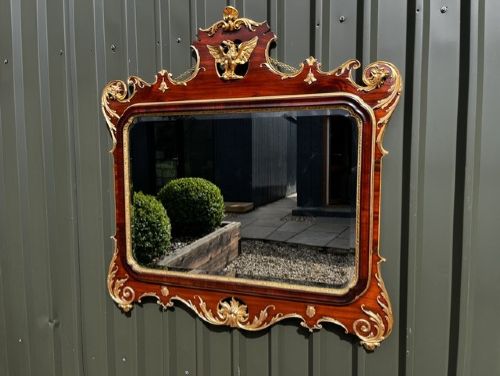
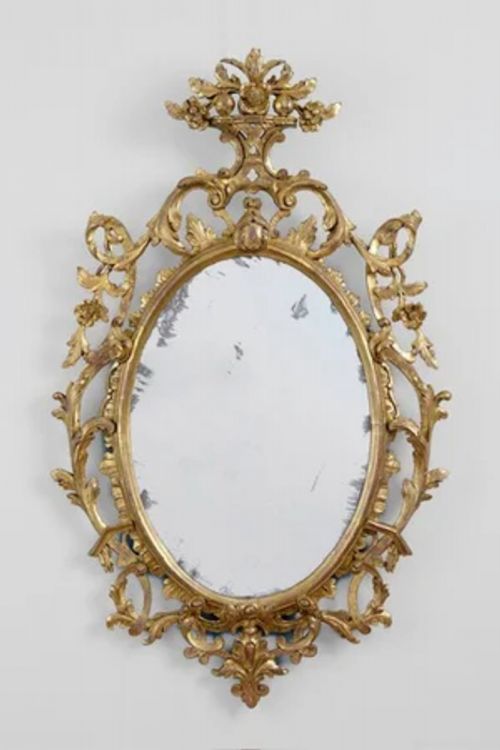
The buyer meets originals from the eighteenth century alongside revival pieces made in the nineteenth and early twentieth centuries. Common motifs include asymmetrical foliage, giltwood surfaces, and occasional figurative details such as birds.
Forms range from small oval wall pieces to large overmantel mirrors intended for prominent placement above a fireplace. The prevailing aesthetic relies on carved wood frames finished with gesso and gold leaf.
How they were made
Makers shaped the frames from timber such as mahogany, walnut, or softer woods, which were then carved by hand with deep relief scrolls and floral motifs. Wood framing provided the structural integrity required to support heavy glass plates and elaborate crestings.
Applied gesso created the smooth, sculptural bed necessary for crisp detailing before the application of gold leaf or paint. Giltwood surfaces catch the light, while painted variants utilise pigment directly on the carved wooden substrate.
Watch closely for hidden squirrels alongside the traditional birds perched within the carved foliage of nineteenth-century Irish pieces.
What varies in quality
The crispness of the carving dictates the distinction between standard production and superior craftsmanship, as skilled hands achieved greater depth and undercut precision in the foliage and scrolls. Inferior examples present softer, shallower relief work that lacks the dynamic movement inherent to the style.
Original mercury glass plates or early replacements impart a characteristic mottled reflection that differs from modern flat glass. The integrity of the original gesso and gilding layer also separates untouched pieces from heavily restored surfaces.
The Georgian Style Rococo Mirror Glossary
- Giltwood
- Wood carved and coated with gold leaf over a prepared gesso ground. This finish provides the bright, reflective surface typical of formal eighteenth-century wall furniture.
- Gesso
- A mixture of plaster of Paris and glue binder applied to carved wood. It creates a smooth surface suitable for intricate moulding and gilding.
- Overmantel mirror
- A large mirror designed specifically to hang above a fireplace mantelpiece. These pieces often feature wide horizontal proportions and elaborate crestings.
- Chippendale
- A style of English furniture design originating in the mid-eighteenth century. It draws on rococo, gothic, and Chinese influences.
- Parcel gilt
- A finishing technique where only specific portions of a wooden or painted object receive gold leaf. This highlights carved details against a contrasting background such as walnut.
Georgian Style Rococo Mirror: Frequently Asked Questions
Where should I hang a rococo overmantel mirror?
These large mirrors sit naturally above a fireplace mantel where they anchor the room and reflect natural light. Their horizontal proportions complement the width of a hearth.
Ensure the wall construction supports the substantial weight of carved wood and glass before mounting.
How do I distinguish an eighteenth-century mirror from a revival piece?
Examine the construction joints, the backing boards, and the wear patterns on the gesso and gold leaf. Eighteenth-century frames often show tool marks and timber shrinkage consistent with age.
Revival pieces from the nineteenth or twentieth century typically utilise machine-cut elements and more uniform patination.
What is a Ho-Ho bird?
A Ho-Ho bird is a stylized phoenix figure frequently incorporated into Chinese Chippendale and rococo crestings. It perches atop the mirror frame amidst swirling foliage and C-scrolls.
This decorative motif reflects eighteenth-century European fascination with oriental art forms.
Can these mirrors be cleaned safely?
Dust the carved wooden frame gently with a dry, soft brush to protect the delicate gesso and gold leaf layers. Avoid liquid cleaners or polishes that might lift the gilding.
Clean the glass plate sparingly with a cloth dampened slightly with water, keeping moisture away from the frame edges.