

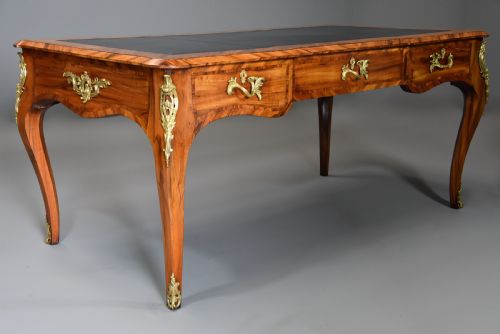

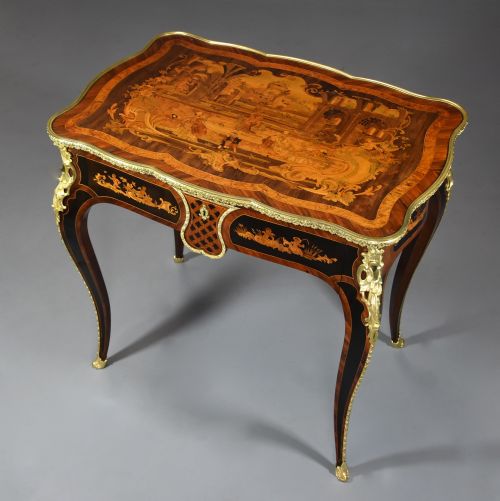
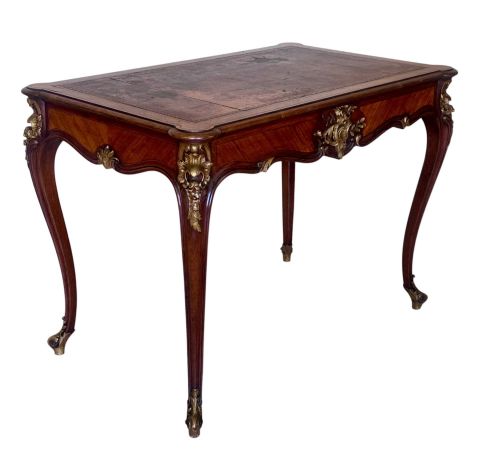
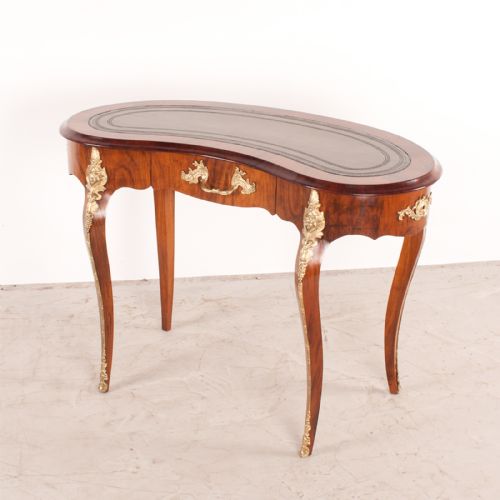


Rococo Revival Writing Desk
A rococo revival writing desk brings 19th-century French curves, rich veneers and gilt mounts into a room.
Rococo Revival Writing Desk
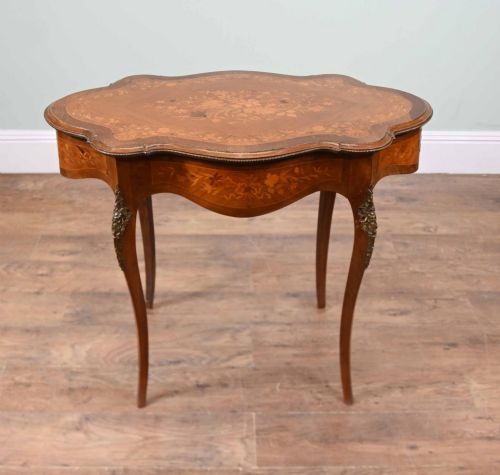
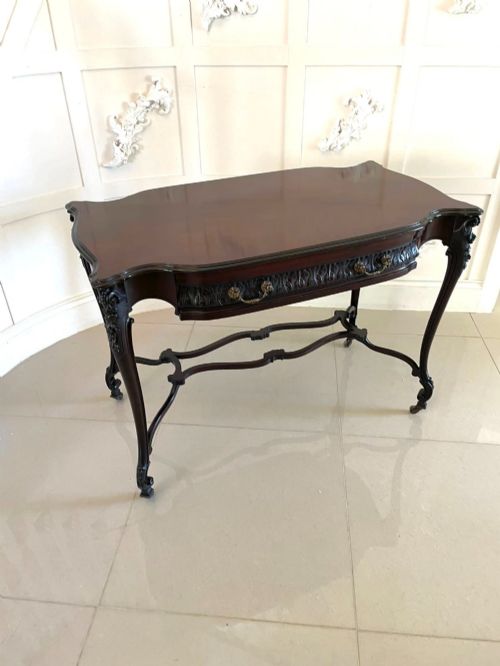
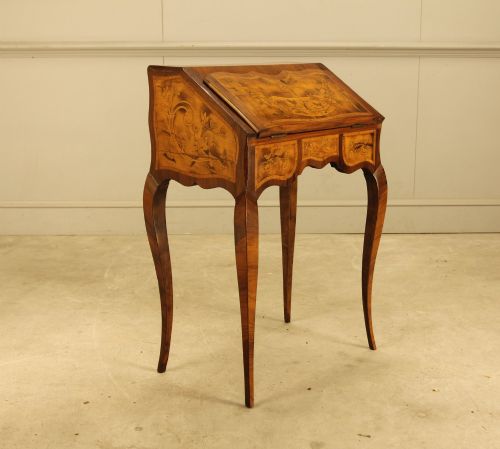
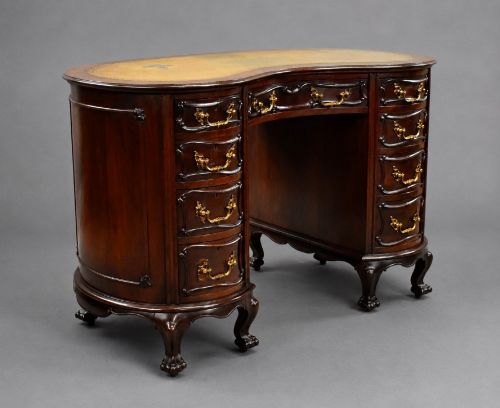
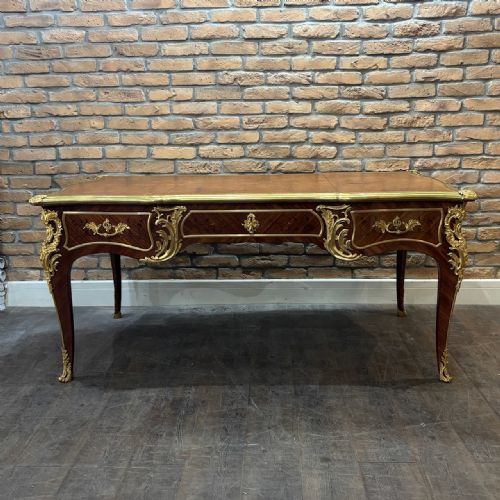
Most examples originate from French workshops or British makers adopting continental tastes, employing freestanding centre table formats or smaller writing cabinets. The structural lines rely on cabriole legs and asymmetrical flourishes typical of Louis XV revivals.
Buyers encounter walnut, kingwood and mahogany carcasses enhanced by marquetry and parquetry patterns. These tables serve as functional writing surfaces while functioning visually as decorative centrepieces.
How They Were Made
Cabinet makers built these desks using foundational hardwoods such as mahogany, walnut and oak, applying decorative veneers including kingwood, satinwood, rosewood and burr walnut over the surfaces. Marquetry and parquetry layouts created intricate geometric or floral patterns across the timber.
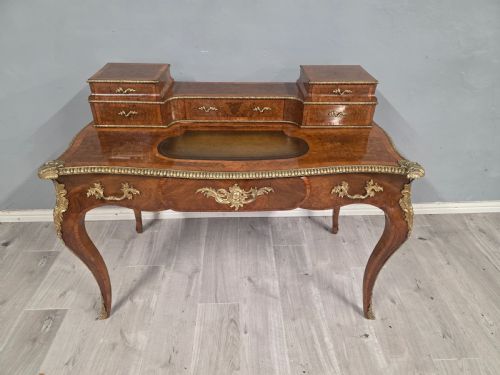
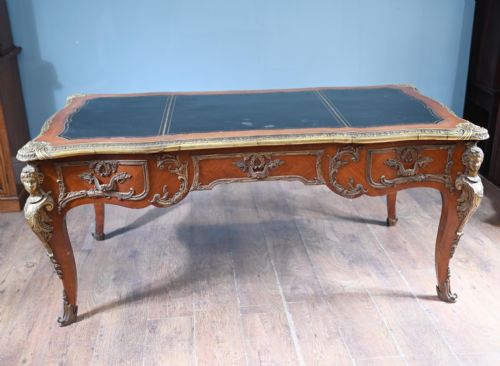
Carcasses incorporated cast ormolu and gilt bronze mounts secured along edges, feet and drawer friezes to accentuate the curved contours. Leather writing inserts frequently lined the top surfaces, bordered by gilt tooling.
Workshops utilised specialised finishes like Vernis Martin lacquer panels on specific secretaire cabinets and writing desks to emulate Asian decorative arts popular in French furniture.
Rococo Revival Writing Desk Retail Price Guide 2026
Typical asking prices for rococo revival writing desk among the pieces listed under this phrase on Sellingantiques today, from the lower quarter to the upper quarter. They describe what is for sale here now, not the wider market.
Secret drawers hidden within secretaire cabinets provide a designated space for confidential correspondence away from prying eyes.
What Varies in Quality
The refinement of the ormolu mounts dictates much of the distinction between standard and exceptional pieces, where chased detailing and weight signal superior execution. Lesser examples rely on stamped brass with minimal hand finishing.
Veneer selection and timber matching reveal workshop standards, particularly in the precision of marquetry cutouts and the grain alignment across serpentine drawers. Plain timber surfaces without thoughtful parquetry sit at the simpler end of production.
Attribution to documented makers such as Gillows, Holland and Son, or Edwards and Roberts elevates a piece through verified construction standards and signature stamps.
CH Jeanselme and Co·Edwards and Roberts·Holland and Son·Maison Millet·Gillows
The Rococo Revival Writing Desk Glossary
- Bureau plat
- A freestanding double-sided writing table fitted with one or more drawers in the frieze. These desks typically feature leather-lined tops and cabriole legs.
- Ormolu
- Gilt bronze mounts applied to furniture edges and corners for decoration. The technique involves a mercury amalgam applied to bronze.
- Marquetry
- The art of applying small pieces of veneer to a structure to form decorative patterns. Craftsmen use woods like satinwood, kingwood and tulipwood.
- Vernis Martin
- A type of simulated Japanese lacquer developed in France during the 18th century. It appears on panels of cabinets and writing desks.
- Serpentine
- A furniture front or edge shaped with a concave centre flanked by two convex curves. This undulating line characterises rococo revival forms.
Rococo Revival Writing Desk: Frequently Asked Questions
How do I identify the wood used?
Examination of the grain and colour reveals whether a surface uses solid timber or a veneer like kingwood, walnut or satinwood. Burr walnut shows distinct swirling patterns, while kingwood displays rich brown tones with darker striping.
Most revival desks employ a primary hardwood structure covered in decorative exotic veneers across the exterior surfaces.
Where were these desks made?
Many examples originate in France, reflecting the enduring influence of Louis XV design during the 19th century. British cabinet makers also produced substantial numbers for the domestic market.
Workshops in London and Paris competed to supply ornate tables featuring marquetry, parquetry and cast ormolu mounts.
How do I care for leather desk tops?
Leather writing surfaces require gentle cleaning with a damp cloth and occasional treatment with appropriate leather dressings to prevent drying. Avoid harsh chemicals or excessive moisture that can damage the gilt tooling along the edges.
Maintaining a stable room temperature protects both the leather insert and the underlying timber carcase from warping.