


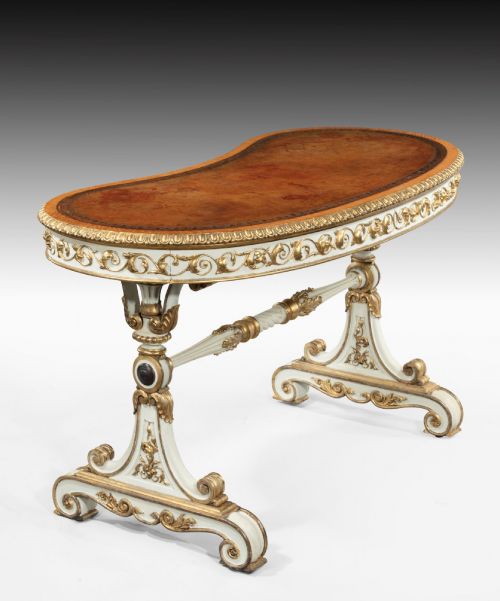
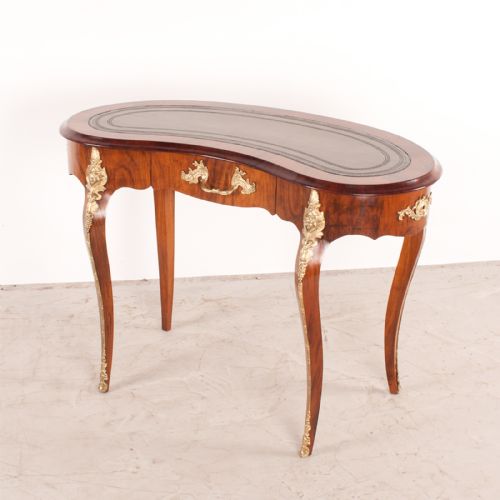
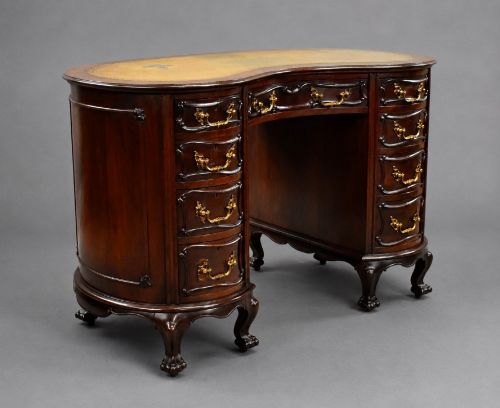
Shaped Leather Writing Desk
A shaped leather writing desk brings elegance to a study, offering a curved surface wrapped in supple hide.
Shaped Leather Writing Desk
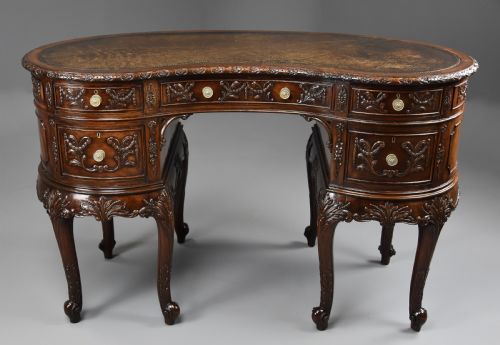
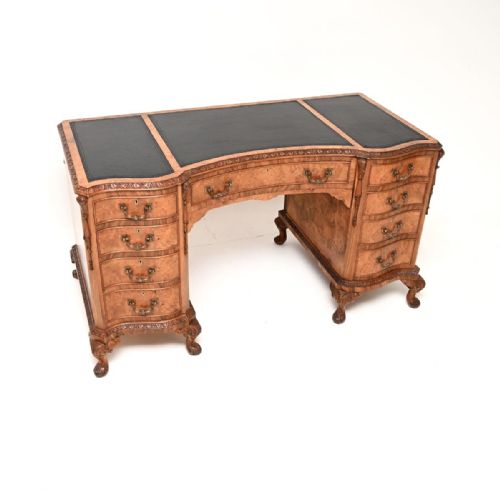
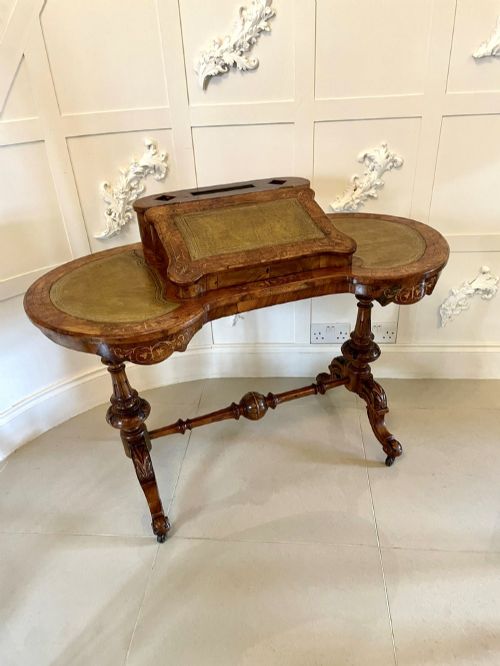
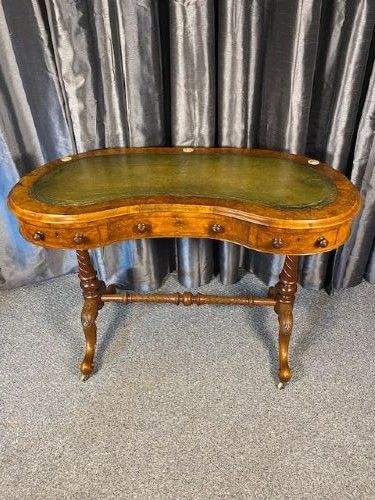
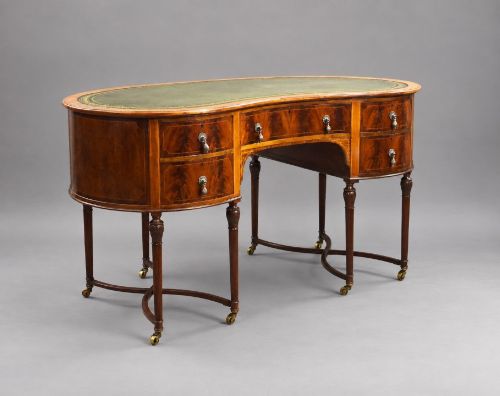
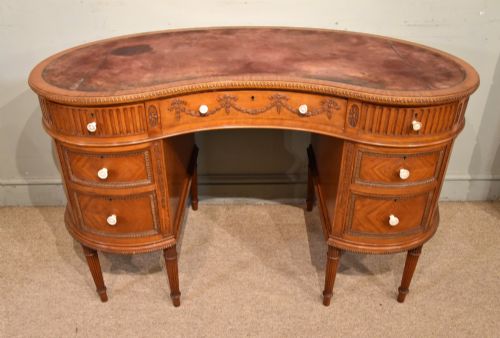
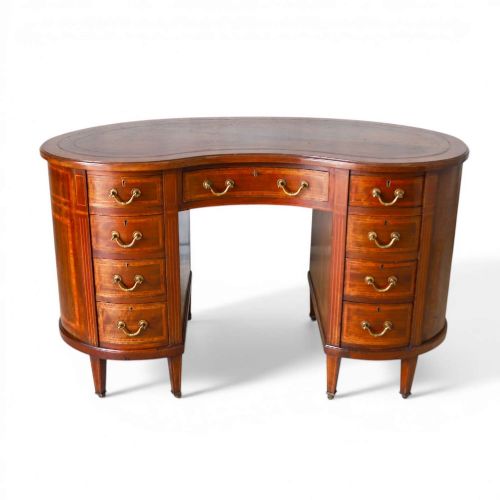
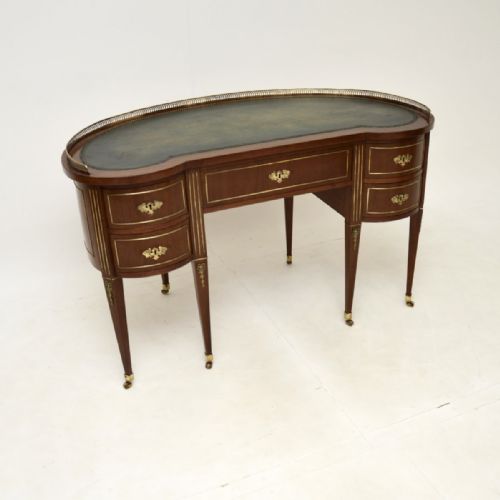
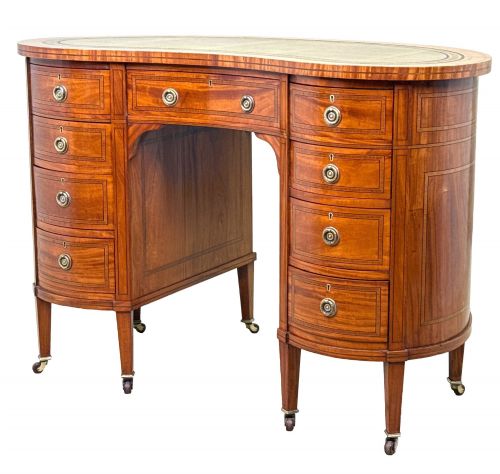
A shaped leather writing desk principally takes the form of a kidney-shaped writing table or a serpentine pedestal desk. These pieces emerge across the Victorian and Edwardian eras, alongside earlier Regency and 19th-century examples.
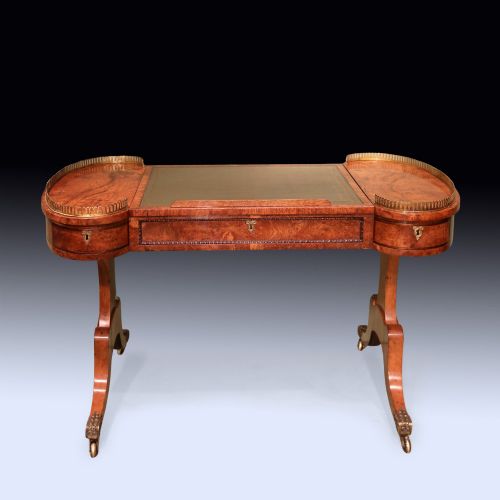
The kidney silhouette dominates the selection, designed to curve gently around the seated writer. Makers also produced rectangular and partner desks featuring shaped outlines and inset leather writing surfaces.
Originating largely from English workshops, these items served grand libraries and private boudoirs alike as functional centres for correspondence.
Materials and construction
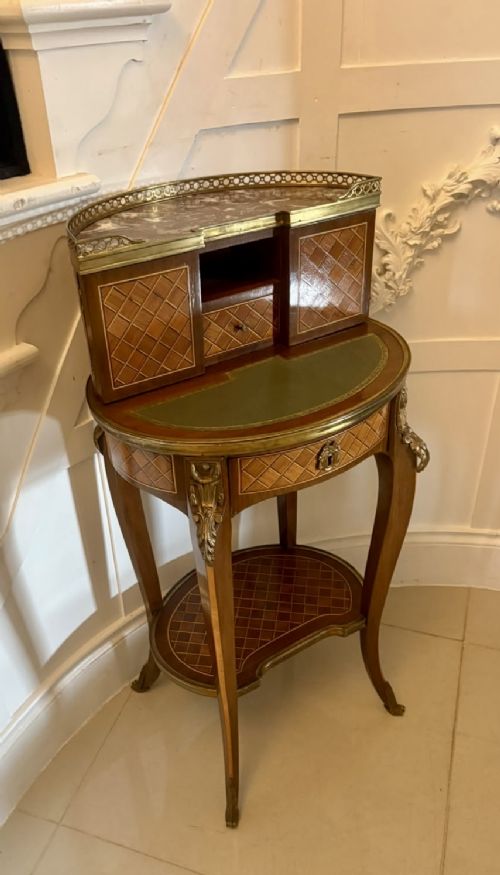
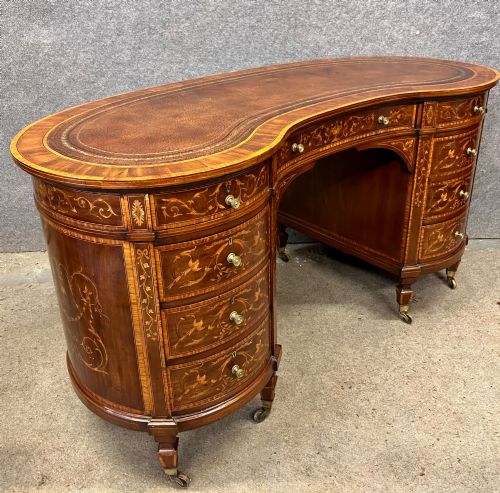
Craftsmen built carcass structures from dense timbers such as mahogany, walnut, and burr walnut, frequently embellishing them with satinwood, kingwood, or marquetry inlay. Many pieces incorporate brass fittings, giltwood details, or ormolu mounts to accent the curves.
The defining writing surface consists of leather, often tooled with gold leaf, inset into the top. Carved woodwork and painted finishes appear on select models from the Victorian and Edwardian periods.
Shaped Leather Writing Desk Retail Price Guide 2026
Typical asking prices for shaped leather writing desk among the pieces listed under this phrase on Sellingantiques today, from the lower quarter to the upper quarter. They describe what is for sale here now, not the wider market.
Some kidney desks were specifically styled as ladies' writing tables for boudoir correspondence.
Judging execution
Quality rests upon the selection of timber veneers, such as richly figured burr walnut or flame mahogany, matched symmetrically across the curved surfaces. Superior examples display crisp hand-carving and meticulous marquetry inlay rather than mechanical ornamentation.
The integrity of the leather insert and the smoothness of the drawers distinguish finer pieces. Maker attribution to notable workshops also elevates the standing of a desk.
Maple & Co·Edwards & Roberts·Wolfe & Hollander·Shapland & Petter·Gillows of Lancaster
The Shaped Leather Writing Desk Glossary
- Kidney-shaped
- A curved desk profile resembling a bean, designed to wrap around the user. This shape gained popularity during the Victorian and Edwardian eras.
- Burr walnut
- A prized timber cut from walnut tree growths, yielding intricate, swirling grain patterns. It forms the primary decorative surface on many high-end writing tables.
- Ormolu
- Gilded bronze mounts applied to furniture for decorative effect. French-influenced pieces frequently utilise this technique.
- Marquetry
- The art of applying pieces of veneer to a structure to form decorative patterns. Craftsmen utilised various exotic woods to create floral or geometric motifs.
- Serpentine
- A curved line of furniture design featuring a convex centre flanked by concave ends. This contour appears on several large pedestal desks in the selection.
Shaped Leather Writing Desk: Frequently Asked Questions
What is a shaped leather writing desk?
A shaped leather writing desk is a antique table featuring a curved silhouette, such as a kidney or serpentine form, topped with an inset leather writing panel. These pieces were constructed primarily during the Victorian and Edwardian periods.
They combine utility with decorative cabinet-making, utilising timbers like mahogany and burr walnut.
Where were these desks used?
Original placement included grand libraries, private studies, and ladies' boudoirs. Their finished backs often allowed them to sit freestanding in the middle of a room.
They provided a dedicated surface for correspondence and estate management.
How do I care for the leather top?
Maintain the leather by keeping it away from direct sunlight and heat sources that might dry the material. Gentle cleaning with appropriate leather balms preserves the gilt tooling.
Avoid excessive moisture during routine maintenance.
How to identify an Edwardian piece?
Edwardian examples often display lighter satinwood inlays, Sheraton Revival influences, and refined mahogany frames. These desks date from the period around nineteen hundred.
Construction techniques from this era balance earlier Victorian heft with more delicate proportions.