


Rococo Revival Porcelain Pair
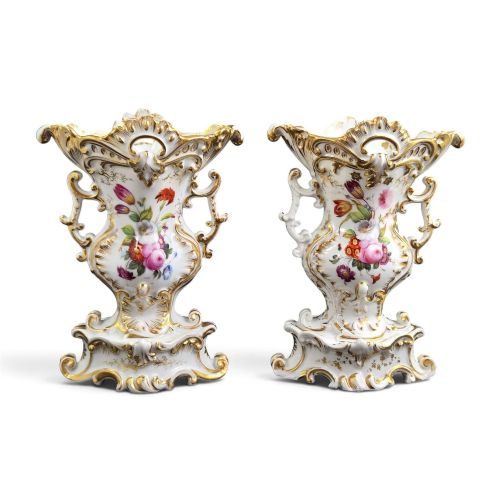
These rococo revival porcelain pair pieces bring exuberant asymmetrical curves, rich gilding and hand-painted scenes into a room.
Rococo Revival Porcelain Pair
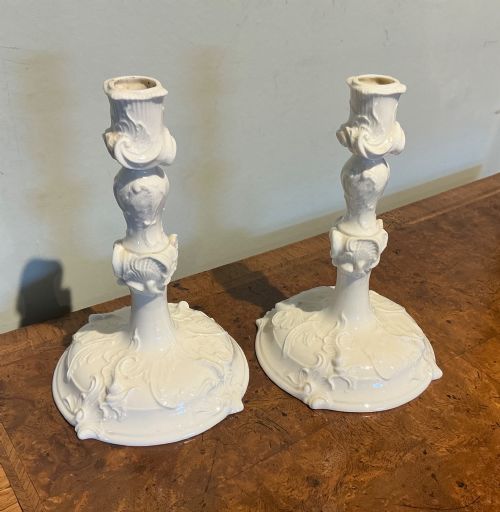
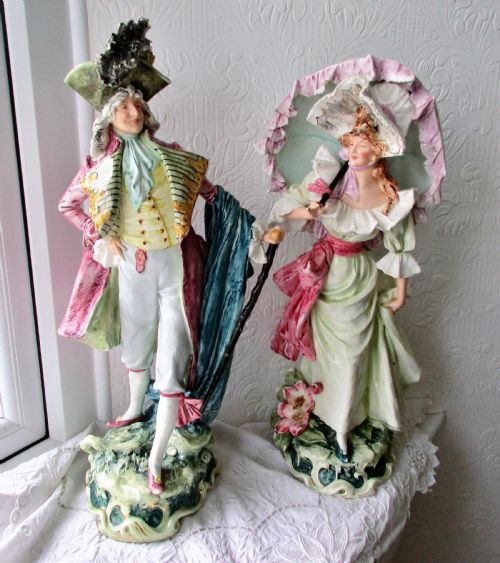
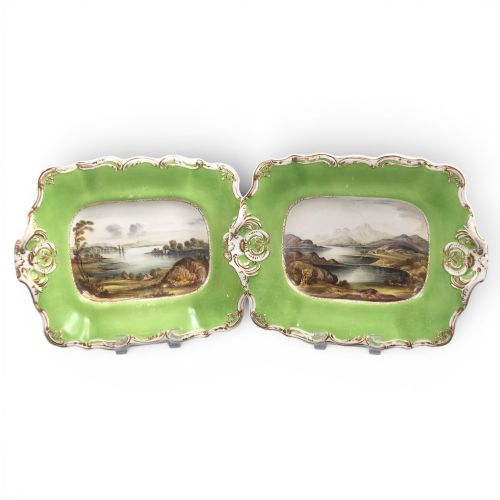
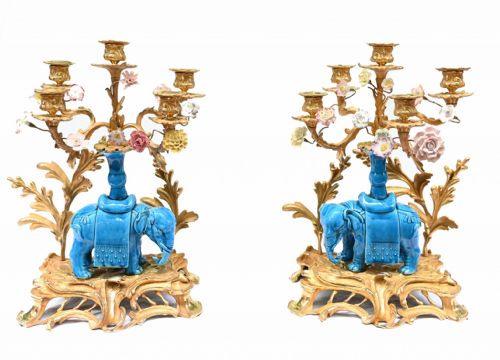
When you search for a rococo revival porcelain pair, you encounter decorative objects designed in matched sets, predominantly originating from nineteenth-century European factories. The selections available on this page most commonly take the form of figural groups, lidded vases, and candelabras produced during the Victorian era and the decades immediately following. Makers across France, Germany, and England drew inspiration from earlier French court aesthetics to create symmetrical dual compositions for mantelpieces and cabinets.
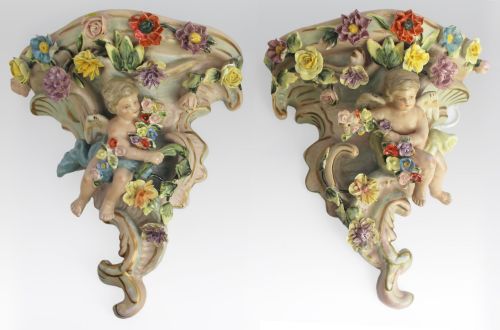
The forms span from utilitarian candlesticks and table lamps to purely decorative wall brackets, urns, and scent bottles. Many pieces adopt whimsical or romantic themes, depicting gallants, shepherdesses, musicians, and cherubs amidst applied floral details. These dual objects were originally intended to balance interior architectural schemes, offering an opulent focal point that reflects historical design revivals.
How they were made
The manufacture of these objects relies on hard-paste porcelain shaped in multi-part moulds, allowing for intricate three-dimensional modelling of figures and scrolling foliage. Artisans applied liquid clay slip to form delicate elements like applied flower petals and leafy boccages by hand before the initial firing. Glaze was subsequently applied to seal the ceramic body, creating a smooth, glossy surface ready for detailed painting.
Surface decoration combined hand-mixed enamel pigments with rich applications of gold leaf, gilt, and ormolu mounts. Firing took place across multiple stages to bond the polychrome enamels and metallic highlights securely to the porcelain body. Metal components, including gilt bronze and ormolu, were cast separately and mechanically joined to complete the dual compositions.
Listings feature hard-paste porcelain, enamel, gold leaf, and ormolu across nineteenth-century Victorian, Regency, and early twentieth-century periods.
What varies in quality
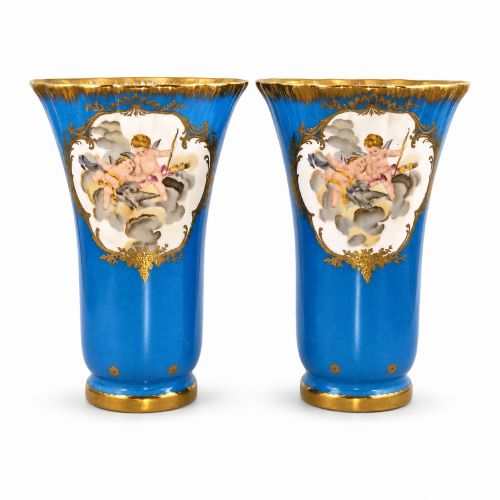
Proportion and factory provenance further separate categories within this field. Pieces originating from renowned establishments like Meissen, Sèvres, or early Samson imitations often demonstrate superior balance in their sculptural weight and more convincing integration of gilt bronze or ormolu mounts. The complexity of the firing and the richness of the cobalt blue grounds or turquoise bleu céleste glazes also dictate the upper tier of execution.
Jacob Petit·Nymphenburg·Meissen·Samson Paris·Copeland and Garrett·Derby·Chelsea·Volkstedt Richard Eckert·Vion and Baury·Helena Wolfsohn·Sitzendorf·Minton·Dresden·Sevres
The Rococo Revival Porcelain Pair Glossary
- Hard-paste porcelain
- A dense, durable ceramic composed of kaolin and petuntse fired at very high temperatures. This material forms the solid structural body for the majority of nineteenth-century continental figures and vases.
- Ormolu
- Finely ground high-carat gold applied to a bronze base metal through a mercury amalgamation process or modern electroplating. It provides a bright, warm metallic finish to decorative mounts and lamp bases.
- Bleu céleste
- A brilliant turquoise blue glaze famously developed at the Sèvres porcelain manufactory during the eighteenth century. Later revival makers adopted this distinct colour ground for luxury vases and urns.
- Bocage
- An open, branching framework of leaves and flowers modelled in porcelain to form a rustic background behind figures. It requires meticulous hand-assembly before firing.
- Enamel
- Opaque or translucent glass paste fused to the ceramic surface during a secondary low-temperature firing. It provides the vibrant polychrome palette seen in floral motifs and garments.
Rococo Revival Porcelain Pair: Frequently Asked Questions
How were these porcelain figures used?
In nineteenth-century interiors, these dual decorative objects served both functional and aesthetic purposes. Items like candelabras and go-to-bed candlesticks provided ambient illumination in parlours and bedchambers.
Purely decorative pieces, such as vases and figural groups depicting shepherds or musicians, demonstrated the owner's cultivation and taste by filling empty architectural spaces with romantic narratives.
How do I live with porcelain pairs?
Displaying these items requires stable surfaces away from high-traffic walkways to protect delicate elements like applied floral petals and protruding fingers. Placing them on sturdy mantelpieces or inside glass-fronted cabinets shields them from accidental impacts.
Keep them out of direct sunlight to preserve the vibrancy of the hand-painted enamels and the integrity of the gold leaf over time.
How do I identify factory marks?
Many nineteenth-century factories applied underglaze blue or painted marks to the base, ranging from crossed swords to initials and monogram styles. Some revival makers deliberately imitated earlier marks from Meissen, Sèvres, or Chelsea to honour those traditions.
Examining the style of the script, the quality of the paste, and the painting technique helps differentiate a period factory piece from a later continental imitation.