



Rococo Revival Mantle Mirror
A rococo revival mantle mirror brings exuberant asymmetry and sweeping scrolls to a room, catching the light with a grand sense of nineteenth-century theatre.
Rococo Revival Mantle Mirror
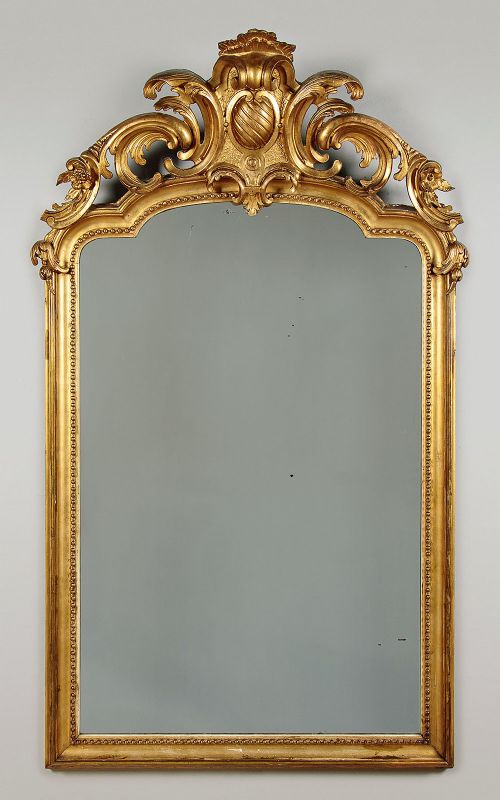
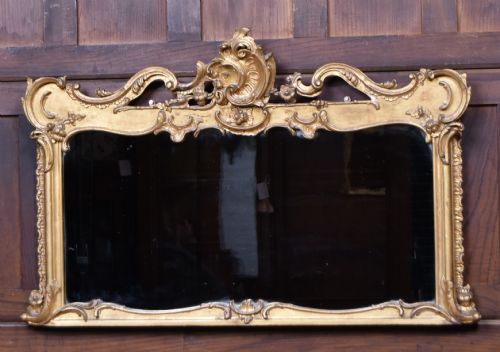
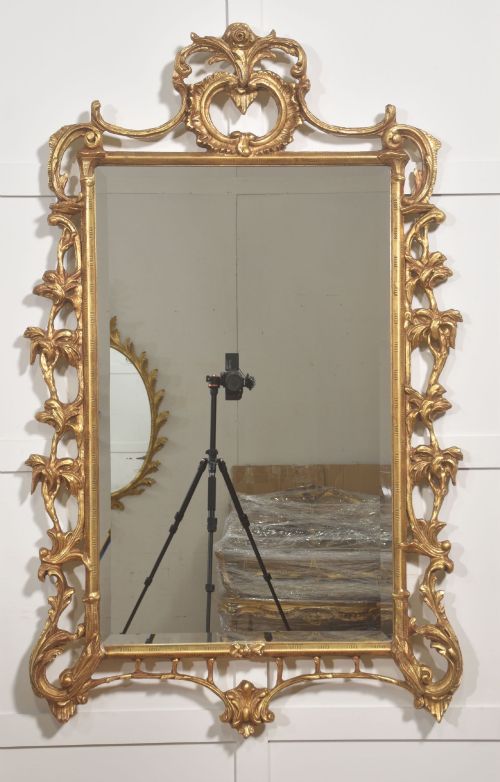
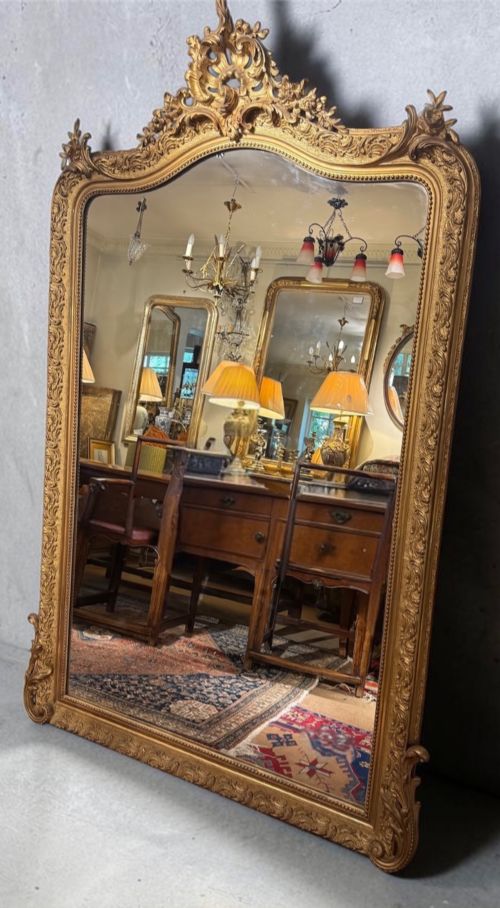
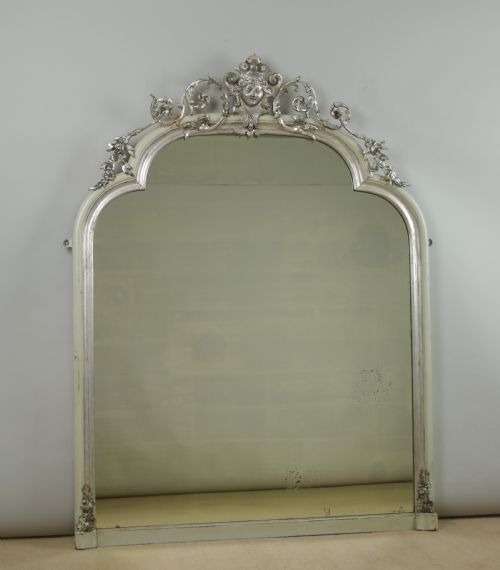
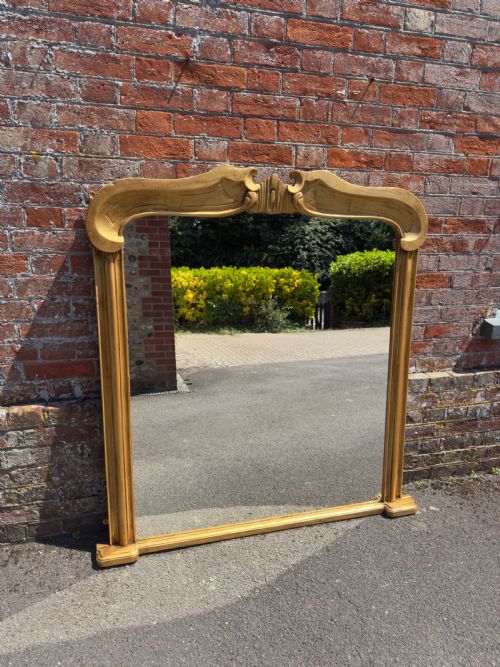
A rococo revival mantle mirror sits above a fireplace or hangs as a statement wall piece, taking shapes defined by sweeping curves and arched tops. The listings show these pieces emerging primarily from the nineteenth century, including Victorian interpretations and French Louis XV revivals.
Buyers will encounter overmantel mirrors alongside tall wall-hanging formats, often featuring elaborate frames finished with central cartouches. The design vocabulary relies heavily on asymmetrical scrolls, foliage, and shaped framing that reflect the mid-nineteenth-century appetite for theatrical nineteenth-century decoration.
How they were made
Makers shaped these frames from carved wood, oak, or mahogany, building up complex decorative reliefs with composition and gesso. Artisans then applied gold leaf or paint to the prepared surfaces, creating the luminous giltwood finishes seen across the period.
The heavy mirror glass is set within these ornate wooden structures, supported by robust backing boards designed to handle the substantial weight of large wall and overmantel formats.
Rococo Revival Mantle Mirror Retail Price Guide 2026
Typical asking prices for rococo revival mantle mirror among the pieces listed under this phrase on Sellingantiques today, from the lower quarter to the upper quarter. They describe what is for sale here now, not the wider market.
Materials recorded across the selection include carved wood, gesso, giltwood, composition, mahogany, and oak.
What varies in quality
Quality rests in the depth and sharpness of the carved or moulded ornament, where crisp undercut foliage distinguishes finer examples from softer, flatter castings. The handling of the gilding, whether gold leaf or painted surfaces, dictates the richness of the reflection and the visual weight of the frame.
Scale also drives distinction, as exceptionally tall or wide architectural formats require precise joinery to keep heavy wooden frames stable over time.
The Rococo Revival Mantle Mirror Glossary
- Overmantel mirror
- A large mirror specifically designed to be positioned on the wall directly above a fireplace mantle. These pieces often feature wide horizontal or arched proportions.
- Gesso
- A plaster-like mixture applied to wood frames to create a smooth surface for gilding or painting. It allows craftsmen to carve intricate relief details before finishing.
- Cartouche
- An ornamental framed emblem or panel, often resembling a scroll or unfurled parchment, placed centrally at the crest of the mirror.
- Giltwood
- Timber that has been coated with gold leaf. This technique produces a durable, luminous metallic finish characteristic of nineteenth-century formal interiors.
Rococo Revival Mantle Mirror: Frequently Asked Questions
How do I hang a heavy overmantel mirror?
These large mirrors carry considerable weight from their timber frames and glass plates, requiring secure fixings directly into structural wall studs or masonry. Professional installation is strongly advised to distribute the load safely.
Ensure the hanging wire or integrated brackets are rated for heavy architectural pieces, as standard picture hooks will not support nineteenth-century frames.
Are these mirrors suitable for modern rooms?
The exuberant scrolls and grand scale of a nineteenth-century mirror create an effective focal point in contemporary minimalist spaces. They bounce natural light around a room and add historical contrast to plain walls.
Placed above a fireplace or mounted low on a chimney breast, they anchor the surrounding furniture and draw the eye upward.
How do I clean the gilt frame?
Dust the intricate gesso and carved wooden details gently with a soft, dry brush to avoid disturbing fragile gold leaf. Moisture and chemical cleaners can lift the historic surface finish.
Keep liquids away from the joints where the frame meets the mirror glass to prevent water damage to the backing.
How can I tell the period of the mirror?
Dating relies on examining the construction of the wooden frame, the composition of the gesso, and the manufacturing characteristics of the mirror glass. Nineteenth-century examples often exhibit hand-carved elements combined with moulded composition ornament.
Stylistic markers such as French Louis XV revival motifs or Victorian proportions also help place the piece within the eighteen-fifties to the early nineteen-hundreds.