


Rococo Revival Bureau
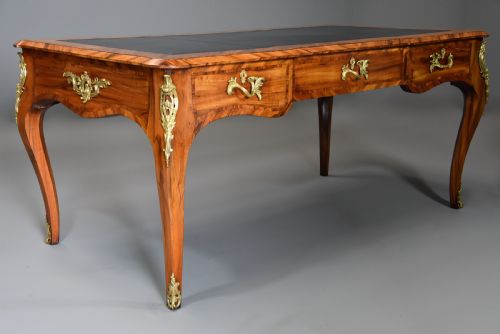
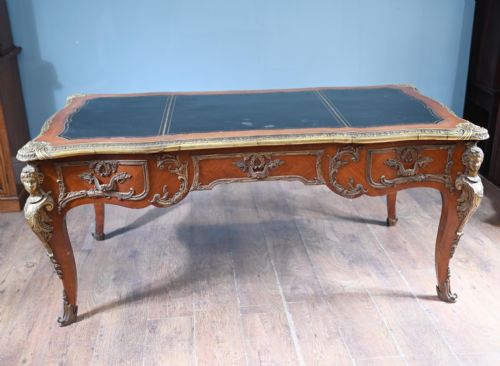
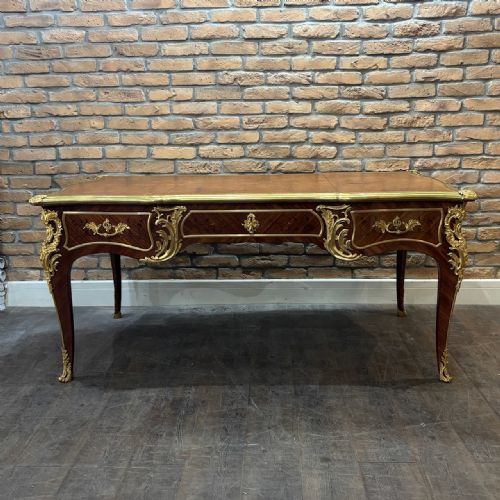
These pieces of rococo revival bureau bring ornate French flair to a writing space, combining serpentine forms with decorative mounts.
What a rococo revival bureau is
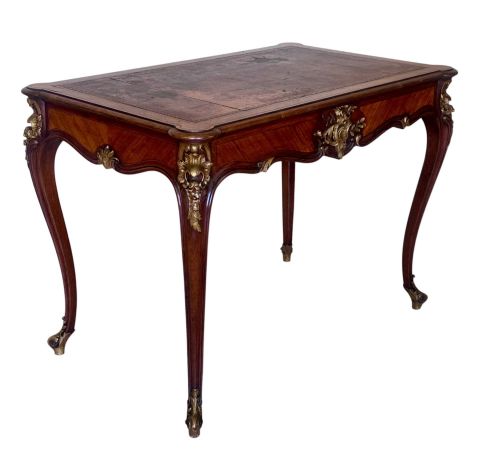
A rococo revival bureau represents nineteenth-century interpretations of earlier French furniture styles, specifically drawing from the Louis XV period. These writing pieces include lady's desks, bureau plat forms, and secrétaire abattant designs.
The versions met on this page date from the nineteenth century, specifically around the eighteen-eighties and eighteen-nineties. Forms range from compact petite desks to broader writing tables suited for formal reception rooms.
How they were made
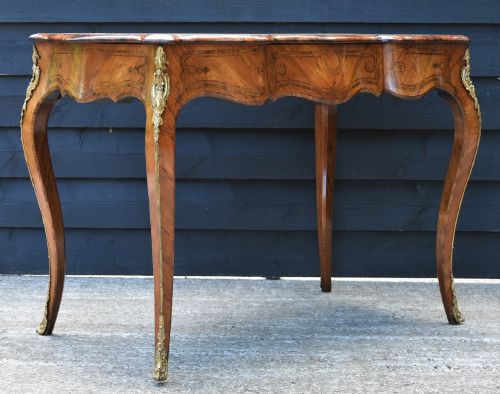
Cabinetmakers utilised dense exotic timbers such as kingwood and rosewood as foundational structural and decorative veneers. Marquetry inlay techniques create intricate floral or geometric patterns across the writing surfaces and panels.
Gilded bronze or ormolu mounts provide decorative edging and corner accents, while internal fitted compartments sometimes feature contrasting silks. Glass elements and brass hardware complete the construction details of these nineteenth-century writing desks.
Retail Price Guide 2026
Typical UK retail prices for rococo revival bureau, calculated from the Sellingantiques database of over a million retail prices indexed since 2003. This retail price guide relies exclusively on Sellingantiques data; no external sources or auction records are used, so the figures do not describe the wider market.
What varies in quality
The standard of execution in the marquetry inlay and the crispness of the cast ormolu mounts separate standard examples from finer works. The depth of the timber grain and the precision of the French polish finish dictate the visual appeal.
Attribution to documented makers such as Maison Millet elevates an individual piece through superior workshop execution and sophisticated cabinetmaking techniques. The integration of specialised finishes like Vernis Martin further distinguishes exceptional items.
Maison Millet
The Rococo Revival Bureau Glossary
- Bureau plat
- A flat-topped freestanding writing table, typically featuring drawers beneath the writing surface.
- Secrétaire abattant
- A tall vertical cabinet with a drop-front writing flap that conceals internal pigeonholes and small drawers.
- Ormolu
- Gilded bronze applied as decorative mounts and feet on nineteenth-century furniture.
- Marquetry
- The art of applying pieces of veneer to a structure to form decorative patterns and pictorial designs.
- Kingwood
- A dense, heavy timber with rich brown and violet-black figuring, popular for fine French veneering.
Frequently Asked Questions
What is a bureau plat?
A bureau plat is a freestanding table designed for writing, featuring a finished back so it can sit in the centre of a room. These desks typically include integrated drawers beneath the writing surface.
Such pieces served as formal writing desks in nineteenth-century drawing rooms and libraries.
How do I identify a bureau de dame?
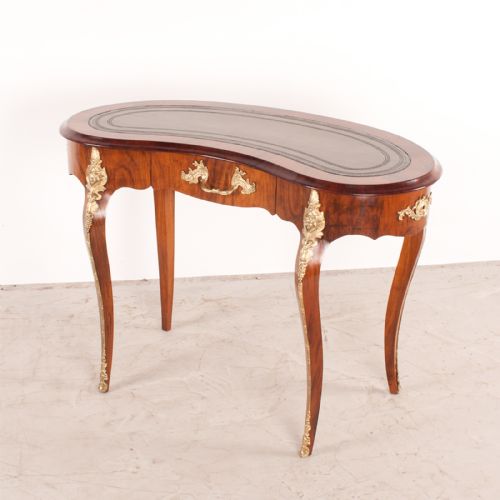
A bureau de dame is a smaller lady's desk, often incorporating curved cabriole legs and delicate ormolu mounts. They are scaled for domestic boudoirs rather than grand offices.
These compact writing spaces frequently showcase intricate marquetry and fitted interior compartments.
What woods were used?
Cabinetmakers employed exotic hardwoods including kingwood and rosewood for their rich natural grain and deep colour. These timbers provided a stable base for detailed veneer work.
Selected panels often received marquetry decoration using contrasting light and dark woods.
Where were these desks made?
These writing pieces originate from nineteenth-century French workshops following Louis XV revival styles. Parisian cabinetmakers led the production of these elaborate revival pieces.
Production dates cluster around the eighteen-eighties and eighteen-nineties.