
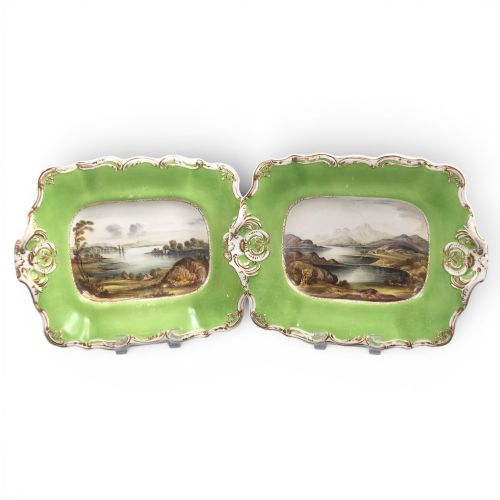
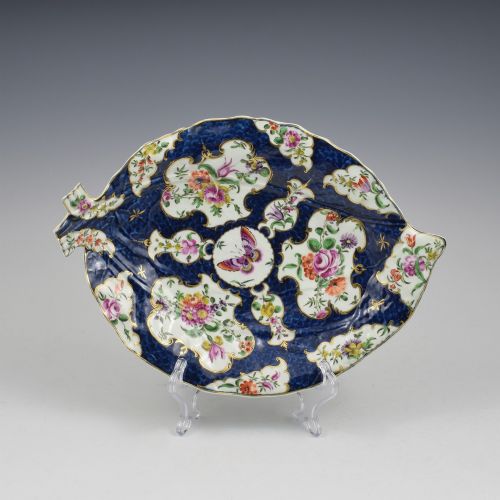
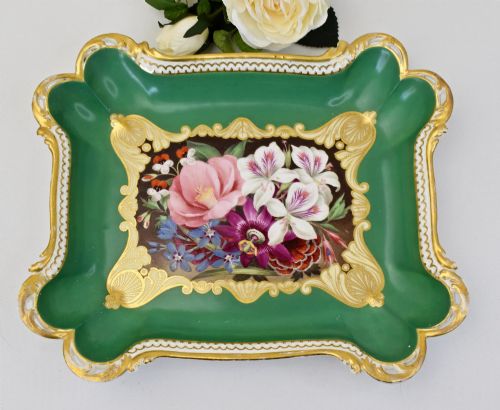
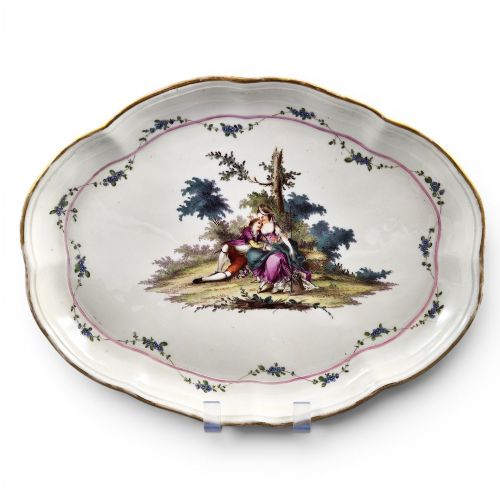
Rococo Porcelain Dish
These rococo porcelain dish examples bring asymmetric scrolls, hand-painted florals and gilt highlights into domestic settings from eighteenth and nineteenth century kilns.
Rococo Porcelain Dish
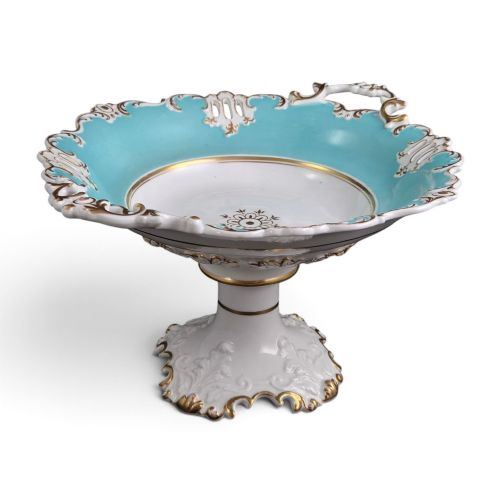
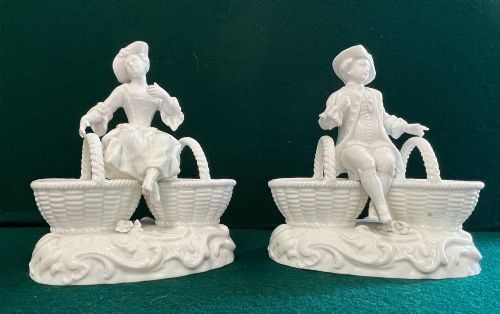
A rococo porcelain dish gathers forms like sweetmeat dishes, cabinet plates, tazzas and trays designed for display or dining. The examples span eighteenth-century factories and nineteenth-century revivals.
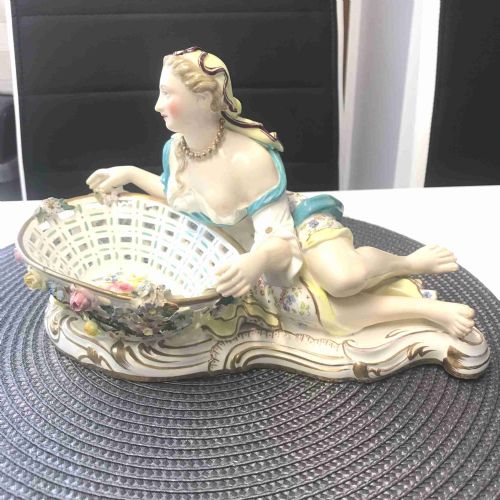
Buyers meet eighteenth-century porcelain pieces alongside Victorian and Edwardian interpretations from English and continental potteries. Forms range from simple leaf dishes to elaborate figural centrepieces.
How They Were Made
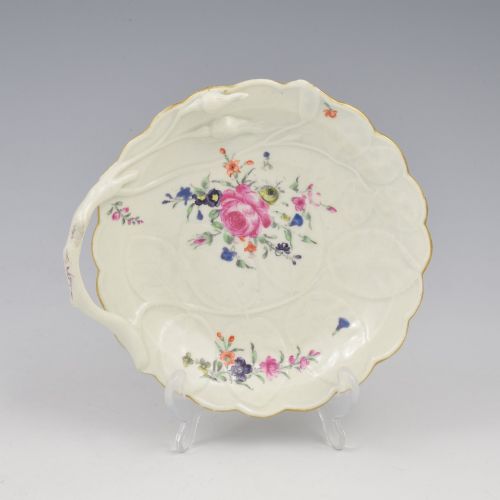
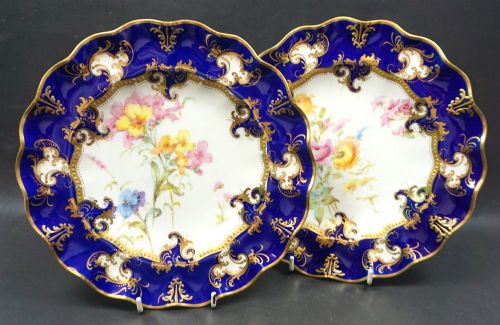
Potters shaped ceramic and soft-paste porcelain into moulded bowls, trays and plates before applying polychrome enamel and hand-painted scenes. Artisans added gold leaf, gilt and gilding to accentuate scrollwork and rims.
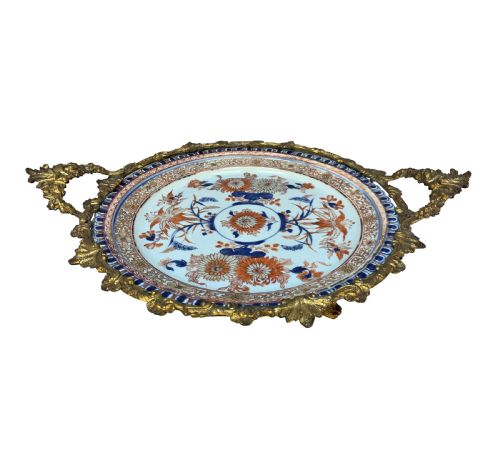
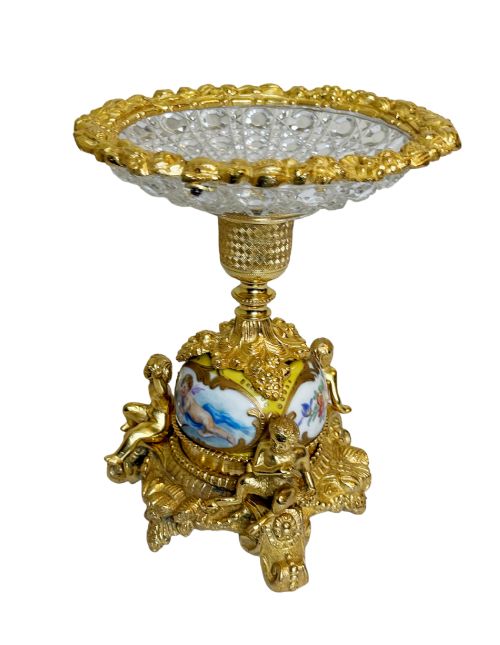
Mounts in ormolu and gilt bronze integrated with porcelain bodies on select centrepieces and decorative vessels. Firing techniques evolved from early factory practices through to nineteenth-century industrial standards.
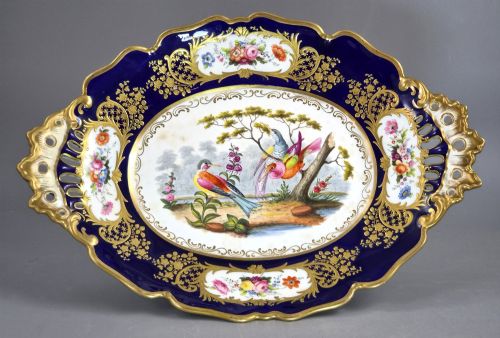
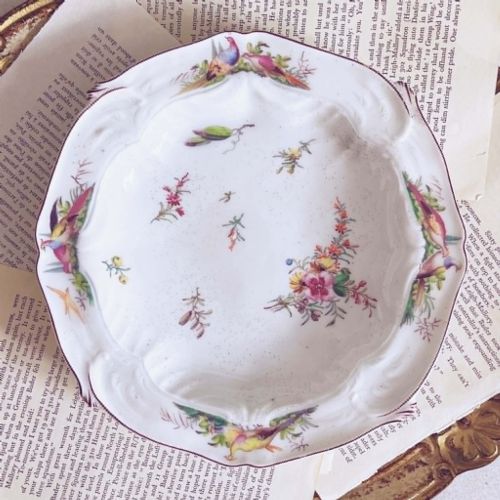
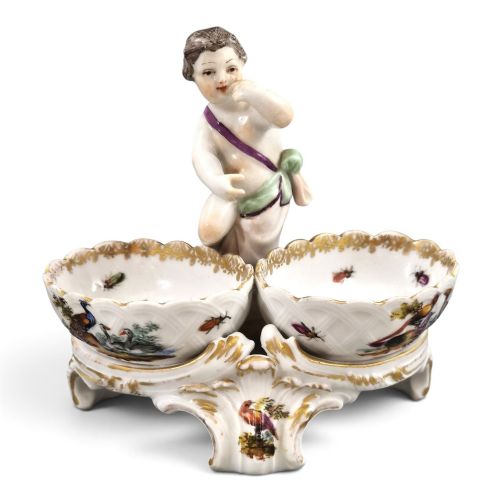
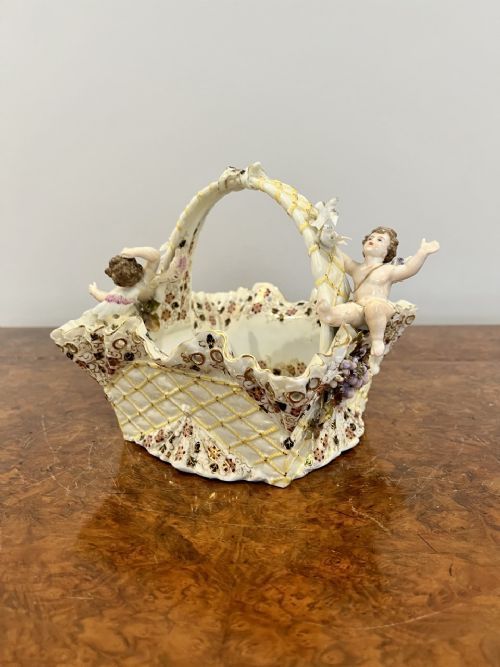
Cherubs and exotic birds frequently populate the painted scenes, keeping watch over sweetmeats and dessert fruits across the centuries.
What Varies in Quality
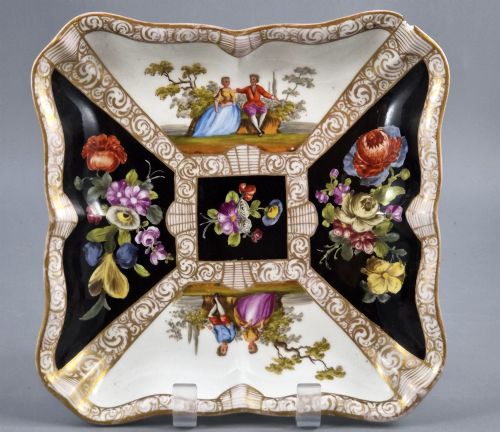
Quality rests upon the precision of the hand-painted details, from botanical studies to Watteau scenes and bird motifs. Crisp moulding in the porcelain paste defines the success of the asymmetric scrolls.
The application and preservation of the gilding separate standard production from superior cabinet pieces. Surviving enamel brilliance and factory marks indicate the standing of the pottery.
Coalport·Meissen·Worcester·Chelsea·KPM Berlin·Royal Crown Derby·Copeland and Garrett·Marseille·Mintons·John Ridgway·Dresden·Paul Muller Selb·Chantilly·Volkstedt·Schierholz·Helena Wolfsohn·Royal Worcester·Samson Paris
The Rococo Porcelain Dish Glossary
- Soft-paste porcelain
- An early ceramic composition fired at lower temperatures than hard-paste porcelain, yielding a warm, creamy body beneath the glaze.
- Sweetmeat dish
- A small vessel shaped for serving confectioneries, often featuring compartmentalised sections or figural supports.
- Tazza
- A shallow ornamental bowl raised upon a central foot or pedestal, utilised for display.
- Ormolu
- Gilt bronze mounts applied to ceramic bodies, popular in decorative arts to add architectural weight.
- Bleu céleste
- A bright turquoise ground colour developed at eighteenth-century porcelain factories and copied in later revivals.
Rococo Porcelain Dish: Frequently Asked Questions
How do I date a porcelain dish?
Dating relies on factory marks, paste composition and stylistic details such as the depth of the rococo moulding. Early pieces show characteristic glaze pooling and softer paste bodies.
Later nineteenth-century revivals employ sharper industrial moulds and brighter, uniform enamel colours that distinguish them from eighteenth-century productions.
Were these dishes used for food?
Many sweetmeat dishes and cabinet plates served confectioneries or desserts in formal dining settings. Others functioned purely as decorative trays and centrepieces for drawing rooms.
Over time, handling shifted from dining use to cabinet display and interior decoration.
How do I care for gilt porcelain?
Gentle dusting with a soft, dry cloth protects the delicate enamel painting and surface gilding from abrasion. Moisture and chemical cleaners can damage fragile gold leaf and soft-paste glazes.
Display pieces should sit away from direct sunlight to prevent the fading of hand-painted polychrome colours.
What defines the rococo style?
The style relies on asymmetric scrolls, C-scrolls, shell motifs and naturalistic floral arrangements. Forms avoid strict symmetry in favour of flowing, organic contours.
In porcelain, this translates into waved rims, moulded basketweave textures and sculptural figural supports.