


Rococo Painted Wall Mirror
These rococo painted wall mirrors bring asymmetric scrollwork and fluid curves into a room, offering the decorative presence of eighteenth-century French and Italian salons.
Rococo Painted Wall Mirror
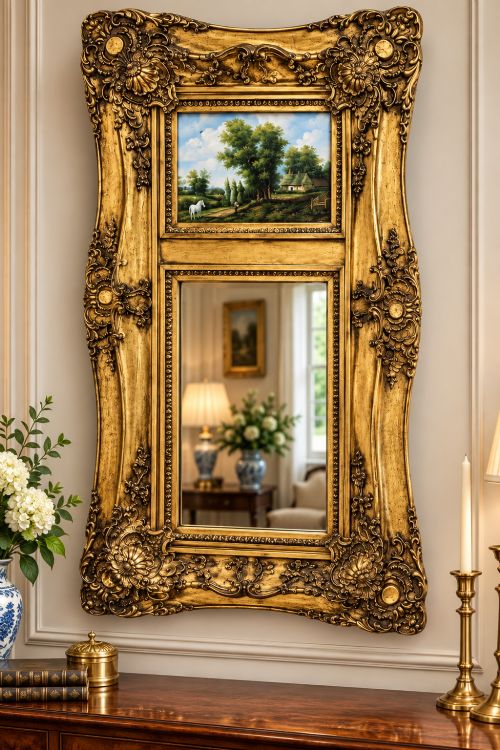
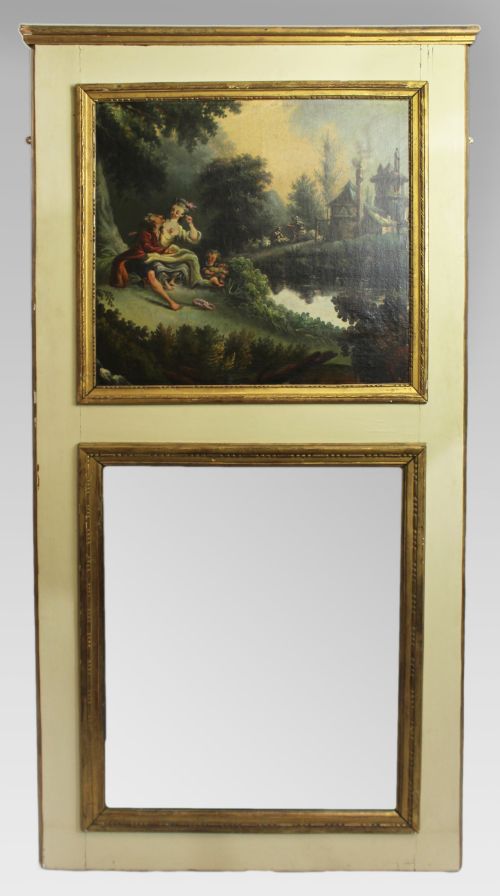
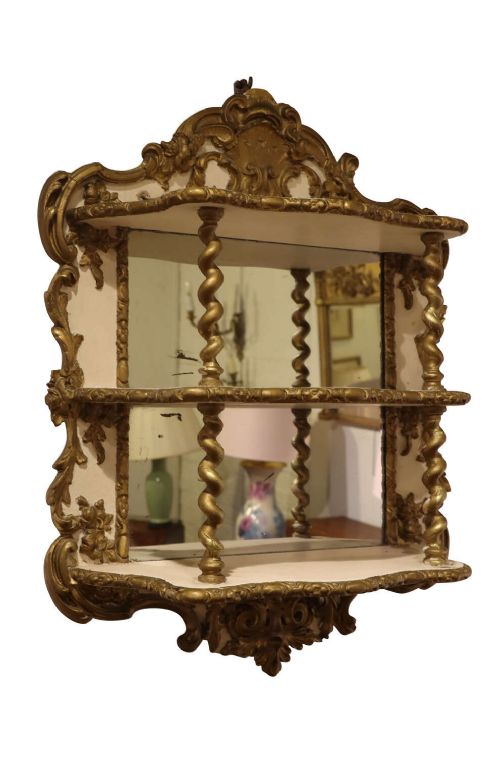
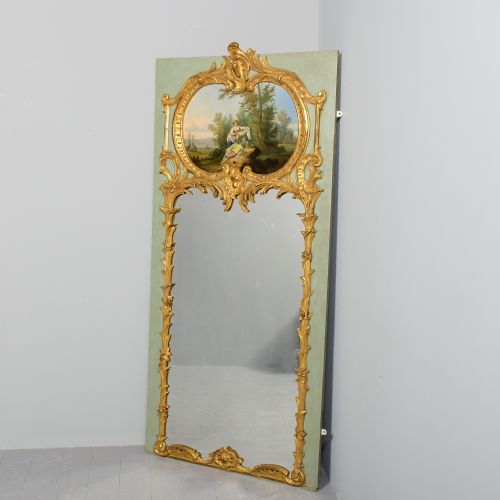
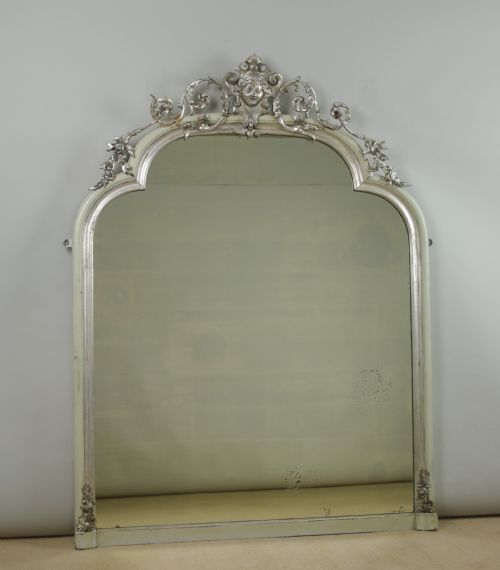
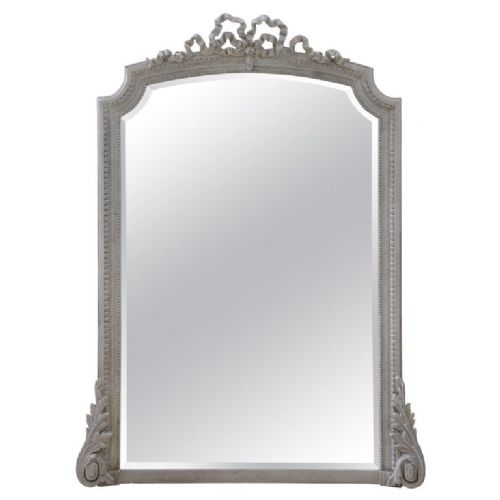
A buyer seeking a rococo painted wall mirror encounters pieces spanning the eighteenth century to the early twentieth century, with nineteenth-century revivals forming a substantial portion of the selection. These objects range from compact wall-hung pier glasses and éTAGèRES to tall trumeau panels incorporating oil paintings and wide overmantles designed for placement above fireplaces.
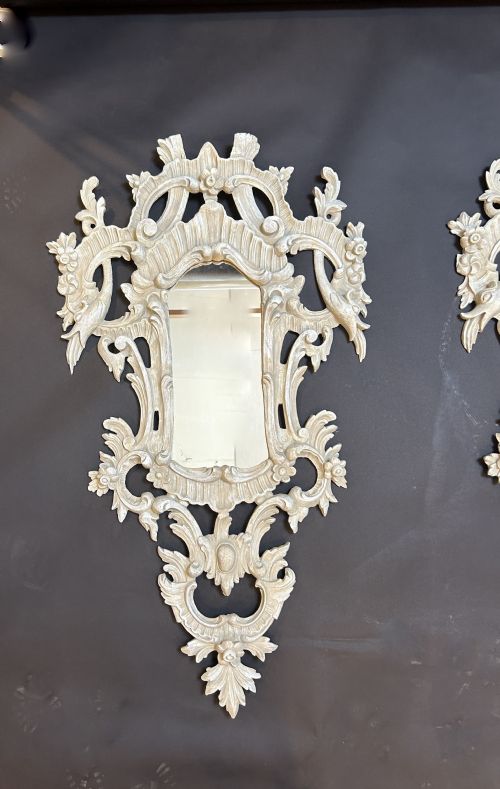
French and Italian origins dominate the selection, alongside English interpretations bearing rococo revival and Georgian style characteristics. Forms typically feature shaped tops, carved woodwork, and painted surfaces often combined with parcel-gilt highlights.
The aesthetic relies on asymmetrical motifs, floral garlands, and C-scrolls that reflect the theatricality of Louis XV design. Many surviving examples date from the Victorian era and the decades around nineteen hundred, demonstrating how later makers adapted continental vocabulary for domestic interiors.
Materials and Construction
Carved wood and gesso provide the sculptural foundation for these frames, allowing artisans to build up high-relief scrollwork and botanical details before applying paint. Giltwood and gold leaf frequently accent the painted surfaces, highlighting edges and carved flourishes.
Makers applied oil paint, often in light grey or subtle tones, directly over the prepared gesso and timber base. Original mirror plates, occasionally showing eglomise panels or pastoral oil paintings set into trumeau frames, complete the construction.
Listings feature pieces spanning the eighteenth century through the 1920s, predominantly utilising carved wood, gesso, paint, and gold leaf.
Assessing Quality and Execution
Depth and crispness in the wood carving separate superior frames from simpler production pieces, as hand-carved elements display sharper undercut details in the foliage and scrolls. The application of gesso dictates how smoothly curves sweep and whether the underlying ornament remains distinct beneath layers of paint.
The integrity of the painted surface, particularly where original pigment meets gilt highlights or distressed finishes, influences the visual weight of the mirror. Survival of early or original mirror glass plates adds historical depth to eighteenth and nineteenth-century examples.
The Rococo Painted Wall Mirror Glossary
- Trumeau mirror
- A decorative wall mirror fitted with a panel above the glass, frequently containing an oil painting or eglomise decoration. These pieces were designed to fit specific wall spaces between windows or above mantelpieces in grand rooms.
- Overmantle mirror
- A wide mirror specifically proportioned to hang above a fireplace mantel. They often feature large carved wood and gesso frames.
- Gesso
- A plaster-like mixture applied to wood frames to create a smooth surface for carving and gilding. It allows artisans to shape intricate relief ornamentation.
- Eglomise
- A technique of cold painting and gilding on the rear face of glass. It produces a reflective, metallic panel often seen in upper trumeau sections.
- Pier glass
- A tall, narrow mirror designed to be hung on the pier of wall space between windows. They typically reflect additional light into darker rooms.
Rococo Painted Wall Mirror: Frequently Asked Questions
Where should I hang a trumeau mirror?
Trumeau mirrors suit living rooms or hallways where their vertical proportions and integrated paintings command attention. They function effectively above low furniture or as architectural focal points on plain walls.
Their substantial height helps draw the eye upward, altering the apparent scale of a room while providing functional reflection.
How do I identify a revival piece from an eighteenth-century original?
Distinguishing periods relies on examining the timber construction behind the gesso, the composition of the paint layers, and the manufacturing traits of the mirror plate. Eighteenth-century examples display hand-cut joinery and older glass characteristics.
Nineteenth-century revival pieces adopt the same Louis XV vocabulary but often utilise machine-sawn backing boards and different preparation methods under the gesso.
What maintenance do painted and gilt frames require?
Dusting with a dry, soft cloth prevents particulate buildup on carved gesso and painted surfaces. Avoid liquid cleaners and harsh chemicals that can strip delicate finishes or harm the gilt details.
Keeping the mirror away from direct sunlight and excessive humidity protects both the wooden structure and the original painted pigments.
Are these mirrors heavy to hang?
Many overmantle and trumeau mirrors incorporate solid carved wood and thick gesso over wooden substrates, resulting in considerable weight. Proper wall anchoring into studs or masonry is essential for secure installation.
Professional hanging ensures the weight distributes safely across the wall fixings without straining the frame joints.