


Rococo Marble Console Table
A rococo marble console table brings exuberant carved ornament and heavy stone tops into a room with undeniable presence.
Rococo Marble Console Table
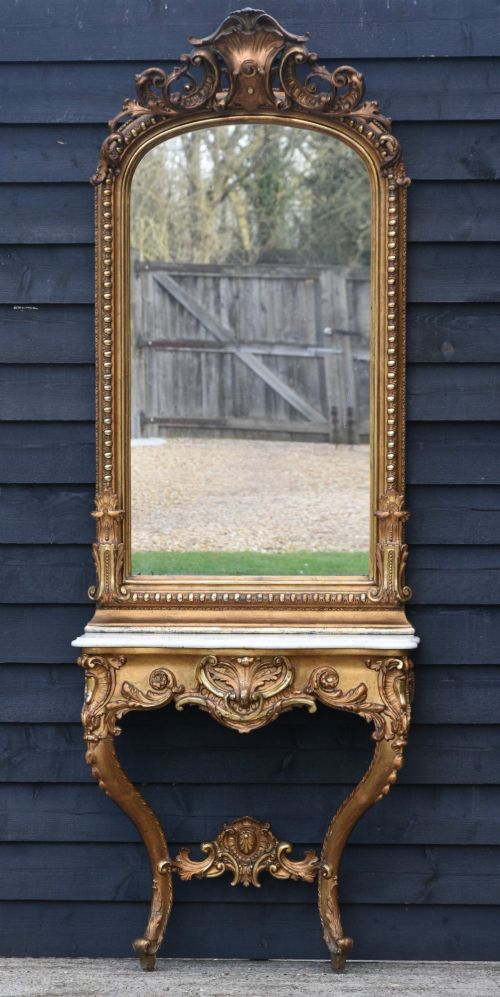
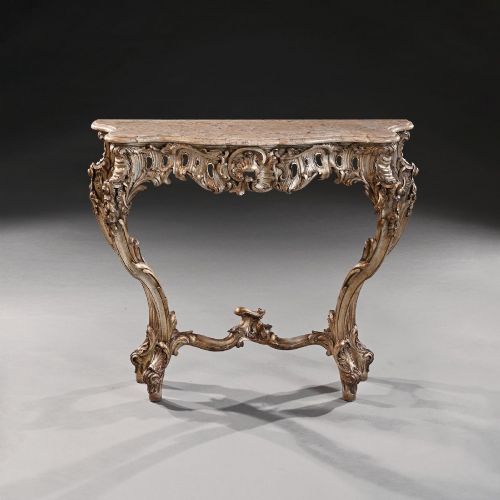
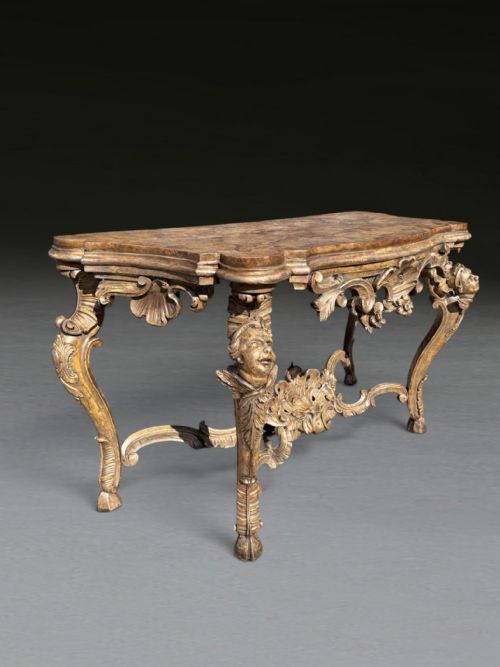
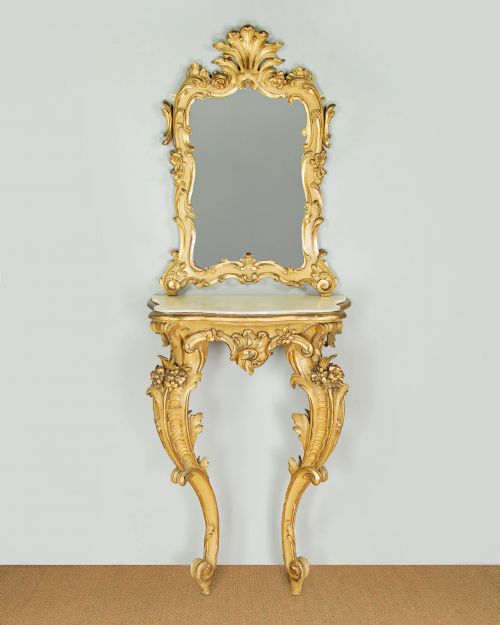
A rococo marble console table stands against a wall, frequently paired with a matching pier mirror or executed as a serpentine or straight-fronted side table. These pieces emerge primarily from 18th century and 19th century workshops in France and Italy, adopting distinct national interpretations of the style.
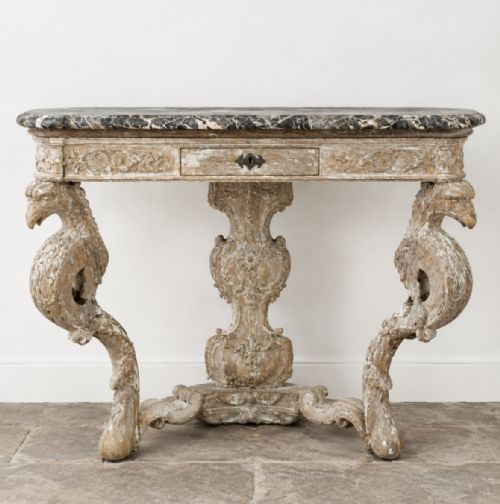
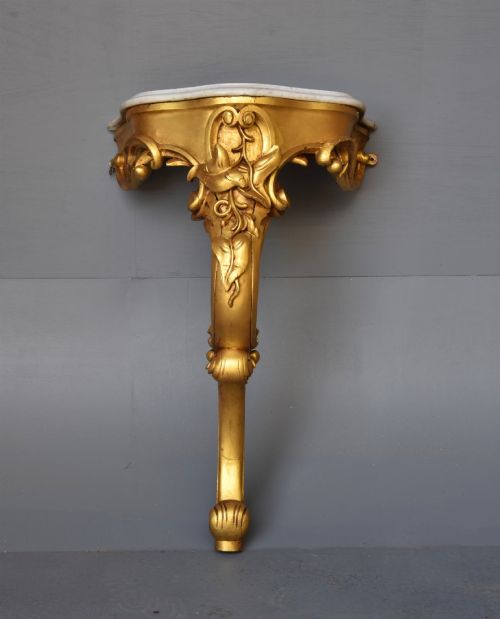
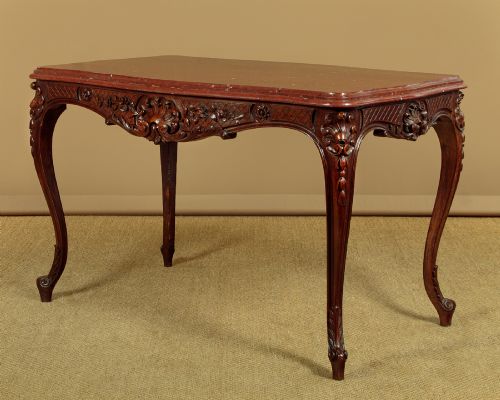
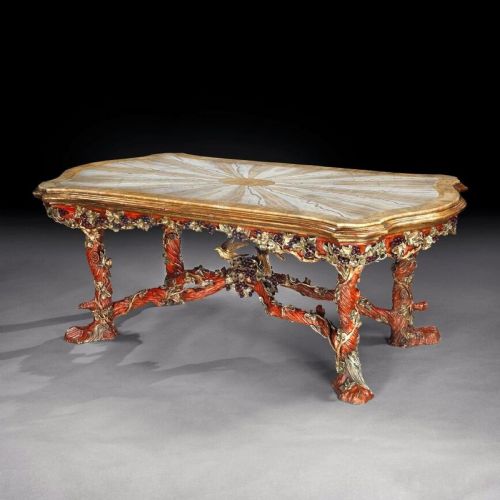
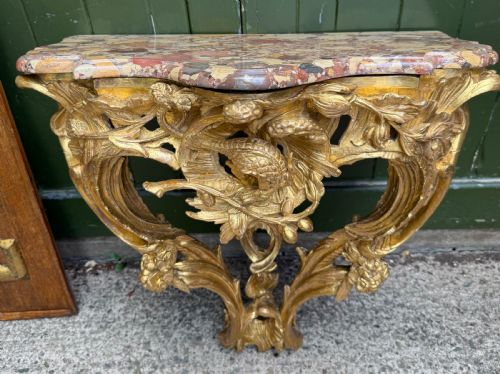
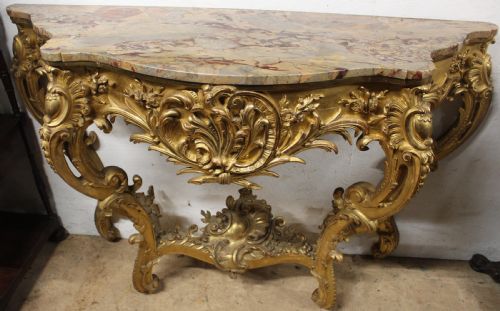
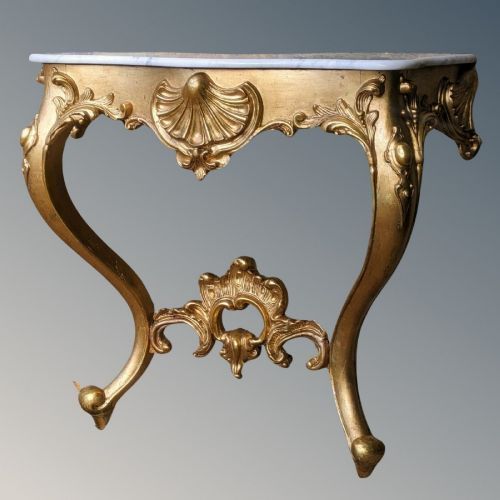
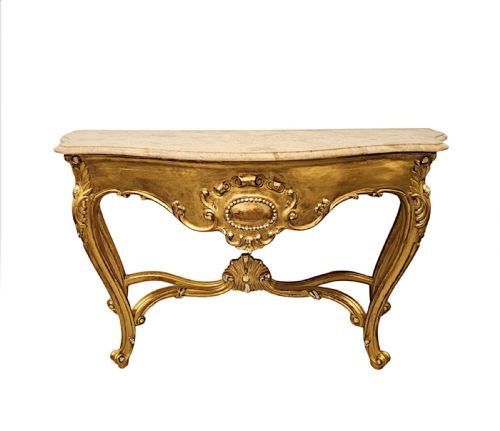
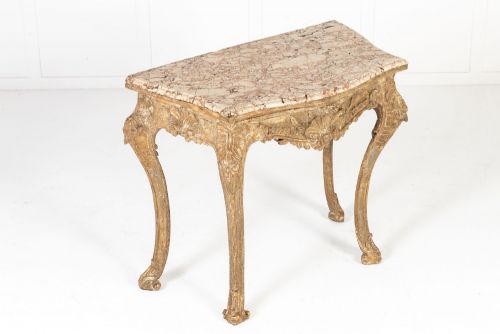
The most common formats on this page range from compact gilded side tables to large hall tables and centre tables, incorporating shaped white Carrara, rouge, onyx, breche d'alep, or breccia marble surfaces.
How they were made
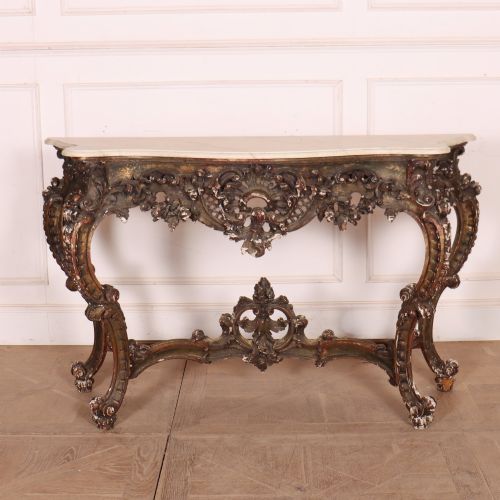
Carvers shaped frames from wood, walnut, or oak, applying layers of gesso to prepare the surface for gold leaf, silver gilt, paint, or parcel-gilt finishes. Italian and French makers utilised deep relief carving to produce asymmetric scrolls and foliage characteristic of the style.
Heavy marble tops were cut, shaped to follow the serpentine or rectilinear contours of the wooden base, and polished to a smooth finish, resting directly upon the carved framework.
Several tables manage to look as though they are melting gracefully into gold-leafed seaweed.
What varies in quality
Depth and crispness of the wood carving separate standard decorative pieces from exceptional examples, as skilled carvers achieved fluid, undercut foliage rather than shallow surface incisions. The choice of marble also indicates tier, with figured stones like breche d'alep or breccia commanding attention over plain alternatives.
The preservation of original gilding, gesso, and polychrome paint determines the integrity of the object, distinguishing untouched period surfaces from later interventions.
Amleto Bertoni
The Rococo Marble Console Table Glossary
- Console table
- A table designed to stand against a wall, traditionally supported by two legs and fixed with brackets.
- Giltwood
- Wood coated with a thin layer of gold leaf or gold paint. This finish defines the majority of the carved frames seen here.
- Serpentine
- A curved line that swells outward and then recesses inward, creating a gentle undulating front edge on the marble top.
- Pier mirror
- A large wall glass designed to hang directly above a console table, often sold as a unified set.
- Breche d'alep
- A multicoloured figured marble displaying a brecciated pattern of angular fragments held within a contrasting matrix.
Rococo Marble Console Table: Frequently Asked Questions
What is a rococo marble console table?
A rococo marble console table is a wall-fixed or freestanding decorative table featuring ornate carved woodwork, asymmetric scrollwork, and a heavy polished stone top.
Originating across 18th century and 19th century European salons, these pieces served as formal display surfaces in grand interiors.
Were these tables used freestanding?
Most console tables were designed to stand directly against a wall, frequently positioned beneath a matching pier mirror.
Centre tables included in this category share similar carved decoration and marble tops but are finished on all sides for central room placement.
How do I style a console table?
These tables anchor a hallway or reception room by combining architectural weight with ornate carved detail.
Pairing a gilded console with its original pier mirror recreates the traditional arrangement found in historic French and Italian interiors.
How do I date an antique console table?
Dating relies on examining the timber construction methods, the composition of the gesso beneath the gilding, and the specific characteristics of the carved ornament.
Eighty-one current listings and archive records show examples spanning the 18th century through to the early 20th century revival periods.