
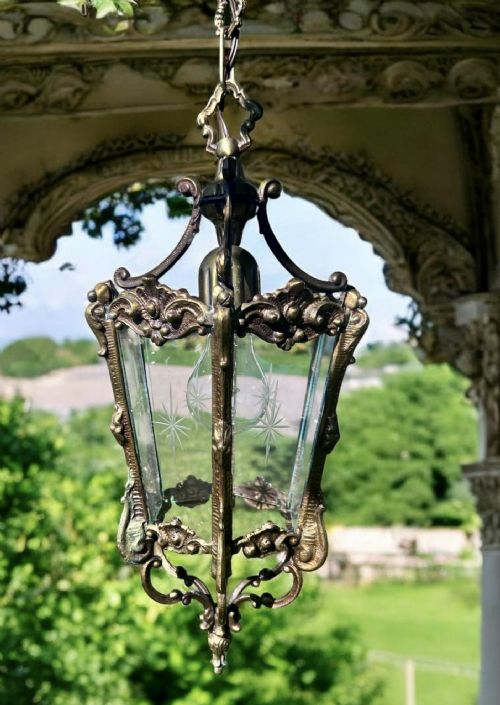
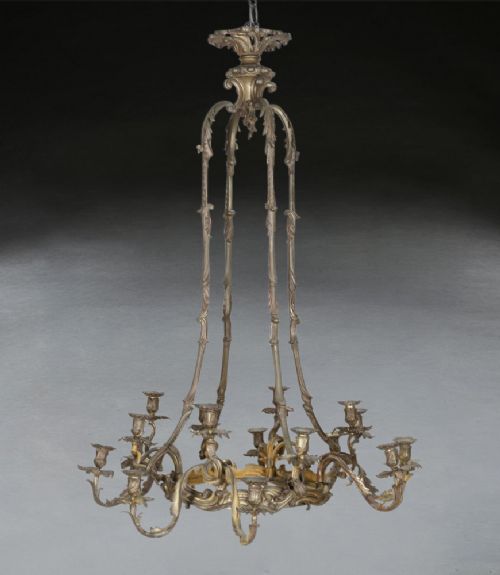
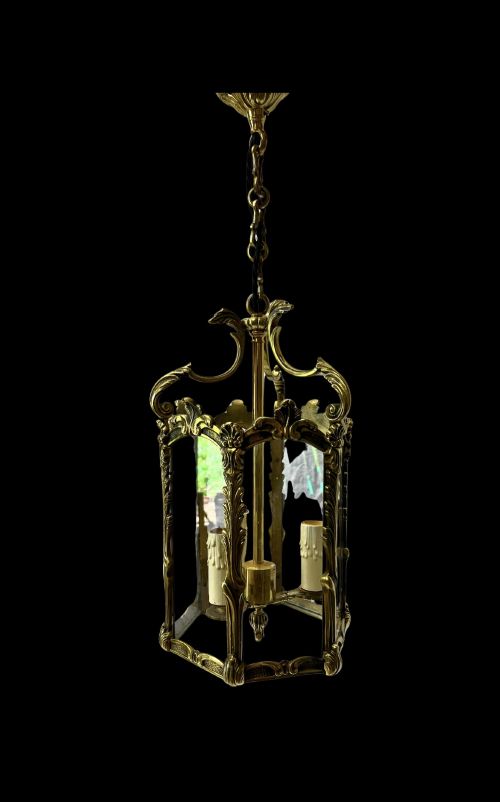


Rococo Hall Pendant
These rococo hall pendant lights bring French and Italian chateau elegance straight into your entranceway.
Rococo Hall Pendant
When you search for a rococo hall pendant, you are looking at ornate overhead ceiling lighting designed specifically to grace entranceways and corridors. The pieces on this page span from the nineteenth century into the 1930s, capturing the revival of opulent continental aesthetics.
Most examples you will meet take the form of hanging lanterns or multi-light chandeliers with distinct regional flavours. French and Italian interpretations dominate the selection, bringing substantial character to smaller spaces.
Forms range from single light glass lanterns to sixteen light chandeliers and hexagonal hanging fixtures. Each configuration provides practical overhead illumination while maintaining a decorative period silhouette.
Materials and construction
The construction relies heavily on cast and worked metals combined with clear or bevelled glass panels. Brass, bronze, and toleware form the primary structural frameworks, often finished with silver or gold gilding.
Surface treatments include polychrome paintwork and heavy gilding applied to bronze and brass bases. Glass components are frequently etched or panelled to diffuse the internal bulb light effectively.
Some lanterns feature subtle asymmetries in their leaf scrolls, reminding you that human hands shaped the original moulds.
Judging the quality
Quality reveals itself in the crispness of the cast metalwork and the weight of the frame. Heavier bronze and thick gilded brass indicate superior foundational casting compared to lighter pressed alternatives.
The treatment of the glass and secondary decoration sets finer pieces apart. Bevelled glass panes fitted securely into ornate frames demonstrate a higher standard of period craftsmanship.
The Rococo Hall Pendant Glossary
- Rococo revival
- A nineteenth century design movement that reinterprets the ornate, asymmetrical scrolling curves of the eighteenth century. It defines the decorative flourishes seen on these lanterns.
- Gilded bronze
- Metal cast in bronze and coated with a thin layer of gold leaf or powder. This finish provides a warm, reflective surface suited to formal reception spaces.
- Toleware
- Enamelled or lacquered sheet metal used for decorative light bodies and shades. It introduces painted colour and durable surface pattern to the fixture.
- Bevelled glass
- Glass panes with angled edges cut around the perimeter. This technique catches and refracts light to create prismatic visual effects.
- Hall lantern
- An enclosed ceiling pendant designed for corridors and entrance halls. It protects the light source while projecting illumination downwards.
Rococo Hall Pendant: Frequently Asked Questions
Where should I hang a hall pendant?
These fixtures work best suspended in entrance halls, stairwells, or high-ceilinged corridors where their decorative frames can be appreciated from multiple angles.
Ensure you hang the pendant with enough clearance beneath for people to pass comfortably underneath while maintaining the right visual proportion to the room height.
How do I date these lanterns?
Dating relies on examining the metal casting techniques, wiring methods, and overall style of the brass and bronze components. Pieces span from the nineteenth century into the 1930s.
Revival styles often borrow earlier motifs, so inspecting the wear on the gilding and the construction of the glass frame helps confirm the actual period of manufacture.
Are these lights electrified?
Most pieces listed have been adapted for modern electrical use to fit standard domestic ceiling wiring. You will find single and multi-light internal fittings.
It remains wise to have a qualified electrician inspect the internal wiring and fixings before final installation in your home.
What is the difference between brass and bronze?
Bronze is an alloy of copper and tin, while brass is an alloy of copper and zinc. Bronze generally offers a heavier and deeper metallic tone for casting ornate details.
Both metals accept gilding and surface patination readily, which explains why makers of the period utilised both materials for these hanging lanterns.