


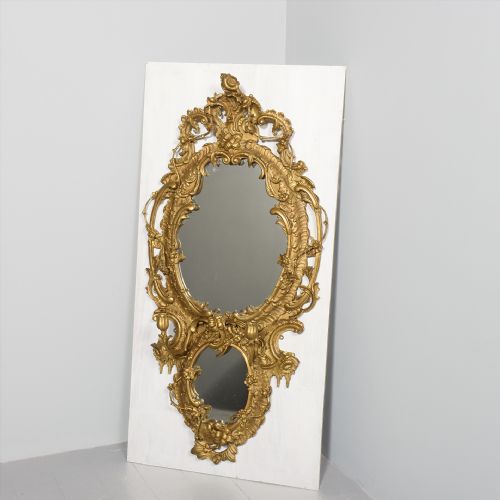


Rococo Girandole Mirror
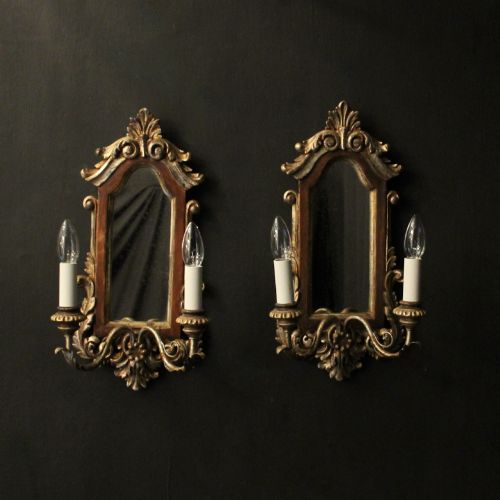
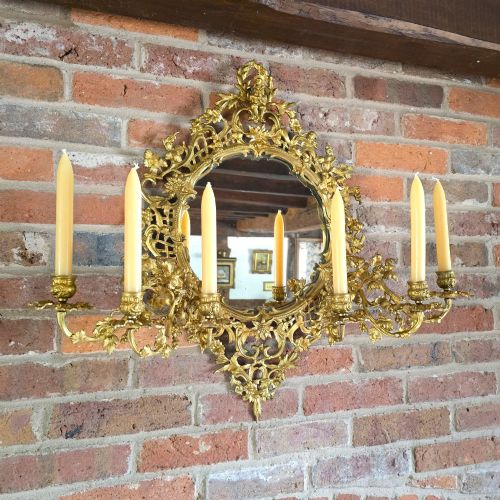
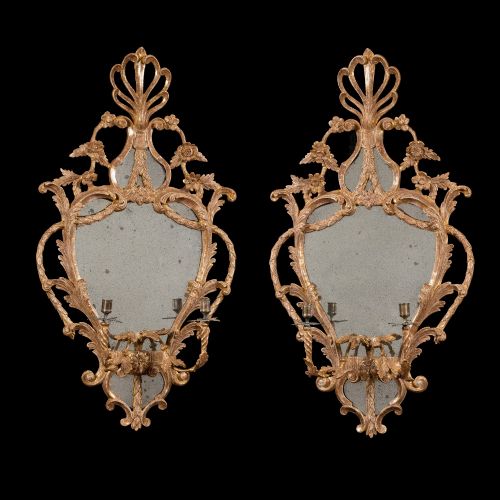
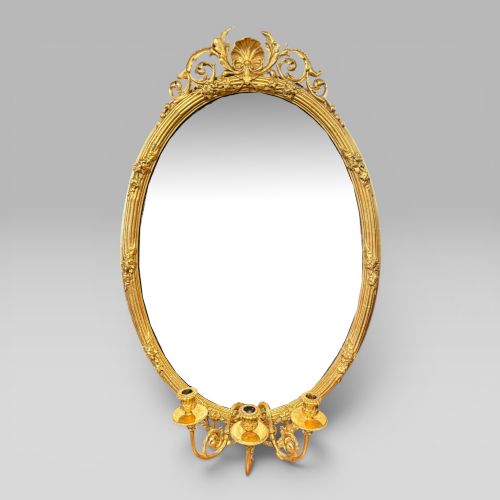
A rococo girandole mirror brings candlelight and carved asymmetry into a room, offering reflective depth alongside integrated wall sconces.

Rococo Girandole Mirror
A rococo girandole mirror combines a reflective glass plate with integrated candle arms, merging illumination with wall decoration. When searching for a rococo girandole mirror, buyers encounter forms ranging from eighteenth-century originals to nineteenth-century revivals and early twentieth-century interpretations.
Most examples appear as pairs or single wall-hanging pieces constructed during the Victorian era, the nineteenth century, or the 1920s. These items function as prominent focal points, designed to bounce candlelight and natural illumination across interior spaces.
How they were made
Construction relies on carved wood frameworks, predominantly giltwood and gesso, alongside metal components such as brass, bronze, and ormolu. Artisans carved intricate organic motifs, C-scrolls, and asymmetrical foliage directly into the wooden substrates before applying gold leaf or polychrome finishes.
Mirror glass plates sit within these heavily ornamented frames, accompanied by secured metal candle arms or branches wired or fixed directly to the structure. Gilt bronze and gilt metal elements are cast and chased to match the fluid curves typical of the style.
Rococo Girandole Mirror Retail Price Guide 2026
Typical asking prices for rococo girandole mirror among the pieces listed under this phrase on Sellingantiques today, from the lower quarter to the upper quarter. They describe what is for sale here now, not the wider market.
Many of these mirrors were originally positioned between windows to bounce the dim evening glow of a single tallow candle across the parlour.
What varies in quality
Depth and crispness of the carving separate superior examples from standard production, as hand-carved wooden frames display sharper undercut details than cast compositions. The finesse of the gilding, whether matte or burnished gold leaf over gesso, dictates the richness of the surface reflection.
The structural integration of the candle branches determines durability, with robust metal armatures securely anchored into the primary frame. Original mirror glass plates showing uniform foxing carry distinct character compared to later replacement plates.
The Rococo Girandole Mirror Glossary
- Giltwood
- Wood that has been coated with gold leaf. This finish forms the primary reflective surface colour on traditional frames.
- Gesso
- A plaster-like mixture applied to wood frames to create a smooth base for carving and gilding. Artisans model fine decorative relief directly into this layer.
- Girandole
- A branched wall sconce fitted with a mirror. The reflective plate amplifies the light cast by the attached candles.
- Ormolu
- Gilded bronze used for decorative mounts and structural arms. This technique involves applying a gold amalgam to a bronze base.
- Pier mirror
- A tall mirror designed to hang on the wall between windows. These pieces often feature candle arms below the glass plate.
Rococo Girandole Mirror: Frequently Asked Questions
How do I hang a heavy giltwood mirror safely?
Heavy carved frames require robust wall fixings anchored directly into structural studs or masonry. Professional mirror hangers utilise heavy-duty brackets that distribute the weight evenly across the backplate.
Avoid relying on single picture hooks for large nineteenth-century pieces. Ensuring proper wall support protects both the carved frame and the glass.
How do I clean antique mirror glass?
Cleaning requires a soft microfiber cloth and a mild, ammonia-free glass cleaner applied to the cloth rather than directly to the glass. This prevents moisture from seeping behind the plate and damaging the silvering or the wooden rabbet.
Care must be taken around the edges where silver loss or foxing occurs naturally over time. Harsh rubbing should be avoided to preserve the original patina of the glass.
What is the difference between an 18th-century piece and a revival piece?
Eighteenth-century originals display hand-carved construction details specific to period tool marks and traditional gesso layering techniques. Revival pieces from the nineteenth and early twentieth centuries replicate these historic silhouettes utilising contemporary manufacturing methods of their respective decades.
Examining the wood species behind the gilding and the construction of the joints helps clarify the manufacturing era. Both periods offer distinct craftsmanship suited to different interiors.