


Rococo Giltwood Sconces
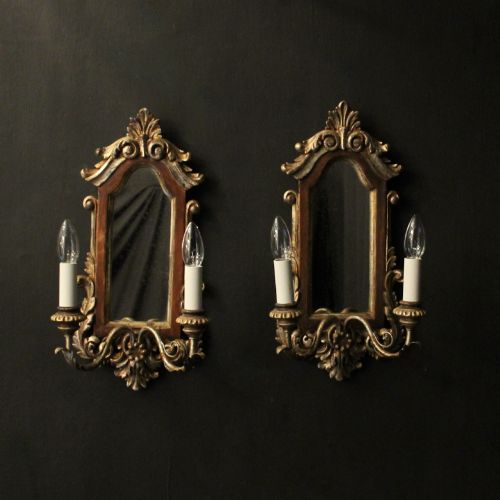
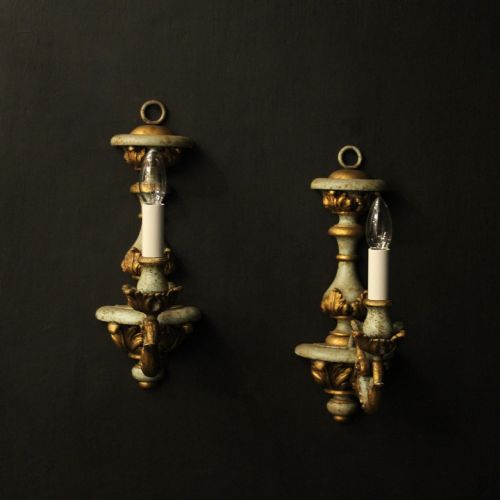
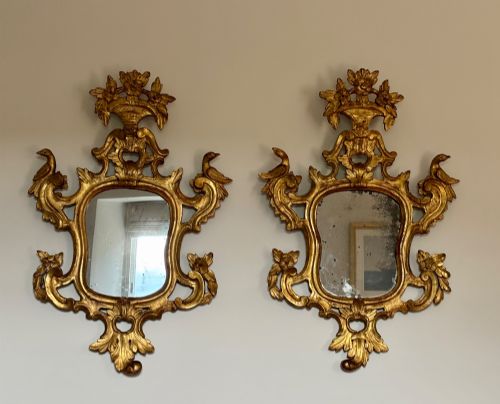
Rococo giltwood sconces bring dramatic candlelight and carved flourish to a wall, combining ornate woodwork with shimmering gold.

Rococo Giltwood Sconces
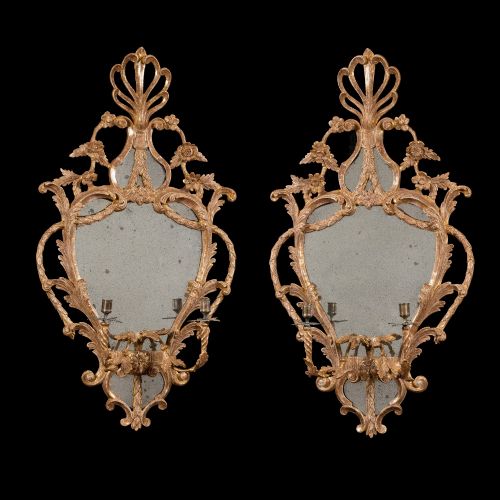
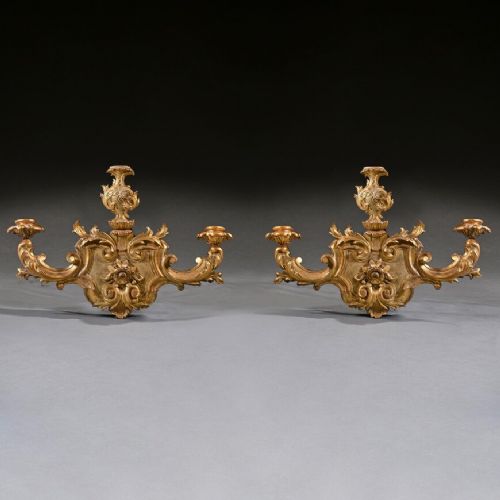
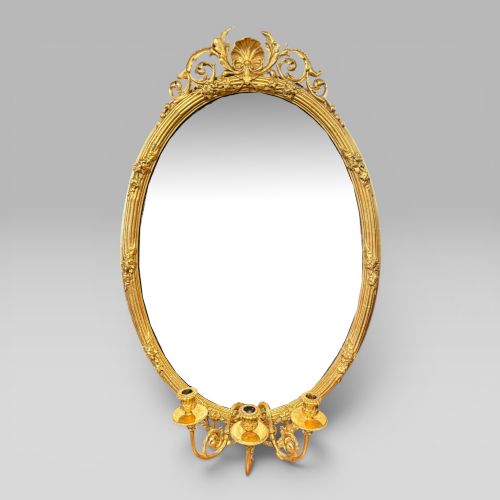
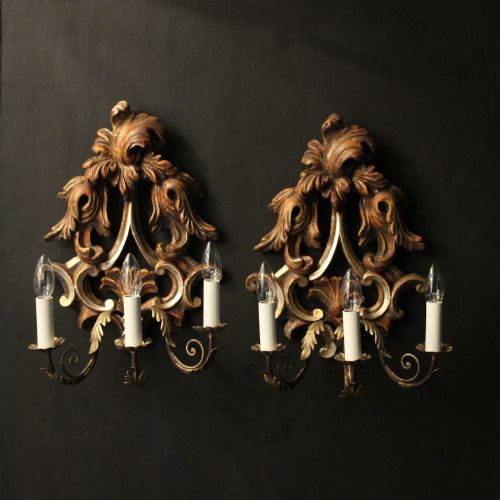
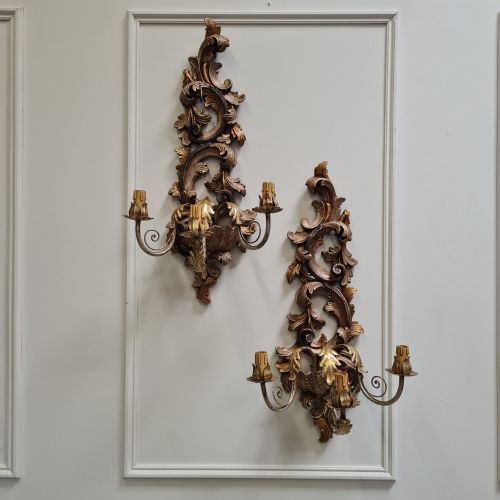
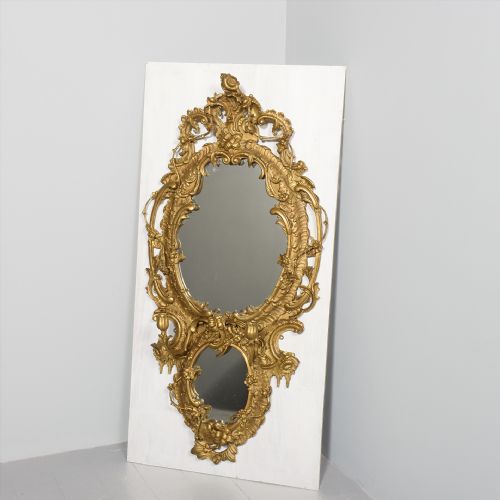
When searching for rococo giltwood sconces, collectors encounter wall lights, girandoles, and wall brackets spanning the eighteenth century to the early twentieth century. Italian, French, and Florentine origins dominate the selection, often appearing as matched pairs designed to flank a mirror or fireplace. Forms range from single-arm brackets to elaborate multi-arm wall lights integrated with carved wooden frames and mirror glass.
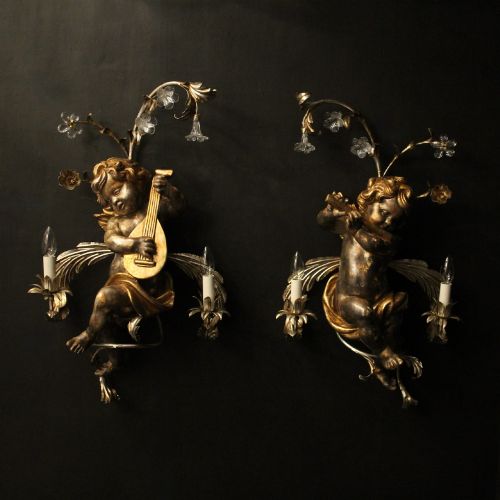
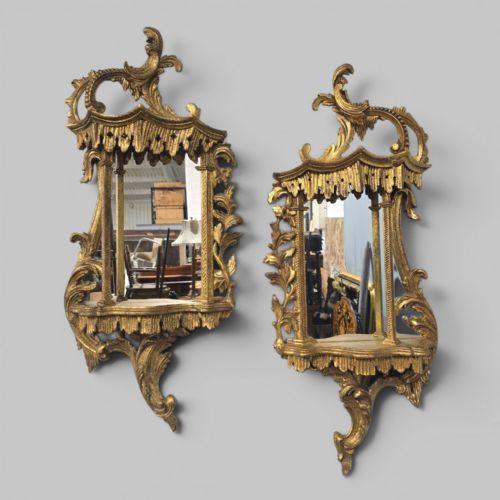
The aesthetic draws heavily on Continental revivals, encompassing Florentine rococo, Venetian designs, and Chinese Chippendale interpretations. Pieces from the nineteenth and early twentieth centuries frequently replicate earlier eighteenth-century exuberance with asymmetrical scrolls, acanthus leaves, and putti. Buyers regularly find wall lights fitted with twin, triple, or four arms intended to multiply the warmth of candlelight against a reflective surface.
How they were made
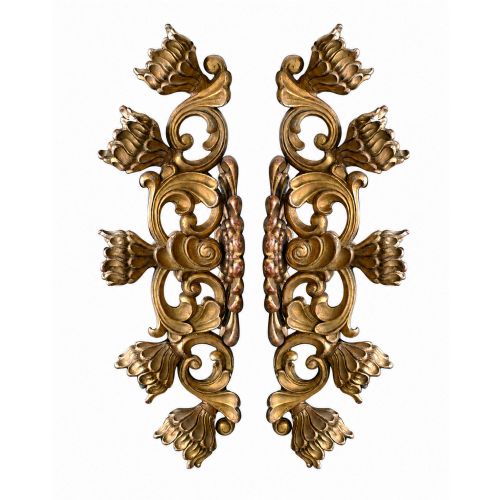
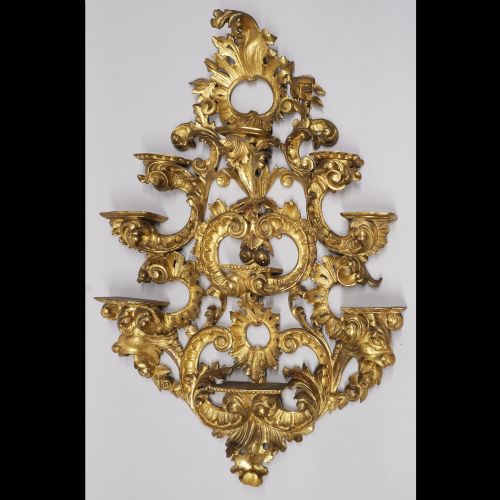
Makers shaped these fixtures from carved wood, applying layers of gesso to build up intricate relief details such as scrolls, cherubs, and floral motifs. Artisans then laid gold leaf over the prepared surfaces, occasionally incorporating silver gilt or polychrome accents to create depth and contrast. Mirror glass and Murano elements frequently appear as backplates to enhance the diffusion of light in dimly lit rooms.
Structural joinery for the arms and brackets relied on solid timber foundations capable of supporting metal candle holders and branch fittings. Skilled carvers utilised hand tools to achieve the sweeping, asymmetrical curves characteristic of the style, ensuring each wooden component flowed naturally into the next before gilding took place.
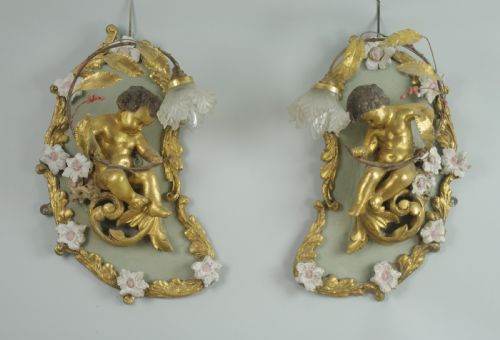
Carved wooden cherubs peek out from behind candle arms, watching dinner parties unfold with perpetual wooden surprise.
What varies in quality
The depth and fluidity of the hand-carving separate ordinary production from superior examples, with finer pieces exhibiting crisp, undercut foliage and expressive figures rather than flat, repetitive moulding. The quality of the gilding itself dictates the visual impact, where burnished gold leaf reflects light with a rich warmth that flat modern paints fail to replicate. Preservation of the original gesso surface beneath the gold also marks a significant distinction between well-kept specimens and heavily restored alternatives.
Proportion and structural balance determine the architectural success of a wall light or girandole, ensuring the arms project harmoniously from the backplate without appearing clumsy. Heavier pieces require robust internal framing and secure mounting brackets to maintain their integrity over decades of wall hanging. The integration of original mirror glass, where present, adds considerable character compared to later replacement plates.
The Rococo Giltwood Sconces Glossary
- Giltwood
- Wood that has been coated with thin sheets of gold leaf over a prepared gesso ground. This technique creates a luminous metallic finish characteristic of high-status period lighting.
- Girandole
- An ornamental wall mirror featuring attached candle branches or sconces. The reflective glass serves to multiply the illumination cast by the candles.
- Gesso
- A plaster mixture applied to carved wood to create a smooth, absorbent surface for gilding. It allows carvers to achieve sharp, detailed relief work.
- Putto
- A figure of a small chubby infant, often depicted as a winged cherub. These motifs frequently populate the carved woodwork of French and Italian lighting fixtures.
- Chippendale
- A style of English furniture and decorative design inspired by Thomas Chippendale, incorporating rococo, Gothic, and Chinese elements. Chinese Chippendale variants often feature pagoda motifs and intricate fretwork.
Rococo Giltwood Sconces: Frequently Asked Questions
How were rococo giltwood sconces used?
These fixtures served primarily to illuminate rooms by multiplying the flickering glow of candles against reflective mirrored backplates. Placed strategically on walls, they provided both functional lighting and decorative splendour for domestic interiors.
Pairs were typically positioned to flank paintings, doorways, or mantelpiece mirrors to create visual symmetry. The reflective surfaces helped to brighten dark corners before the advent of electric lighting.
How do I hang a heavy wall light safely?
Hanging these items requires locating solid wall studs or using heavy-duty wall anchors rated for the combined weight of the wood, metal arms, and mirror glass. The mounting bracket must securely engage the internal structure of the piece rather than relying on surface decoration alone.
Professional installation is recommended for larger multi-arm configurations to distribute the load evenly. Ensuring the wall plate sits flush prevents unnecessary strain on the projecting candle branches.
How can I tell eighteenth-century pieces from later revivals?
Eighteenth-century examples display hand-cut timber foundations, hand-applied gesso that shows natural shrinkage cracks over time, and subtle tool marks left by period carvers. The wear patterns on the gold leaf often reveal centuries of gentle cleaning and atmospheric ageing.
Revival pieces from the nineteenth and twentieth centuries frequently utilise machine-prepared timber or harder composition materials for the relief ornament. Examining the reverse of the backplate usually uncovers clues regarding the age of the wood and the construction methods used.
Can these wall lights be wired for electricity?
Many wall lights and girandoles have been adapted over the years to take small electric lamp holders in place of candles. This conversion allows them to function safely within modern lighting schemes while retaining their historic aesthetic.
Any electrical work should be carried out by a qualified professional to ensure the internal wiring complies with current safety standards. Careful routing of wires preserves the delicate carved details of the wooden arms.