
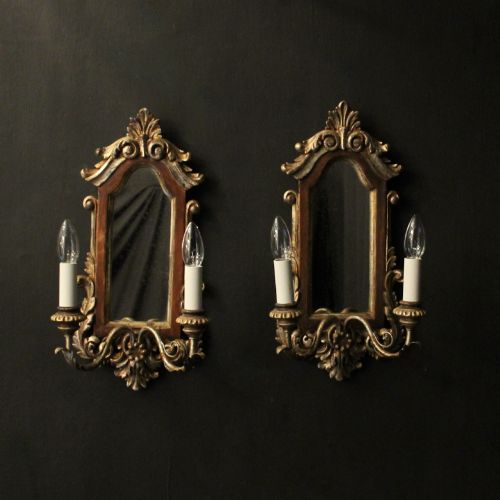
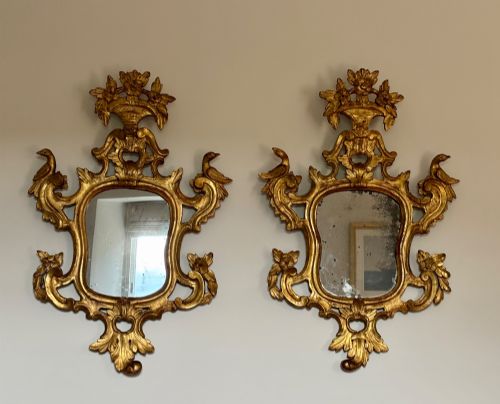
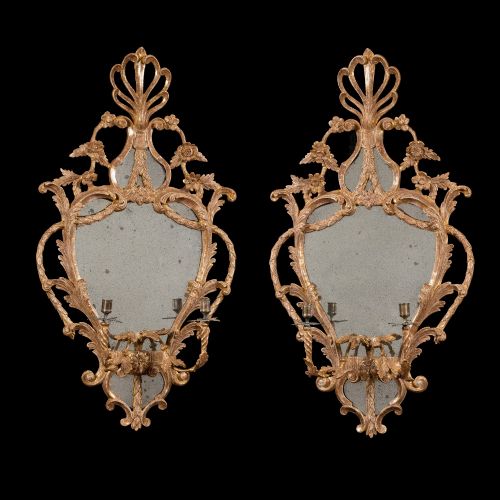
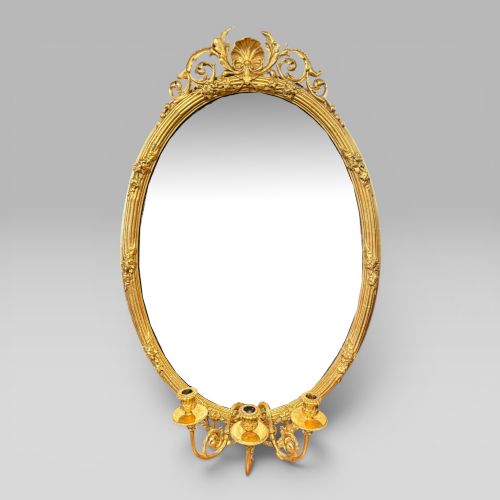
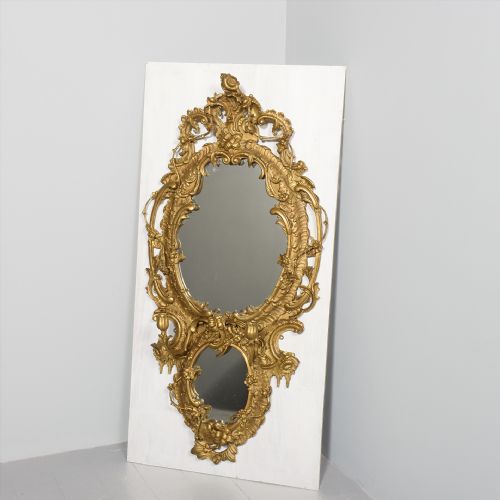
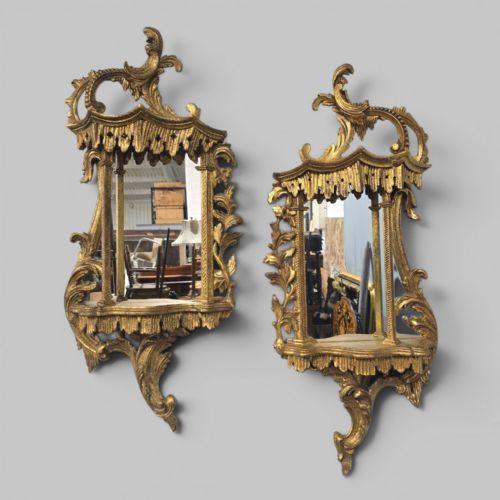


Rococo Giltwood Sconce Mirror
A rococo giltwood sconce mirror brings fluid carved movement and candlelight to a room, catching the eye with swirling gilt frames and polished glass.
Rococo Giltwood Sconce Mirror
A rococo giltwood sconce mirror combines a reflective plate with integrated candle arms, designed to multiply the warm glow of evening light against a panelled wall. These decorative pieces emerge in varied regional interpretations, from Venetian and Florentine workshops to Georgian and Victorian adaptations.
The selections span centuries of craftsmanship, featuring eighteenth-century originals alongside nineteenth-century revivals and later twentieth-century interpretations. Many examples appear in matched pairs, offering symmetry for placement above mantelpieces or console tables.
Makers drew heavily on asymmetric C-scrolls, floral motifs, and organic foliage to frame the glass. Buyers encounter both plain wall mirrors and elaborate girandoles fitted with twin or single arm sconces for candles.
How They Were Made
Carved wood provides the structural foundation for the most intricate frames, shaped from soft timbers that accepted deep relief work. Artisans applied layers of gesso over the timber base to create a smooth, responsive surface for subsequent detailing and tool work.
Gold leaf application required meticulous skill, laying delicate metallic sheets over a coloured bole ground before burnishing to a bright finish. Mirror glass was then set into the rebate, often backed by original wooden panels or secured with traditional fixings.
Listings feature works from the eighteenth, nineteenth, and twentieth centuries, using giltwood, gesso, brass, and carved wood.
What Varies in Quality
Depth and sharpness of the carving separate standard production from superior examples, as master carvers achieved crisp undercutting and naturalistic asymmetry without stiffness. The quality of the gilding itself dictates the visual warmth, with burnished highlights contrasting against matte textured grounds.
Integrity of the timber frame and the originality of the mirror glass plates heavily influence standing. Superior pieces retain their early silvered plates and initial gilt surfaces, showing harmonious ageing rather than heavy modern intervention.
The Rococo Giltwood Sconce Mirror Glossary
- Giltwood
- Wood covered with gold leaf or thin gold metal powder applied over a prepared surface. This finish provides the characteristic rich metallic lustre seen on period frames.
- Girandole
- A decorative wall mirror fitted with one or more arms for holding candles. The reflective glass serves to multiply the ambient light in the room.
- Gesso
- A plaster mixture applied to carved wood to form a smooth surface for gilding. It allowed carvers to achieve sharp relief details before applying gold leaf.
- Rococo Revival
- A nineteenth-century design movement that reinterpreted the curving, asymmetric style of the eighteenth century. Makers embraced elaborate scrolling foliage and shell motifs.
- Pier mirror
- A tall mirror specifically designed to hang on the wall space between windows. These pieces often sat above low console tables or pier tables.
Rococo Giltwood Sconce Mirror: Frequently Asked Questions
How do I hang a heavy giltwood mirror safely?
These carved frames carry substantial weight due to the dense timber and gesso construction. Secure the fixing directly into wall studs or utilise appropriate heavy-duty masonry anchors.
Distribute the load across two hanging points rather than a single wire to maintain stability and prevent frame distortion over time.
Can I burn candles in the sconce arms?
Original candle arms are delicate and vulnerable to heat or wax damage. It is prudent to use modern LED candles that replicate flame without risk to the antique gilding.
If burning real wax candles, insert glass guards and monitor closely to protect the historic surface from drips and soot.
How do I tell an eighteenth-century mirror from a revival piece?
Examine the construction of the timber backing and the hand-carved tool marks beneath the gesso layers. Eighteenth-century pieces often display hand-beveled glass and irregular timber shrinkage.
Nineteenth-century revival mirrors typically show machine-sawn backing boards and heavier, more uniform plaster casting in the decorative foliage.