
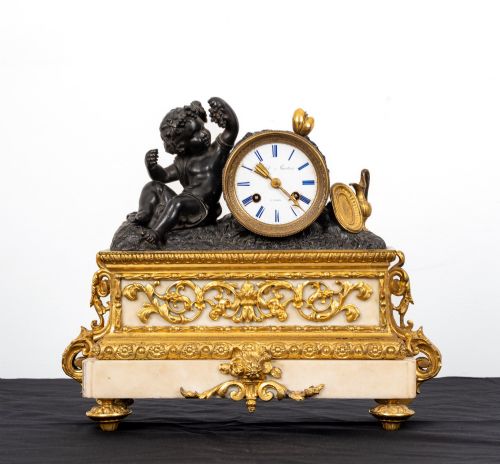
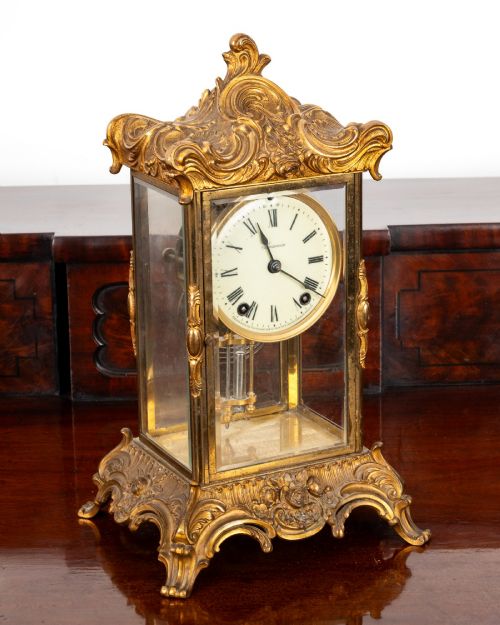

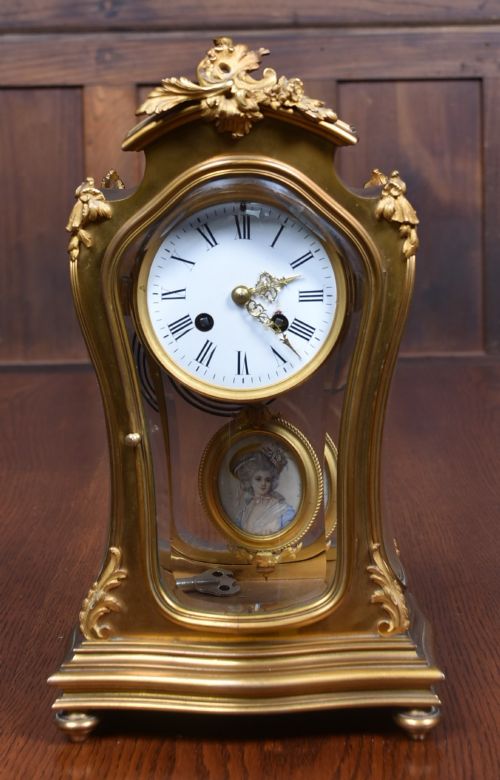


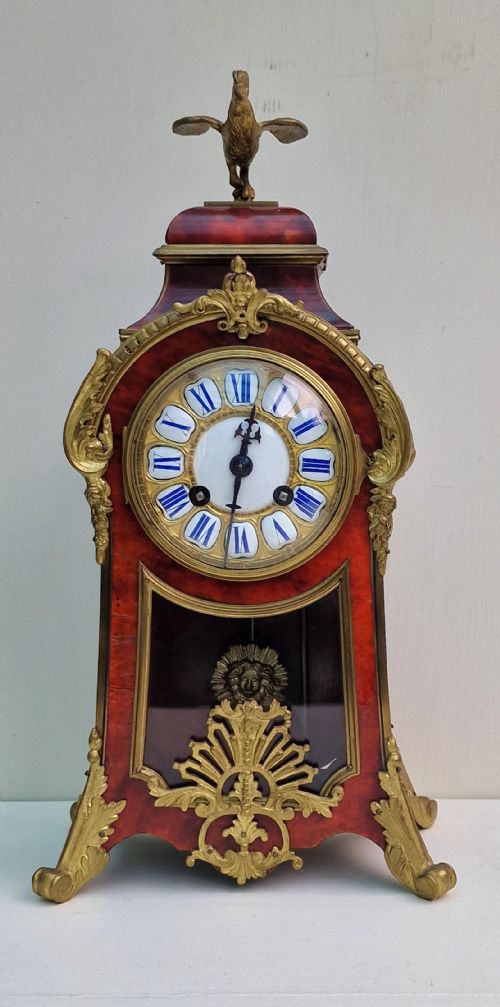


Rococo Gilt Pendulum Clock
A rococo gilt pendulum clock brings 19th-century French metalwork and intricate dial-work into a room.
Rococo Gilt Pendulum Clock
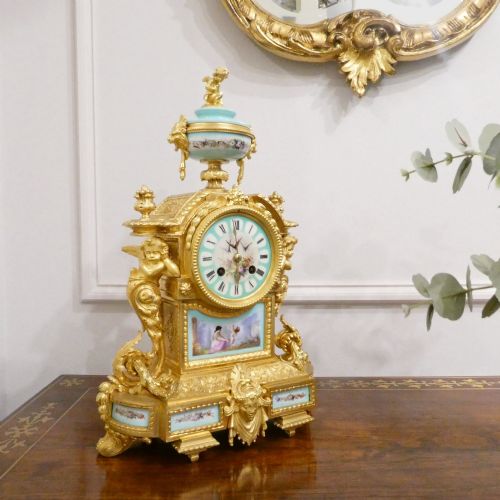
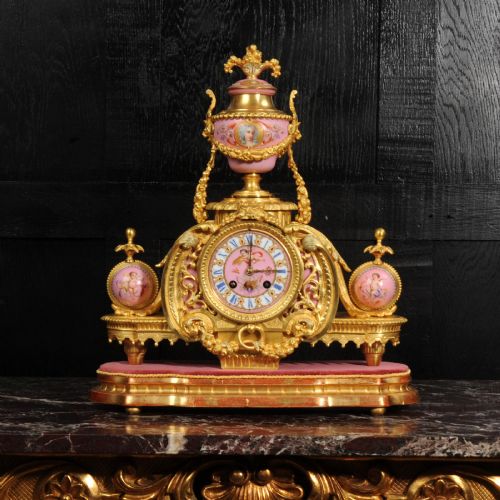
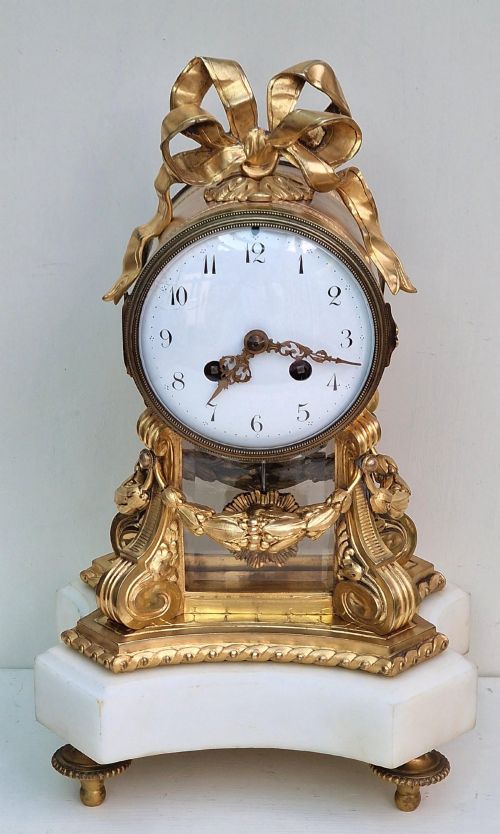
A rococo gilt pendulum clock brings together ornate cast forms and swinging pendulums, mostly arriving from nineteenth-century French workshops. The versions most commonly met on this page take the form of mantel clocks set in gilt bronze, ormolu, and brass.
Makers and retailers from Paris and London signed movements and dials, while styles span from French Rococo Revival to Louis XV and Louis XVI revivals. Alongside shelf-standing mantel pieces, the selection includes wall-hung cartel clocks and occasional longcase or bracket variants.
Dials frequently feature enamel cartouches or painted porcelain panels, paired with cast figures like Cupid or elaborate floral asymmetry. These objects served as domestic timekeepers and decorative centrepieces in Victorian parlours.
Materials and Techniques
Foundries shaped bronze and brass through casting, then applied fire-gilding to produce the ormolu finish characteristic of these pieces. Marble and porcelain sections were incorporated to contrast against the polished metallic surfaces.
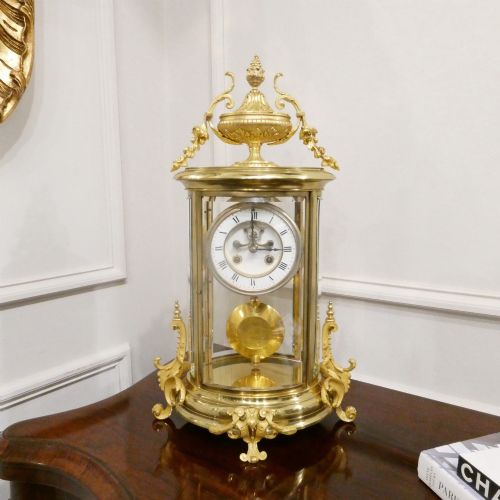
Clockmakers fitted eight-day mechanical movements driven by pendulums, often housing them within four-glass cases or heavily sculpted asymmetrical rococo frames. Enamel dials were painted and fired, while miniature paintings on porcelain added decorative detail to the front plates.
Listings feature items dated from the 1850s to the early 20th century, predominantly created in France.
Assessing Quality
Quality rests upon the crispness of the bronze casting and the depth of the original gilding, where sharp relief and hand-chased details separate superior work from softer secondary casting. The presence of a signed movement by a known maker elevates an example further.
The integration of materials determines refinement, such as finely painted Sèvres porcelain panels or carefully fitted marble plinths rather than plain substitutes. Preservation of the original mechanical components and clean enamel dials also dictate the standing of an individual clock.
Achille Brocot·Samuel Marti·Siffel and Cartier·Delettrez·Japy Frères·Henri Marc·Le Roy and Fils·Phillipe H. Mourey·William Webster
The Rococo Gilt Pendulum Clock Glossary
- Ormolu
- Gilt bronze produced by applying a mercury and gold amalgam to a bronze base and heating it. This technique creates a durable golden surface seen on nineteenth-century French frames.
- Cartel clock
- A wall-mounted clock housed in an ornate frame made of wood, brass, or ormolu. These pieces attach directly to wall fixings rather than resting on a mantel.
- Crystal regulator
- A clock encased in glass panels on four sides that reveals the movement and swinging pendulum inside. They gained popularity during the late nineteenth century.
- Enamel
- Fused glass powder applied to metal dial faces and fired at high temperatures to create a smooth surface. Numerals are typically painted onto these white or cream backgrounds.
Rococo Gilt Pendulum Clock: Frequently Asked Questions
Where should I place a mantel clock?
These clocks fit securely on flat surfaces like mantelpieces, console tables, or sturdy chests of drawers where they can remain level.
Because the pendulum requires a stable and plumb surface to keep accurate time, avoid placing them on vibrating floors or unstable shelves.
How do I wind an eight-day clock?
Insert the winding key into the designated holes on the enamel dial and turn it gently until resistance is felt.
Take care not to over-wind the mainspring, as this can damage the internal mechanical components of the movement.
How do I set the pendulum swinging?
Open the glass door or back panel to access the pendulum bob inside the case.
Give the pendulum a gentle push to one side and listen for an even tick-tock beat to ensure the clock is placed level.
How do I identify the period of a clock?
Examine the style of the cast bronze case, the materials used for the dial, and any signatures stamped on the back plate.
Nineteenth-century pieces often combine rococo revival motifs with machine-made brass movements carrying maker medals or stamps.