
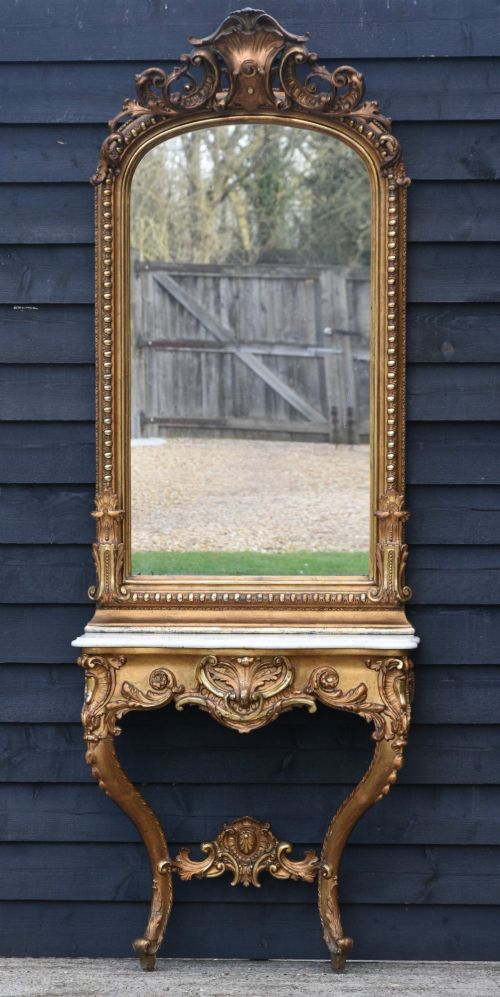
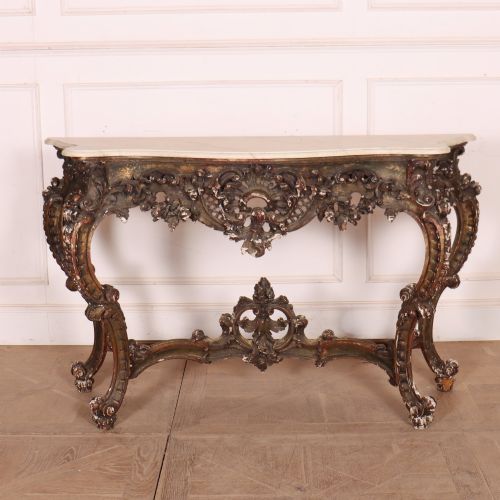
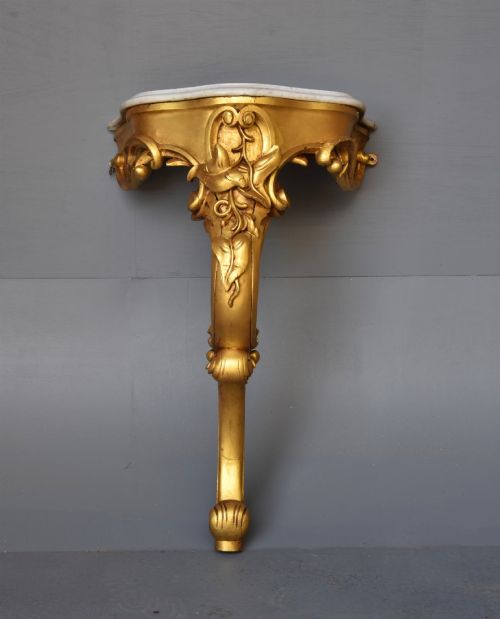
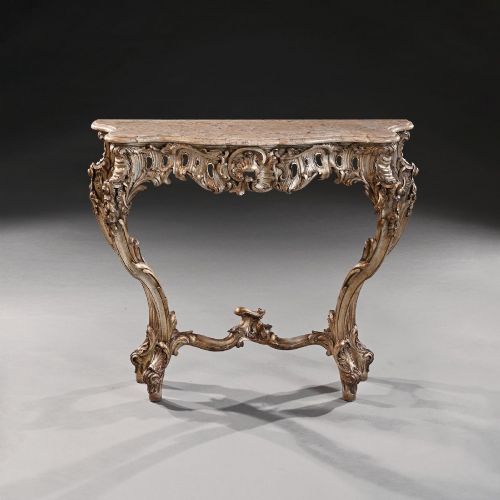



Rococo Gilded Wall Table
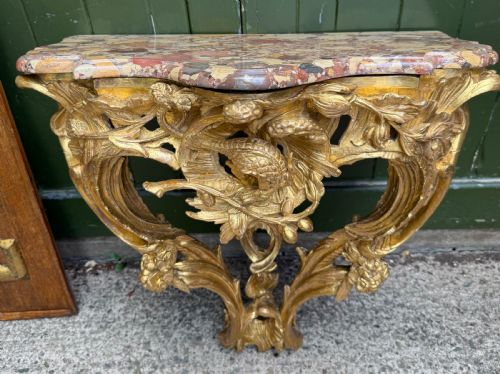
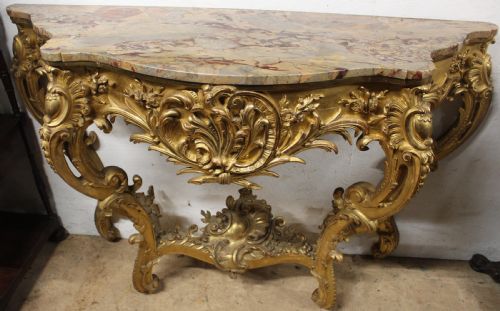
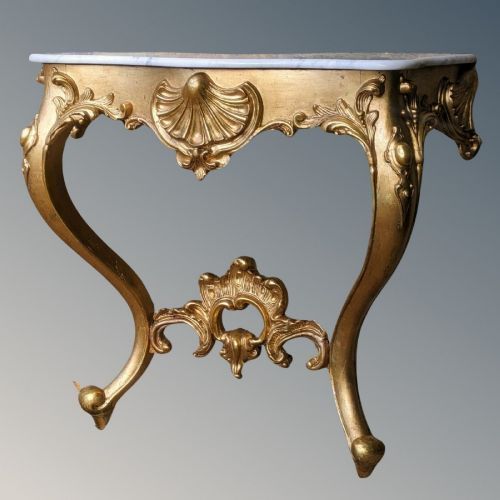
A rococo gilded wall table brings dramatic asymmetry and carved warmth to an interior, pairing heavily figured marble with gold leaf.
Rococo Gilded Wall Table
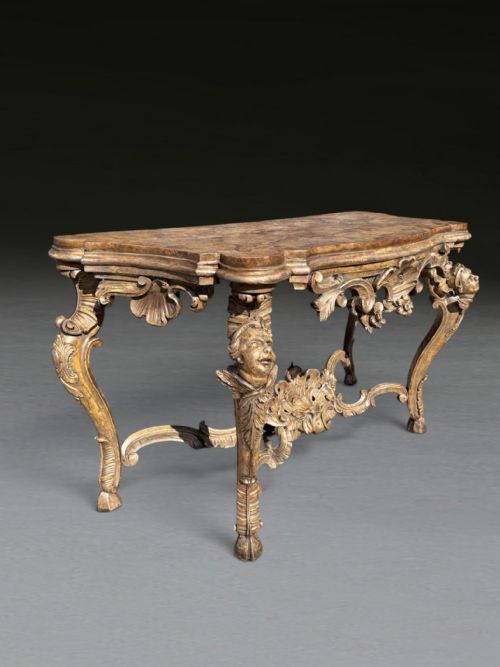
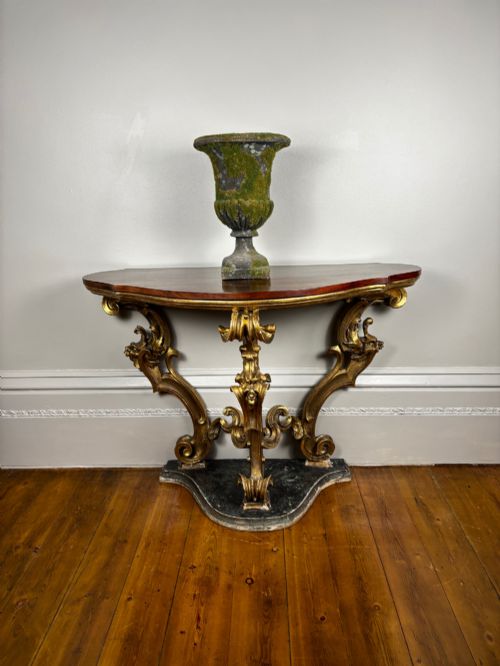
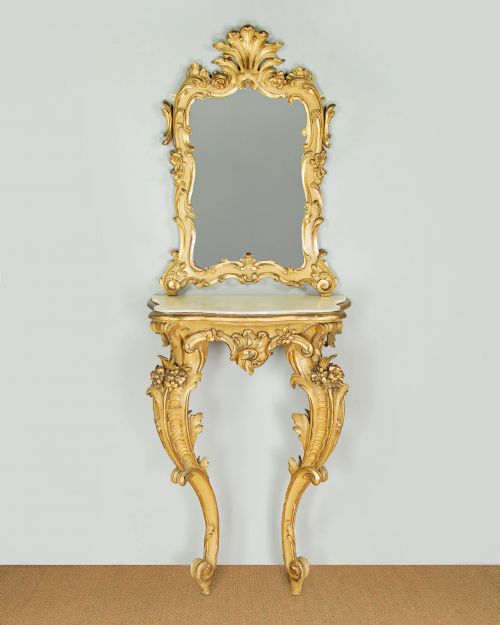
A rococo gilded wall table is designed to anchor a room, appearing frequently as a console table, wall console, or paired with a matching pier mirror. These pieces emerge across the eighteenth and nineteenth centuries, reflecting French, Italian, and Venetian interpretations of the style.
The format ranges from small side tables to grand console table and mirror sets. Marble tops and carved wooden frames define the physical presence of these forms in domestic settings.
Materials and Construction
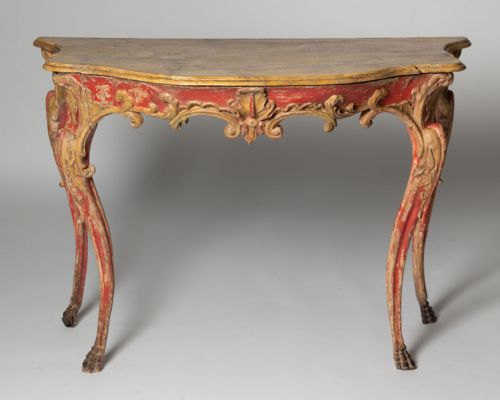
Makers shaped these tables from carved wood, applying gesso to smooth the surface before laying gold leaf or silver gilt. Paint and parcel gilt surfaces also appear, offering varied tones alongside the predominant gilded finishes.
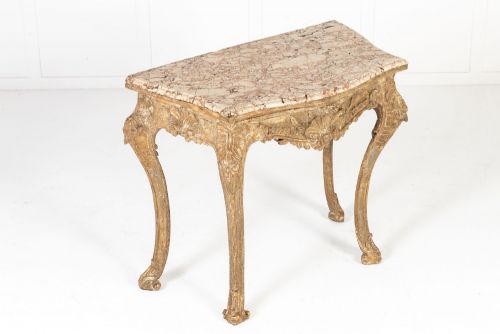
Heavy marble tops, including figured varieties like breche d'alep, rest directly upon the carved wooden bases. Metal elements and glass mirrors complete the primary material palette recorded in the evidence.
Some tables feature carved putto and rams' heads staring steadfastly from the frieze.
Craftsmanship and Proportion
Depth and crispness of the carved wood separate standard production from superior work. The fluidity of the scrolls and the integration of motifs like putto or rams' heads dictate the visual success of the piece.
The quality of the gilding and the selection of the marble top establish the overall refinement. Heavier, more complex console and mirror combinations show greater ambition in workshop execution.
The Rococo Gilded Wall Table Glossary
- Giltwood
- Wood coated with gold leaf or metal leaf applied over a prepared gesso ground. This finish provides the characteristic metallic warmth of the style.
- Console Table
- A table supported by wall brackets or console legs, designed to stand against a wall rather than free in the room. They frequently carry heavy stone tops.
- Gesso
- A plaster mix applied to wood surfaces to create a smooth base for gilding and fine carving detail. It allows crisp edges on scrolls and foliage.
- Pier Mirror
- A large mirror designed to hang on the pier wall between two windows, often paired with a matching console table placed directly beneath it.
- Breche d'alep
- A specific type of figured marble found on eighteenth and nineteenth-century furniture tops. Its mottled pattern contrasts with gilded wooden frames.
Rococo Gilded Wall Table: Frequently Asked Questions
How do I style a wall console?
Place a rococo gilded wall table against a principal wall in a hall or reception room to anchor the space. Pairing it with a matching wall mirror completes the traditional arrangement.
Keep objects placed on the marble top minimal to let the carved wooden frame and gold leaf remain the focal point of the wall.
Are these tables free-standing?
These pieces are designed as wall tables or consoles that require physical attachment or support against a vertical surface. They rely on the wall for stability due to their narrow footprints and heavy marble tops.
Most examples use console legs or brackets that anchor directly into the wall structure.
What is the difference between French and Italian pieces?
French rococo and revival examples tend to emphasise asymmetry, delicate C-scrolls, and painted finishes alongside standard gilding. Italian and Venetian pieces often display bolder baroque undertones and heavier silver gilt.
Both regional traditions utilise carved wood and marble, but the sculptural details on the apron and legs vary in intensity.
How do I identify eighteenth century work?
Eighteenth century examples show deep, hand-carved wooden structures with authentic wear beneath the gold leaf or gesso. The joinery and the weight of the timber reflect earlier workshop practices.
Nineteenth century revival pieces often replicate these forms but carry distinct nineteenth century construction methods and surface patination.