



Rococo Games Table
A rococo games table brings exuberant curves and serpentine lines into a room, offering a functional surface that conceals a playing top.
Rococo Games Table
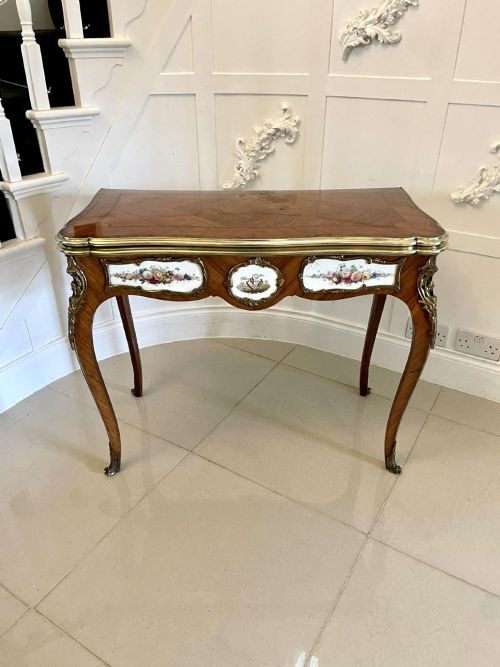
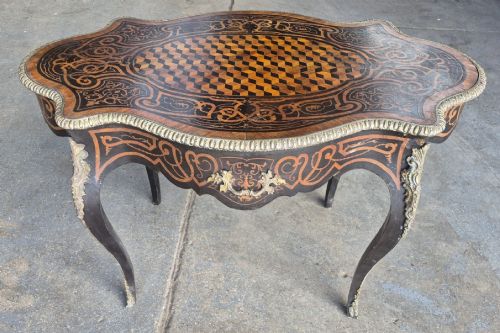
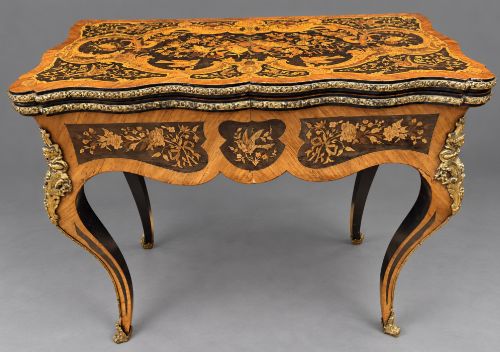
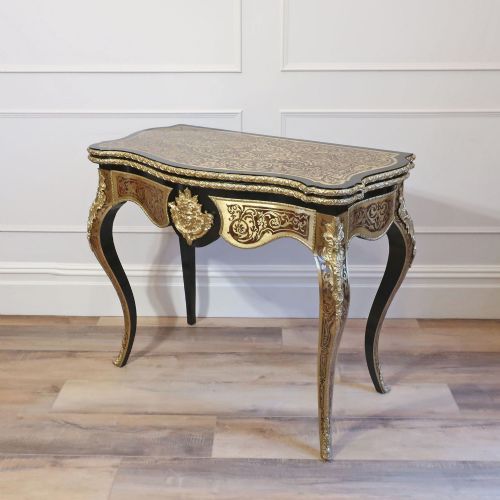
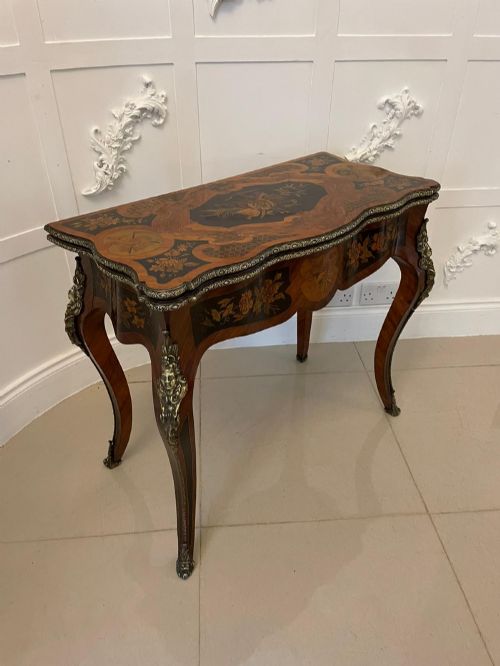
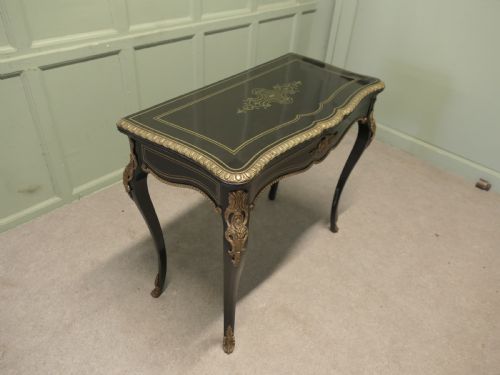
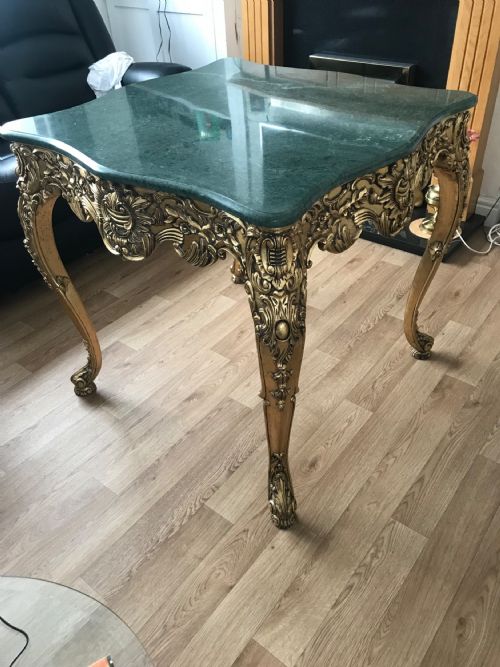
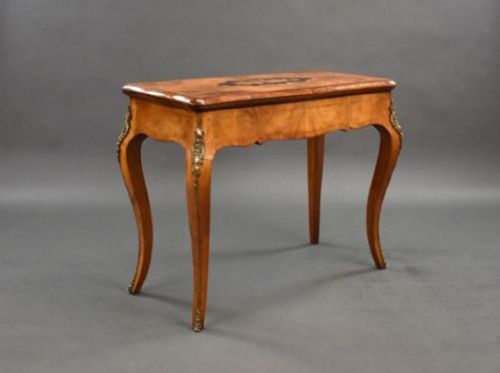
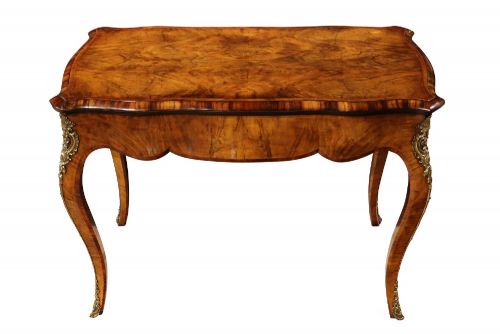
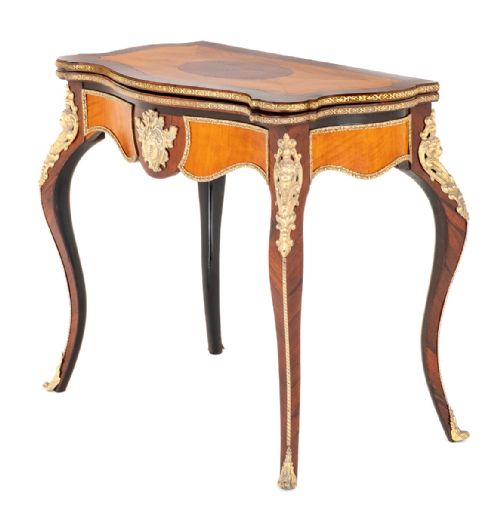
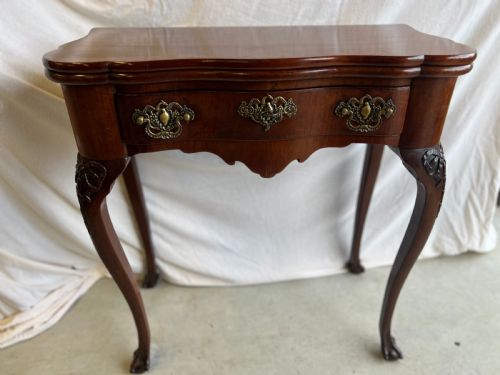
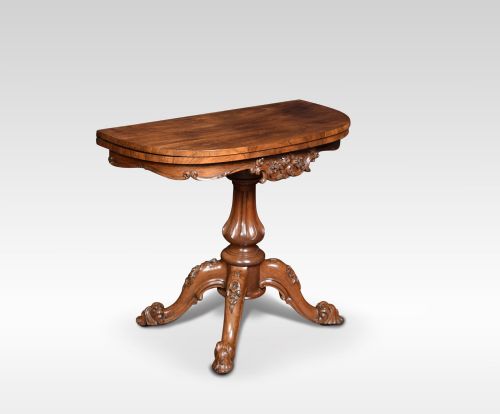
A rococo games table is a foldable or convertible piece designed for social pastimes, most commonly appearing on this page in Victorian incarnations with French revival influences. These tables typically feature a fold-over top supported by cabriole legs, moving between a compact console form and a larger playing surface lined for cards.
The materials span walnut, burr walnut, rosewood, kingwood, and mahogany, often enriched with marquetry inlay or ormolu mounts. Makers adapted 18th-century continental aesthetics during the 19th century, producing substantial pieces that served both for formal display and domestic card games.
How they were made
Cabinetmakers constructed these tables using dense hardwoods like walnut and rosewood, frequently applying burr walnut or kingwood veneers to achieve dramatic grain patterns across the folding top. Marquetry inlay, incorporating various tinted woods, decorated the surfaces with floral or geometric motifs.
Ormolu mounts and brass inlay provided structural edge protection and ornamental contrast, while swivel or gate-leg mechanisms supported the hinged top when opened for play.
Rococo Games Table Retail Price Guide 2026
Typical asking prices for rococo games table among the pieces listed under this phrase on Sellingantiques today, from the lower quarter to the upper quarter. They describe what is for sale here now, not the wider market.
Listings feature Victorian pieces predominantly from the 1850s to 1880s, alongside examples dated to the 1900s and 1960s.
What varies in quality
Quality separates through the depth of carving, the precision of the marquetry, and the selection of veneer figures such as burr walnut. Finer examples display hand-chased ormolu mounts and seamless hinges that allow the folded top to sit completely flat.
The integrity of the pivoting mechanism and the choice of secondary timbers beneath the veneer also distinguish workshop production from standard commercial output.
Maison Millet·Edwards & Roberts·Maple & Co
The Rococo Games Table Glossary
- Cabriole leg
- A furniture leg that curves outward at the knee and tapers inward toward the foot, mimicking an animal limb. This form defines much of the rococo revival style.
- Marquetry
- Decorative patterns formed by fitting together thin pieces of wood veneer and other materials onto a structural surface. It often depicts floral arrangements or geometric designs.
- Ormolu
- Gilded bronze applied to furniture as decorative mounts, feet, or edging. It adds metallic contrast to dark hardwoods.
- Serpentine top
- A table top with a sinuous edge curving outward and inward in a wave-like motion. It requires precise woodworking to shape the solid timber or veneer.
Rococo Games Table: Frequently Asked Questions
How do you open a fold over games table?
The top leaf rotates on a pivot or lifts on a hinged rear leg to unfold flat onto the frame. This action doubles the surface area for card play.
Support mechanisms inside the frieze swing outward to bear the weight of the open leaf safely.
What is the difference between a tea table and a games table?
Tea tables generally feature plain or dished wooden tops designed for porcelain, whereas games tables conceal lined playing surfaces beneath the fold.
Many examples on this page served a dual purpose, functioning as console tables when closed.
How do I identify a Victorian rococo revival piece?
Look for asymmetrical scrollwork, C-scrolls, and naturalistic floral carvings applied to walnut or rosewood structures. The cabriole leg and serpentine top are primary structural indicators.
Nineteenth-century makers often reinterpreted Louis XV forms with heavier timbers and distinct veneer choices.
Where should I place a games table in a room?
These pieces sit well against a wall in a hallway or drawing room when closed, displaying the grain of the burr walnut or marquetry top. Opening the table requires clearance space around it for seating during social use.
Keep them away from direct heat sources to protect the veneered surfaces and wooden hinges.