
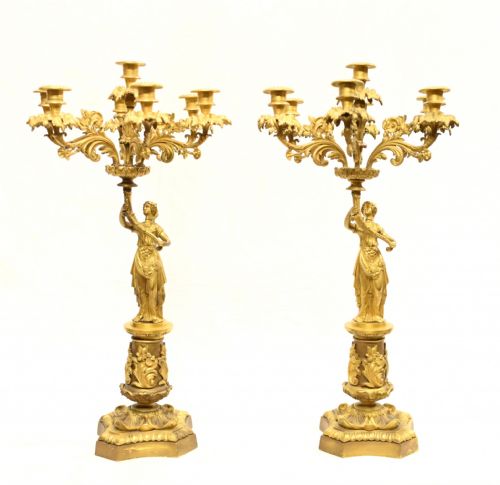


Rococo Figural Candleholders
Rococo figural candleholders bring sculptural figures and organic curves to a room, offering both decorative presence and functional light.
Rococo Figural Candleholders
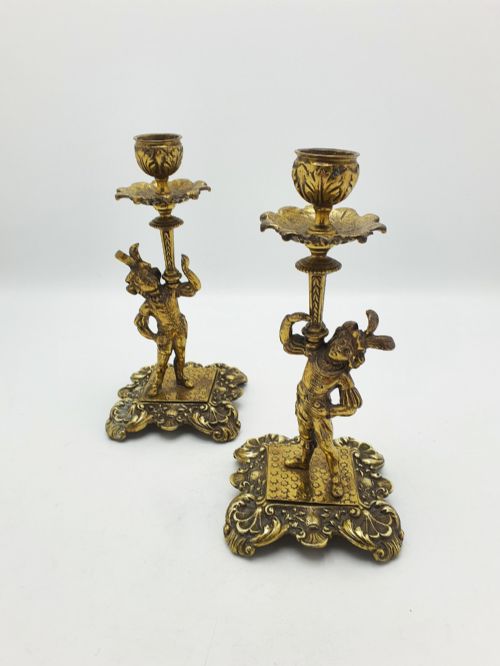
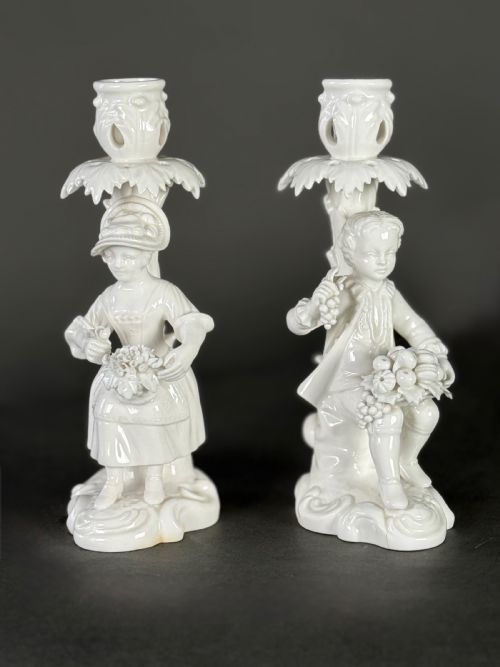
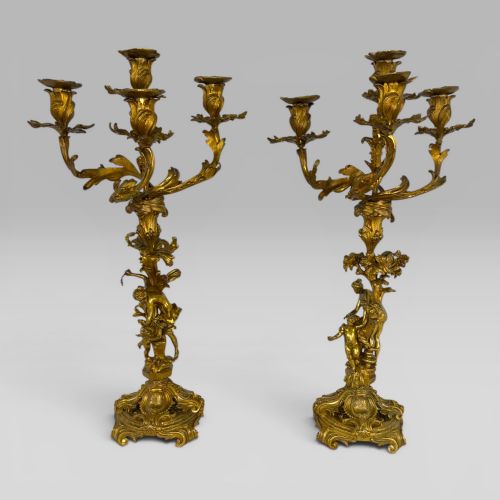
Rococo figural candleholders combine candle-bearing sockets with sculptural figures, spanning single candlesticks and multi-armed candelabra. The forms range from pairs of children and mythological mermen to pastoral gardeners, shepherds, and cherubs.
Most examples originate from nineteenth-century European production, drawing heavily on earlier eighteenth-century French and Derby models. Collectors encounter pairs modelled with rococo scrollwork, floral bocages, and asymmetric bases.
The category encompasses both single-light sticks and candelabra with branches for multiple candles. Figures are integrated directly into the structural design, serving as the central column or flanking the main stem.
How they were made
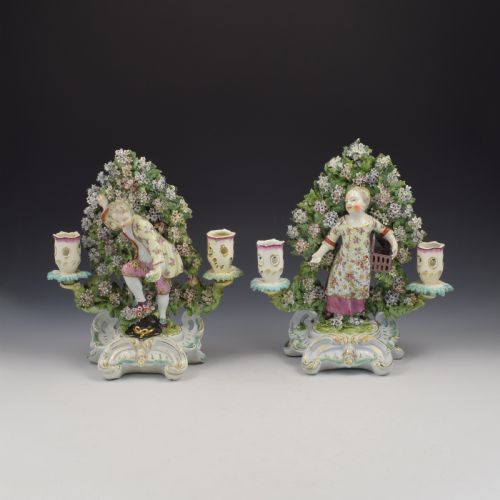
Makers utilised hard paste porcelain and earthenware, shaping figures by hand or in moulds before applying detailed surface painting and glazed finishes. Porcelain models often incorporate delicate floral bocages built from intricate ceramic petals and leaves.
Mermen and cherubs share the mantelpiece with earnest nineteenth-century gardeners holding baskets.
What varies in quality
Quality rests in the crispness of the modelling and the finesse of the hand-painting on ceramic examples. Finer pieces display subtle facial expressions, carefully articulated fingers, and meticulously formed floral elements rather than heavy, uniform casting.
Metal pieces are distinguished by the depth of the chasing and the preservation of the original gilt or ormolu finish. Superior examples maintain sharp relief in the rococo scrolls and secure joints where the branches meet the central figure.
Derby·Sitzendorf·Triebner, ENS & Eckert Volkstedt·Meissen·Minton
The Rococo Figural Candleholders Glossary
- Bocage
- An ornamental background of carved or modelled foliage and flowers encircling a ceramic figure. This technique is frequently seen on eighteenth and nineteenth-century porcelain candlesticks.
- Ormolu
- Finely ground high-carat gold applied to a bronze base using a mercury amalgamation process. The technique produces a rich, durable golden finish characteristic of French decorative arts.
- Candelabra
- A branched candlestick designed to hold multiple candles simultaneously. They often feature removable branches to allow use as single candlesticks.
- Rococo Revival
- A nineteenth-century design movement that re-interpreted the asymmetric scrolls, shell motifs, and natural curves of the eighteenth-century French movement. This style dominates the metal and ceramic pieces in this category.
Rococo Figural Candleholders: Frequently Asked Questions
What is a figural candleholder?
A figural candleholder incorporates human, mythological, or cherubic sculptures into the design of a candlestick or candelabra. These pieces combine functional lighting with decorative ceramic or metal art.
They were primarily produced in Europe during the eighteenth and nineteenth centuries, reflecting prevailing revival styles.
How do I clean porcelain candleholders?
Porcelain candleholders require gentle cleaning with a soft brush or cloth to remove dust from delicate areas like floral bocages. Avoid harsh chemical cleaners that can damage hand-painted enamels or gilt highlights.
Water should be used sparingly, particularly if the piece has exposed ceramic bodies or old repairs.
Can I burn real candles in them?
Real candles can be burned, provided the candles fit securely in the sockets without leaning against fragile ceramic elements or floral bocages. Drip catchers or careful monitoring prevent wax from accumulating on delicate gilt bronze or porcelain surfaces.
Many collectors choose to use non-dripping tapers to protect the original finish.
How do I identify nineteenth-century pieces?
Nineteenth-century pieces often display factory marks, numbers, or impressed stamps underneath the base. The style of the rococo revival movement, combined with nineteenth-century porcelain pastes and cast brass or ormolu techniques, helps date the object.
Comparing the modelling style to known factory outputs provides further confirmation of the period.