
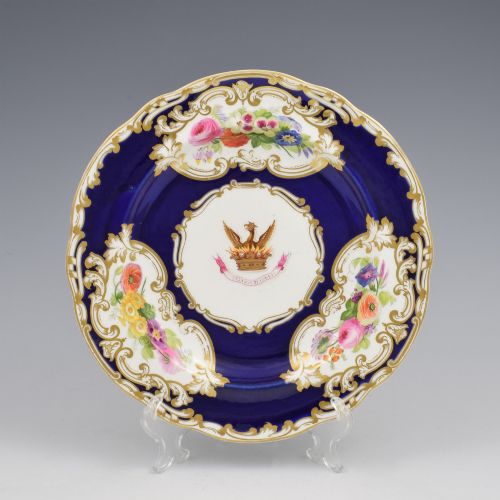


Rococo Ceramic Plates
Rococo ceramic plates bring animated asymmetry and fluid ornamentation to the table, prized for their sculptural forms and painted pastoral scenes.
Rococo Ceramic Plates
Rococo ceramic plates encompass cabinet pieces, dessert dishes, and serving plates produced across the eighteenth and nineteenth centuries. These items reflect distinct periods such as the Georgian, Victorian, and Edwardian eras, spanning soft-paste porcelain, hard-paste porcelain, and tin-glazed earthenware.
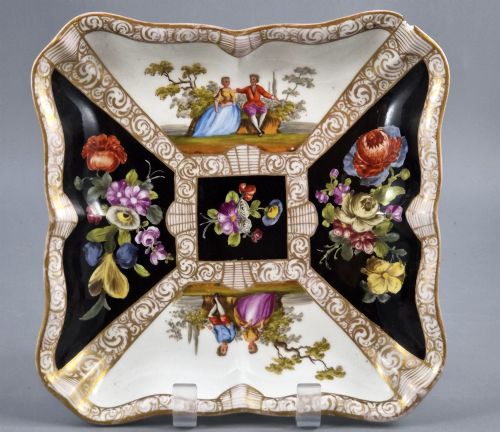
Makers working within French Rococo, Rococo Revival, and English Rococo Revival styles shaped these vessels with C-scrolls, asymmetric borders, and moulded ozier patterns. Examples on this page range from mid-eighteenth-century factories in Worcester, Chelsea, Chantilly, and Marseille to later German and English revivals.
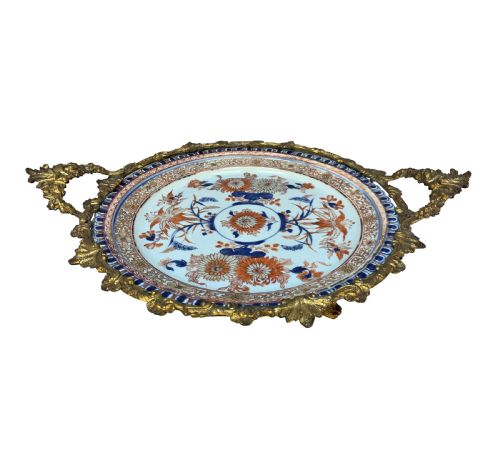
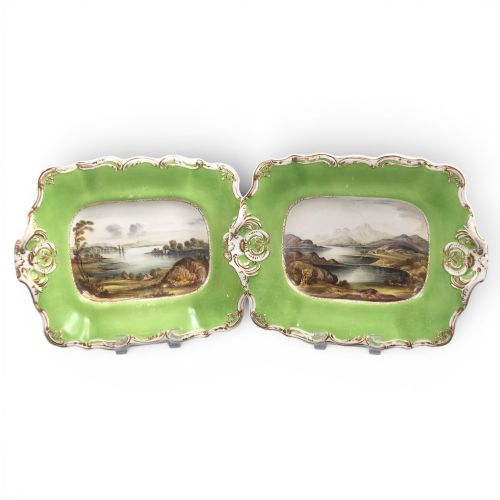
The assortment includes hand-painted botanicals, armorial crests, Watteau scenes, and exotic Chinese Imari patterns mounted in ormolu. Collectors encounter both single cabinet display pieces and surviving parts of grander dessert services.
Materials and Manufacture
Potters utilised soft-paste porcelain, hard-paste porcelain, and tin-glazed earthenware as the primary ceramic bodies, shaping them into square dishes, soup dishes, and flat plates. Soft-paste bodies from factories like Chantilly provided a warm, creamy ground for delicate underglaze and enamel painting.
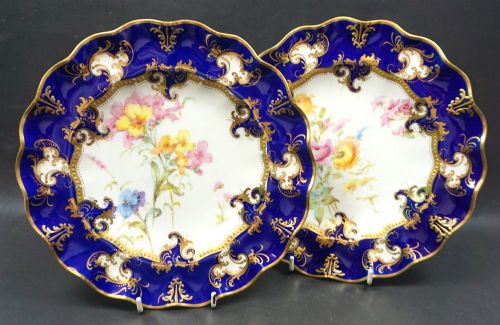
Painters applied polychrome enamels, monochrome puce camaieu, and blue scale grounds, frequently incorporating gold leaf, gilt, and heavy gilding along the moulded rims. Ormolu mounts were occasionally added to Chinese Imari porcelain plates to elevate their status for display.
The application of hand-painted pastoral subjects, botanical specimens, and armorial crests required skilled brushwork across both eighteenth-century manufactories and later nineteenth-century revival workshops in Meissen, Dresden, and Worcester.
Listings feature hard-paste porcelain, soft-paste porcelain, and tin-glazed earthenware spanning the eighteenth, nineteenth, and early twentieth centuries.
Judging Quality
Quality rests upon the crispness of the moulded scrollwork and the dexterity of the hand-painted decoration, where superior pieces exhibit confident brushwork in pastoral scenes, birds, and botanical motifs. The refinement of the porcelain paste, from the early glassy formulas of Worcester and Chantilly to later hard-paste bodies, dictates the tactile weight and translucency of the dish.
The preservation of original gilding and gold leaf without excessive rubbing elevates an object, alongside the historical significance of documented factory marks, armorial provenance, or specific retailer commission addresses. Pieces that retain their crisp moulded ozier borders and vibrant enamel colours demonstrate superior craftsmanship compared to simpler production ware.
Meissen·Royal Crown Derby·Copeland and Garrett·Chantilly·Helena Wolfsohn·Royal Worcester·Veuve Perrin·Chelsea·Sevres
The Rococo Ceramic Plates Glossary
- Soft-paste porcelain
- A glassy ceramic composition fired at lower temperatures than hard paste, common in eighteenth-century factories like Chantilly and early Worcester. It yields a warm body and a distinctive soft interaction with enamel colours.
- Tin-glazed earthenware
- Pottery coated with an opaque white tin glaze that accepts painted decoration directly onto the unfired surface, characteristic of French faience production from Marseille, Lille, and other regional centres.
- Ozier border
- A raised, basket-weave moulded pattern adorning the rim of a plate, frequently utilised by eighteenth-century European porcelain manufactories to mimic wicker texture. This decorative edge provides characteristic relief beneath the glaze.
- Puce camaieu
- A monochrome painting technique executed entirely in shades of purplish-red or pinkish-brown enamel. Artists used this method to render delicate landscape scenes and figural subjects on eighteenth-century ceramic dishes.
- Cabinet plate
- A decorative ceramic plate intended primarily for display in a cabinet or on a wall rather than for everyday dining service. These examples often feature elaborate hand-painted scenes, armorials, or gilt borders.
Rococo Ceramic Plates: Frequently Asked Questions
How were rococo ceramic plates used?
These pieces served practical functions during formal dining, particularly for dessert courses where fruit, sweetmeats, and confectioneries were presented on decorative matching services. Grand households also utilised cabinet plates purely for display in drawing rooms to demonstrate taste and wealth.
Over time, many surviving items transitioned entirely into decorative cabinet pieces, preserved behind glass or mounted on walls to protect delicate painted enamel and gilt surfaces from daily wear.
How do I care for antique porcelain?
Antique porcelain requires gentle hand washing in lukewarm water with mild soap, avoiding dishwashers, harsh abrasives, and soaking that can compromise historic glazes and enamels. Store or display plates securely using padded wall hangers or stable plate stands designed for fragile ceramics.
Keep pieces away from direct sunlight to prevent fading in delicate polychrome enamels and guard against accidental knocks on unpaved surfaces.
How can I tell eighteenth century pieces apart from nineteenth century revivals?
Eighteenth-century ceramics often display the thinner bodies, softer potting characteristics, and distinct glaze imperfections typical of early experimental European kilns. Their painting styles reflect contemporary Rococo ideals directly, showing spontaneous brushwork and period-specific pigments.
Nineteenth-century Rococo Revival pieces typically feature harder paste bodies, brighter machine-mixed enamels, and more standardised factory marks influenced by historicism and industrial production methods.