




Rococo Bronze Centrepiece
A rococo bronze centrepiece brings sculptural French Revival drama to a dining table or sideboard, combining cast metalwork with porcelain, glass or marble.
Rococo Bronze Centrepiece
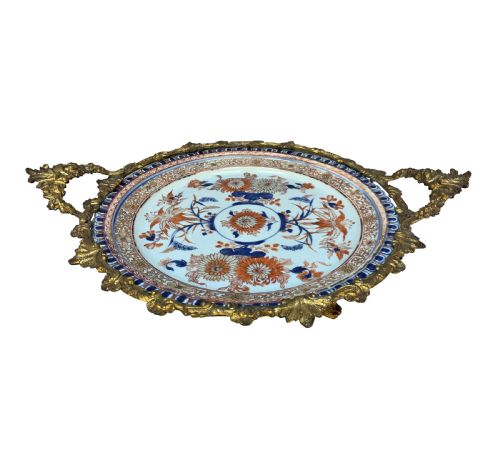
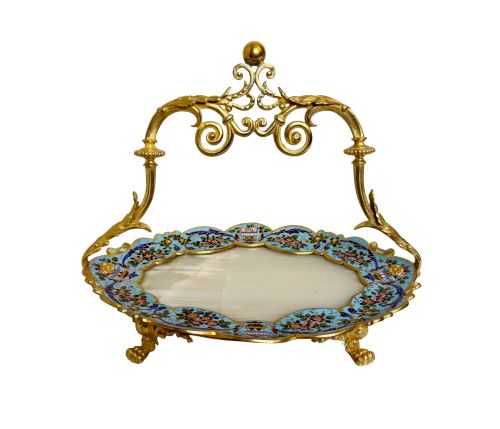
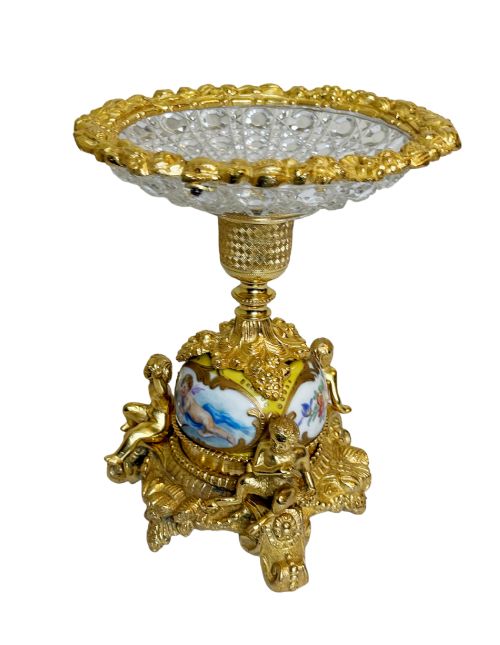
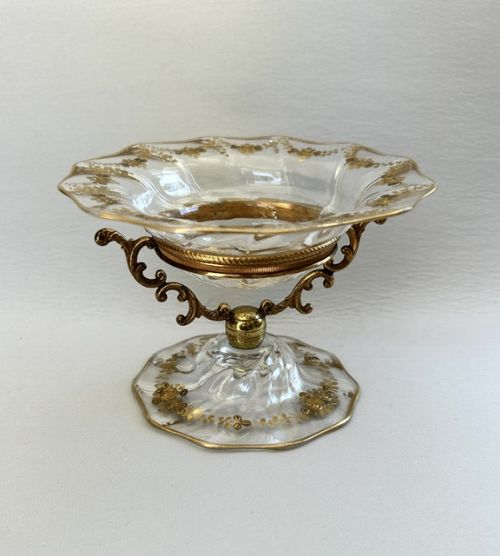
A rococo bronze centrepiece takes the form of decorative bowls, dishes, comports, trays and urns intended to command a table or surface. These items often incorporate figurative elements such as cherubs, putti and birds alongside scrollwork mounts.
The pieces appearing here span the Victorian era, the nineteenth century and specific decades from eighteen-fifty to nineteen-hundred, alongside an Art Nouveau example. French design dominates the selection, frequently utilising revival styles that echo eighteenth-century aesthetics.
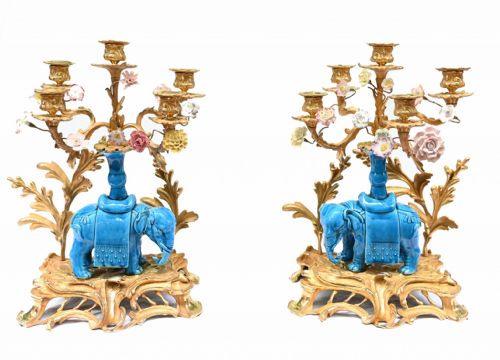
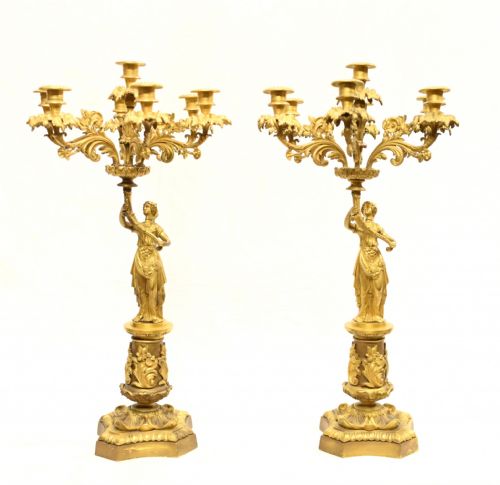
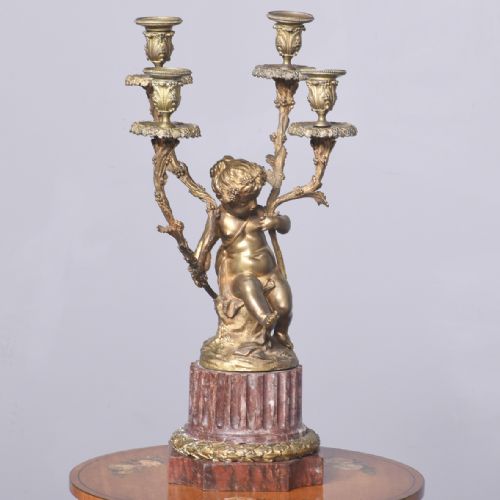
Comports and trays pair patinated or gilt bronze with porcelain, cut crystal, champleve enamel and marble bases. Alongside dedicated centrepieces, the selection includes related candelabra which share identical metalwork and figural vocabularies.
Materials and manufacture
Foundry work relies on bronze, which appears both patinated and heavily gilded as ormolu to create contrasting surface finishes. Metal mounts are cast and chased to achieve intricate asymmetrical scrollwork, foliage and figural detail.
Ceramic and glass elements are integrated directly into the metal armature, utilising porcelain bodies including Chinese Imari, Sevres style wares and Samson productions. Marble and onyx provide heavy, stable bases for figural candelabra and centrepiece bowls.
Heavy bronze cherubs perpetually balance crystal bowls and porcelain plates without dropping them.
Assessing quality
The choice and weight of secondary materials dictate the calibre of the piece, from heavy marble bases and cut crystal bowls to hand-painted porcelain comports. The sophistication of the overall assembly separates standard decorative items from more ambitious foundry productions.
The Rococo Bronze Centrepiece Glossary
- Ormolu
- Gilded bronze, where a layer of gold is applied to a bronze base using mercury amalgamation or electrochemical techniques. This finish provides a bright, durable golden surface characteristic of French decorative arts.
- Champleve enamel
- A technique where troughs or cells are hollowed out of the metal surface and filled with vitreous enamel before firing. It frequently decorates trays and mounts alongside gilt bronze.
- Comport
- A raised dish or bowl on a stem or foot, used for serving fruit or sweets on a dining table. Nineteenth-century examples often feature porcelain bowls held in ormolu stands.
- Putto
- A plump, naked male child figure, frequently winged, appearing in Renaissance and revival art. They serve as structural supports or decorative motifs in bronze centrepieces and candelabra.
- Chasing
- The manual finishing of a metal casting using small punches and hammers to refine details and textures. Superior bronze work shows extensive, sharp chasing across every scroll and surface.
Rococo Bronze Centrepiece: Frequently Asked Questions
What is a bronze centrepiece used for?
These pieces function as decorative table centrepieces, holding fruit or floral arrangements, or simply standing alone as sculptural ornaments on a sideboard.
They were designed to catch the candlelight in formal dining rooms and drawing rooms during the nineteenth century.
Are these pieces French?
Many items from this period reflect French taste and manufacturing centres, often adopting Rococo Revival styles associated with nineteenth-century Paris.
Some pieces incorporate imported porcelain, such as Chinese Imari plates or Sevres style ceramics, mounted in European workshops.
What is the difference between an urn and a comport?
An urn is a closed vessel, sometimes fitted as a vase, featuring a defined body and often handles on a footed base.
A comport is an open bowl or dish raised on a stem, specifically intended for display or serving during formal dining.