



Rococo Brass Fender
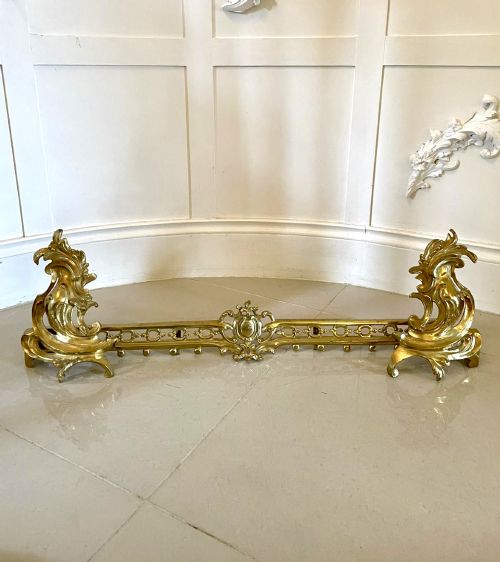
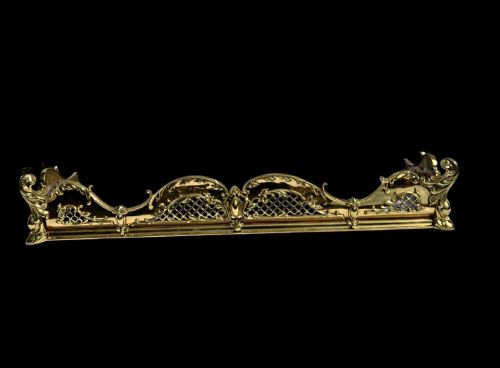
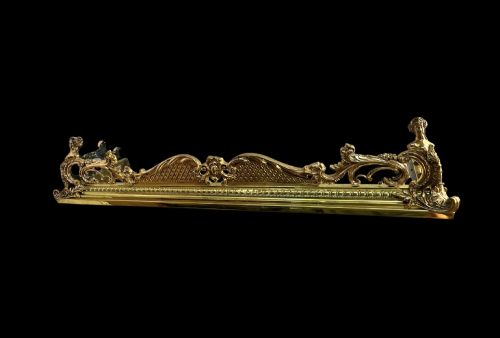
These rococo brass fender examples bring authentic period hearth furniture into the room, combining elaborate scrollwork with practical hearth protection.
Rococo Brass Fender
A rococo brass fender is a decorative metal hearth guard designed to contain embers and frame the fireplace opening. The pieces gathered here trace a clear line through Victorian production and nineteenth century French design.
Most examples you encounter on this page adopt the French Louis XV style or Rococo Revival taste, often featuring adjustable widths and paired chenets. They date principally from the mid to late nineteenth century, spanning the eighteen-fifties to the nineteen-twenties.
Beyond standard brass construction, forms incorporate cast iron, steel, and parcel gilt elements. These items served both to protect flooring from falling coals and to anchor the decorative scheme of the fireplace.
How they were made
Maker workshops utilised heavy casting techniques to produce thick brass, bronze, and ormolu components. Metal was cast, chased, and occasionally gilded or parcel gilt to achieve high contrast across intricate scrollwork.
Extending mechanisms relied on sliding steel or brass sections that allowed the frame to fit various fireplace widths. Artisans combined cast brass ornamentation with structural iron and steel bases to ensure stability.
Rococo Brass Fender Retail Price Guide 2026
Typical asking prices for rococo brass fender among the pieces listed under this phrase on Sellingantiques today, from the lower quarter to the upper quarter. They describe what is for sale here now, not the wider market.
Several examples include cheerful cast putti and cherubs keeping watch over the hearth fire.
What varies in quality
Quality rests in the crispness of the chasing and the weight of the cast metal components. Finer examples display deeply undercut leaf scrolls and finely detailed figural elements such as putti or cherubs rather than shallow, uniform stamping.
The sophistication of the extending mechanism and the retention of original fire gilding or ormolu surfaces distinguish workshop tiers. Heavier gauge brass frames with integrated matching chenets represent the more ambitious end of period production.
The Rococo Brass Fender Glossary
- Ormolu
- Finely ground high-carat gold mercury-gilded onto a bronze or brass base. This technique creates a rich, matte yellow finish characteristic of better French decorative items.
- Chenet
- A decorative andirons or fire dog placed at the front of the hearth. These often accompany or attach to adjustable fenders in matching rococo designs.
- Rococo Revival
- A nineteenth-century design movement reviving the asymmetry, C-scrolls, and naturalistic shell motifs of the eighteenth-century French style. It dominates the ornamentation seen on these hearth pieces.
- Extending fender
- A hearth guard made in overlapping sections that slide to adjust the overall width. This design accommodated varying fireplace openings while maintaining a unified decorative border.
Rococo Brass Fender: Frequently Asked Questions
How do I measure for a fender?
Measure the width of your fireplace opening and the hearth depth to ensure the frame sits correctly on the floor. Many period pieces feature adjustable extending frames to help achieve the right fit against the surround.
Take into account any protruding hearth stones or side tiles so the metal sits flush without crowding the grate.
Were these made in pairs?
While the fenders themselves are single extending frames, they frequently incorporate matching chenets or fire guards designed as pairs. These companion pieces anchor the composition at either end of the hearth.
Matching components share identical cast ornament and gilding style, indicating they were produced as a unified suite for the fireplace.
How do I clean brass and ormolu?
Dust the metal gently with a soft, dry cloth to remove surface particles. Avoid harsh chemical polishes that can strip delicate gilt layers or original patination.
Preserving the historic surface finish maintains the character and depth of the nineteenth-century metalwork.
How do I date a nineteenth-century fender?
Examine the casting quality, fastening screws, and the composition of the metal base. Victorian and mid-century French pieces often display hand-finished chasing and specific alloy weights typical of their decade.
Stylistic shifts between classical restraint and exuberant rococo revival ornamentation also help narrow the production period.