
Brass Curb Fender
A brass curb fender anchors a hearth, bringing a gleam of metal to the base of the fireplace while keeping stray embers in check.
Brass Curb Fender
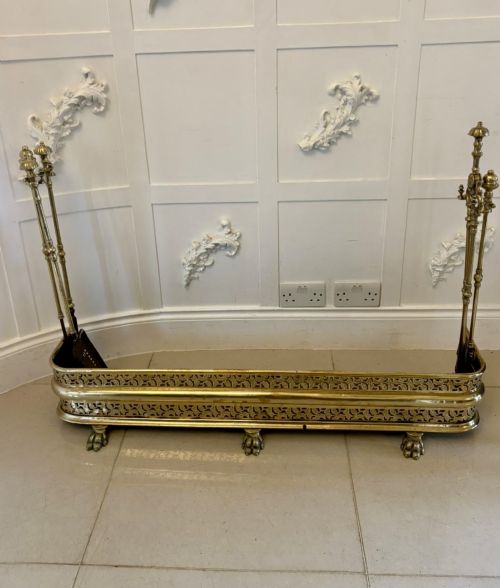
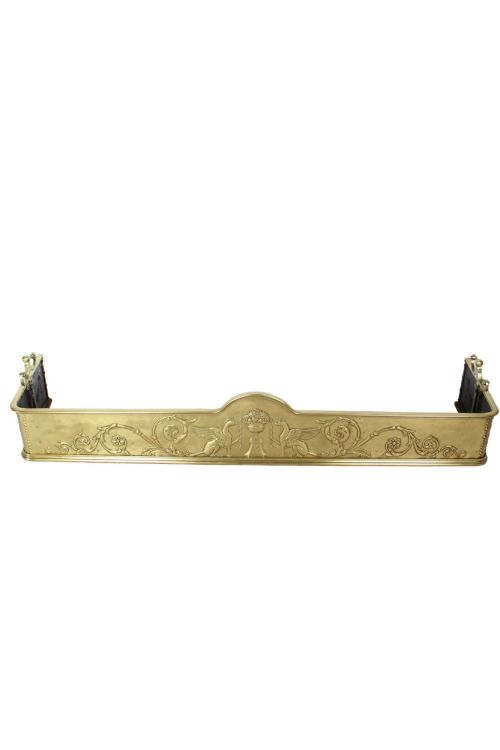
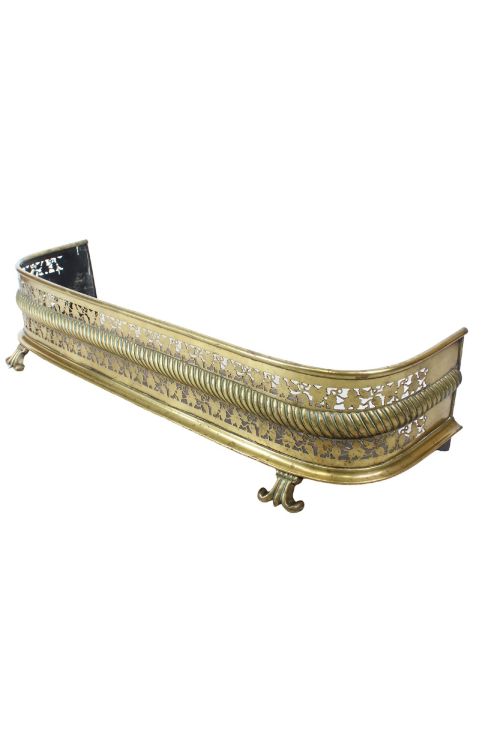
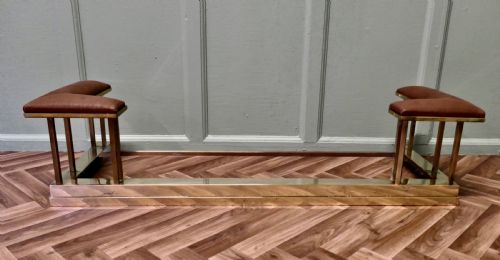
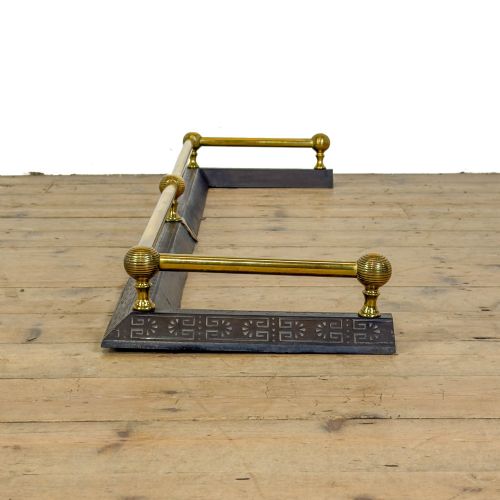
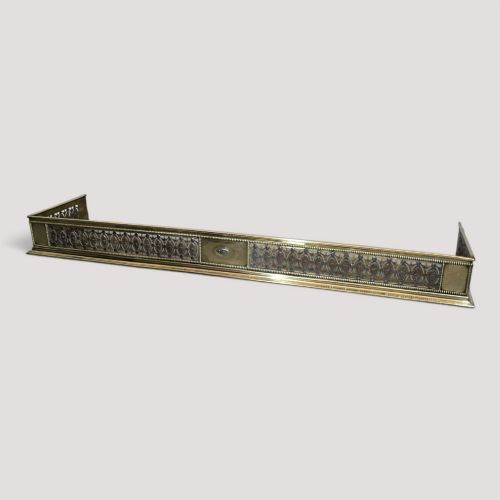
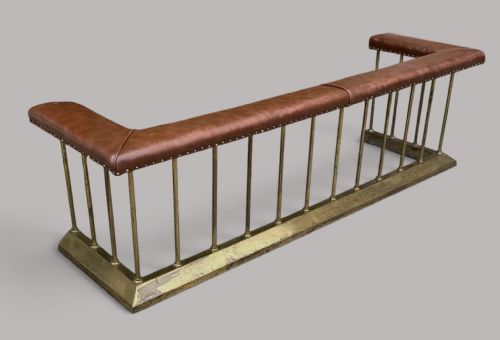
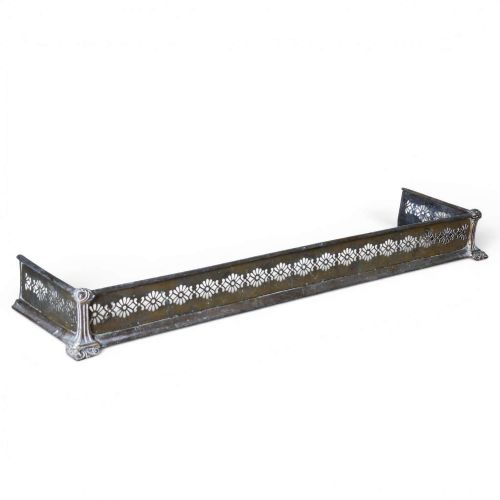
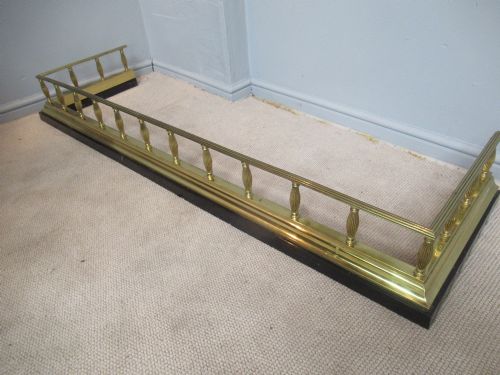
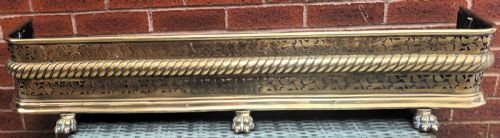
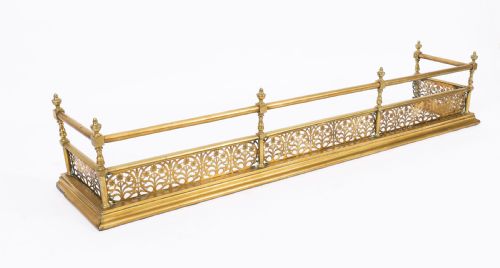
A brass curb fender sits directly on the hearth around the fireplace opening, forming a low barrier between the fire and the room. When searching for a brass curb fender, a buyer encounters everything from simple pierced sheet metal designs to substantial club fenders fitted with cushioned seats.
Victorian and nineteenth-century examples dominate the selections here, alongside Edwardian, Georgian, and Regency period styles. These pieces often incorporate iron or steel components alongside the brass work, providing structural weight and varied metallic contrast around the grate.
Materials and construction
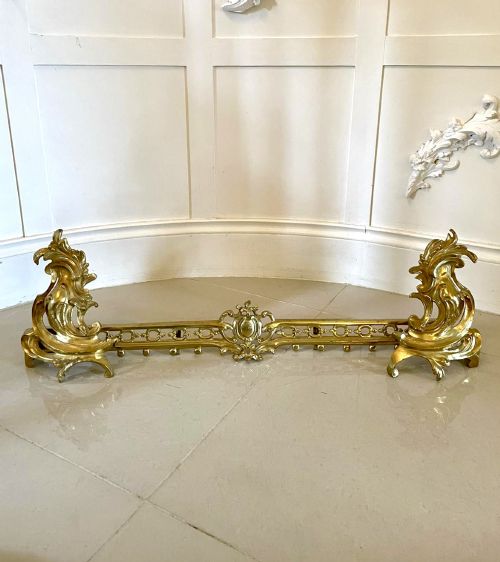
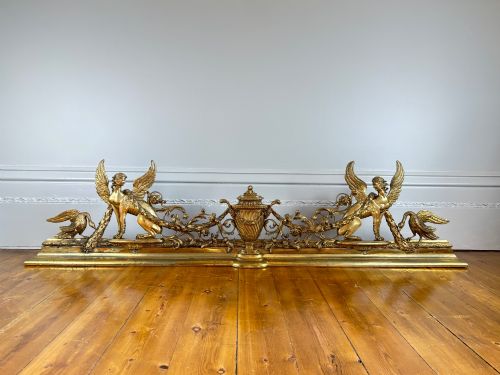
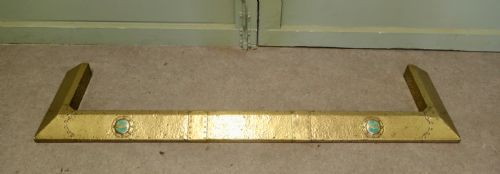
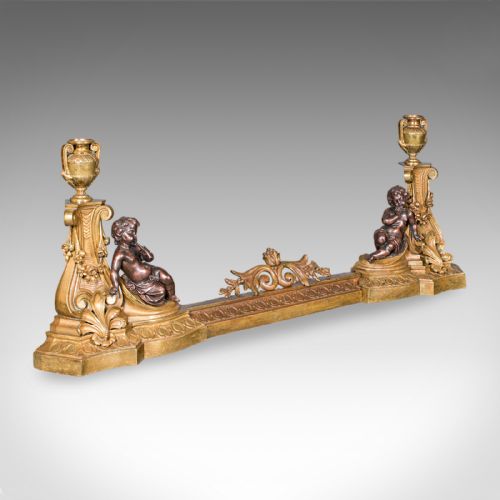
Makers combined sheet brass, cast brass, and pierced brass panels with iron or steel frames to create durable hearth guards. Many examples incorporate decorative elements in bronze, ormolu, and gilt brass, occasionally accented with leather upholstery or green enamel cabochons.
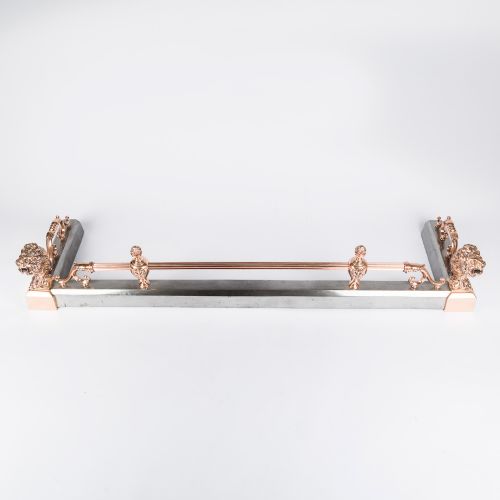
Construction techniques range from pierced and fretted metalwork to heavy cast iron frames clad in polished brass. Extending mechanisms appear on adaptable forms, allowing the fender to adjust in width to fit different hearth dimensions.
Some nineteenth-century makers thoughtfully included matching fire irons so the hearth could be tended without disturbing the decorative curb.
Separating the ordinary from the exceptional
Quality rests upon the crispness of the casting, the thickness of the brass gauge, and the delicacy of any pierced or repoussé work. Fenders that retain original fire irons, substantive leather seating on club variants, or specialised decorative mounts distinguish themselves from standard production pieces.
The integrity of the structural iron or steel core beneath the brass shell also determines durability. Fenders exhibiting thoughtful integration of materials like copper, cut steel, or enamel cabochons reflect superior craftsmanship and design ambition from their period.
E F Caldwell New York
The Brass Curb Fender Glossary
- Curb fender
- A low metal barrier placed around the hearth to contain coals and ash. These pieces frame the fireplace opening and often incorporate seating on club variants.
- Club fender
- A hearth fender equipped with low upholstered seats covered in leather. This form gained popularity for providing fireside seating at the hearth level.
- Pierced brass
- Sheet brass decorated by cutting or punching decorative patterns through the metal. This technique allows light from the fire to reflect through the openings.
- Ormolu
- Gilding technique using finely ground gold mercury bronze applied to cast brass objects. It imparts a rich golden finish to decorative mounts and appliques.
- Cut steel
- Small faceted steel studs riveted to a steel backing to catch and reflect firelight. This material appears on Regency and later decorative hearth surrounds.
Brass Curb Fender: Frequently Asked Questions
What is a club fender?
A club fender is a hearth guard featuring padded leather seats built into the frame around the fireplace. This design allows people to sit close to the fire at hearth level.
Such pieces combine metalwork with upholstered top rails, appearing in Edwardian and nineteenth-century settings.
How do I measure for a fender?
Measure the width and depth of your hearth space to ensure the metal curb sits correctly around the fireplace opening. Take note of any projecting hearth stones or hearth accessories that might affect placement.
Adjustable models offer some flexibility in width, while fixed pieces require exact alignment with the masonry.
Are these fenders adjustable?
Certain examples feature extending mechanisms that allow the brass frame to widen or narrow. This construction helped fit the guard to various fireplace dimensions.
Non-adjustable variants remain fixed at their original manufactured length.
What metals are used besides brass?
Iron and steel frequently form the internal structural frames of these hearth guards. Bronze, gilt brass, and copper also appear in decorative mounts and pierced panels.
Leather and enamel cabochons occasionally supplement the metal components on specific styles.