


Riveted Copper Pot
These heavy riveted copper pot pieces combine utilitarian strength with warm metal surfaces, making them sought after for firesides and garden displays.
Riveted Copper Pot
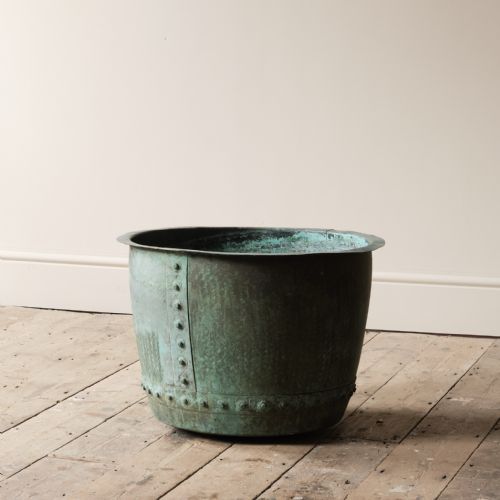
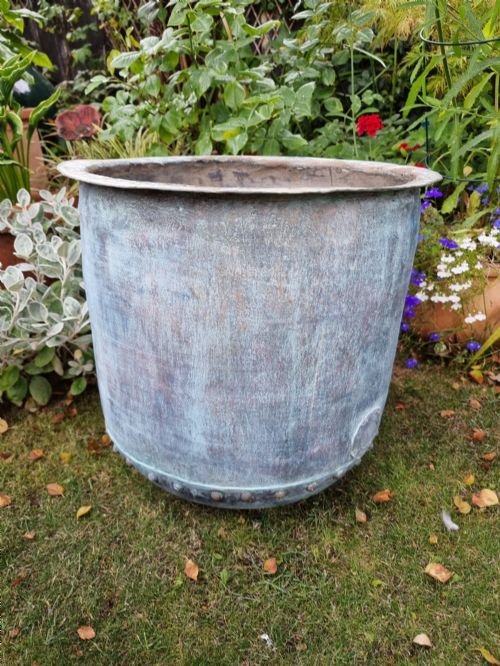
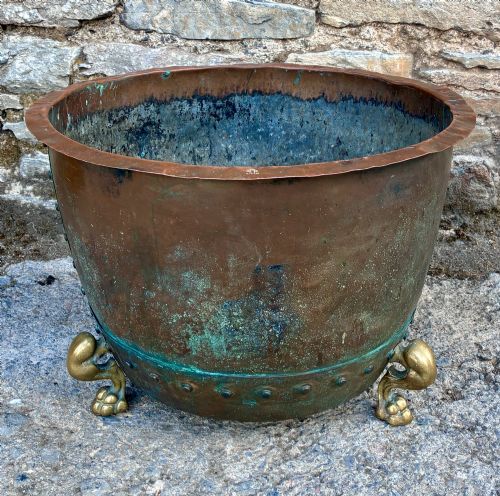
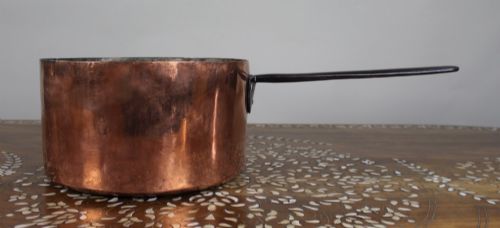
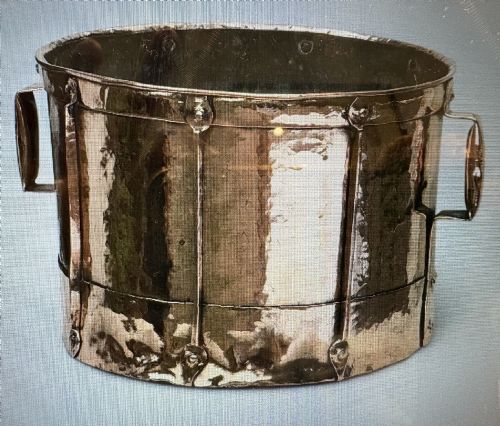
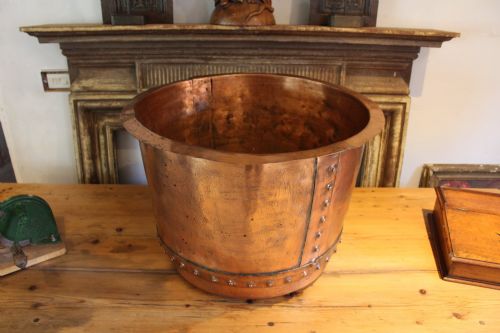
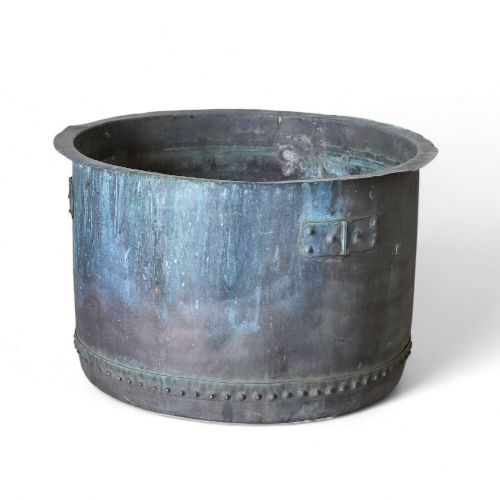
When you search for a riveted copper pot, you encounter robust vessels originally built for heavy kitchen work, dairy production, or laundry tasks. The examples seen here range from Georgian saucepans and Victorian boilers to French grain measures and Arts and Crafts jardinieres.
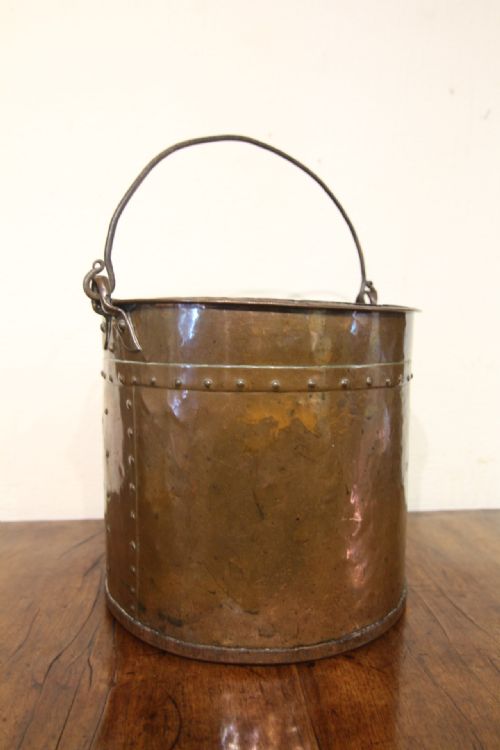
You are most likely to meet large 19th-century specimens adapted for modern interiors as log bins, planters, and display pieces. These utilitarian objects span forms from rectangular troughs and cylindrical buckets to deep cooking vessels and heavy garden display pots.
How they were made
Makers formed these vessels primarily from sheet copper, joining seams with hand-driven metal fasteners to withstand intense heat and heavy loads. Many pieces incorporate supplementary structural elements in iron, wrought iron, brass, and tin for handles, rims, and internal reinforcement.
The heavy gauge of the metal sheets allowed these cooking pots and boilers to endure daily kitchen fires and agricultural routines. Artisans of the 19th century and earlier shaped each body by hand, leaving visible hammer marks and robust joints that mark their working origins.
Cheese making pots sometimes retain traces of ancient curd tucked neatly behind stubborn iron rivets.
What varies in quality
The distinction between standard utility items and superior pieces rests on the weight of the metal and the neatness of the fastener work. Heavier gauge copper retains its structural integrity better over centuries of use.
Proportion and decorative restraint elevate certain vessels, such as Arts and Crafts jardinieres or Georgian saucepans, above basic agricultural tubs. Original handles in wrought iron or brass, alongside an untouched natural patina, set the finer examples apart.
The Riveted Copper Pot Glossary
- Ferrat
- A traditional French copper measure or container, often used in agriculture and dairy work. These cylindrical vessels typically display sturdy riveted seams.
- Jardiniere
- An ornamental pot or stand for holding plants or flowers, popular during the Arts and Crafts period. They often feature decorative brass or copper work.
- Patina
- The surface sheen and colour acquired by copper through age, handling, and exposure to the elements. Collectors prize a rich, undisturbed verdigris or dark bronze tone.
- Wrought iron
- Tough, malleable iron worked by hand while hot, commonly used for the handles and swing bails on heavy copper buckets and log bins.
Riveted Copper Pot: Frequently Asked Questions
How do I clean a copper pot?
Surface cleaning depends entirely on whether you prefer a bright polished shine or an aged dark patina. Most collectors choose to leave the natural oxidation untouched.
Gentle washing with warm soapy water removes accumulated dust without disturbing the historic surface of the metal.
How old is my copper pot?
Dating relies on observing the manufacturing technique, handle attachments, and the formation of the riveted seams. Hand-be hammered bodies and wrought iron fittings usually point towards the Georgian or Victorian eras.
Stamped numbers or standard factory marks often indicate later 19th-century or early 20th-century utilitarian production.
How can I use a log bin indoors?
Large copper vessels make exceptional fireside containers for storing firewood, kindling, or peat briquettes. Their sturdy construction easily absorbs the weight and rough texture of logs.
Placing the pot on a hearth rug protects both the metal base and the surrounding flooring from scratches.