

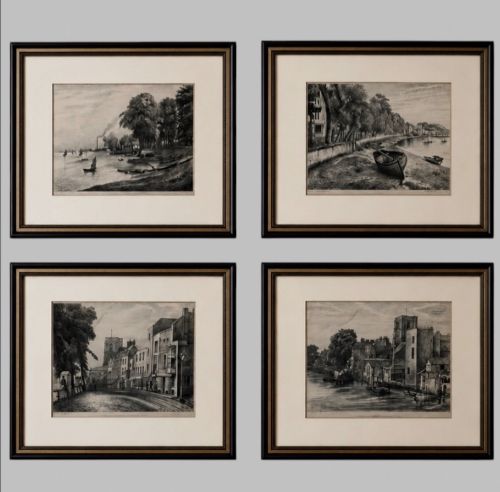
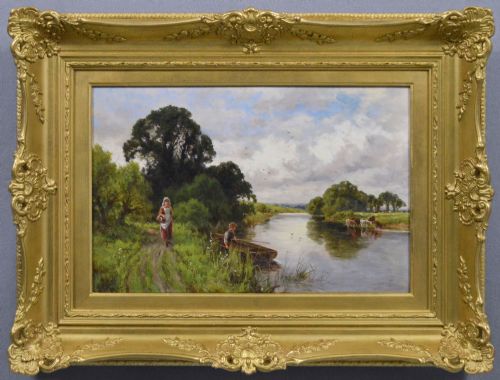


River Thames Artwork
River thames artwork captures centuries of maritime trade and capital architecture along the water in oil, watercolour, and print.
River Thames Artwork
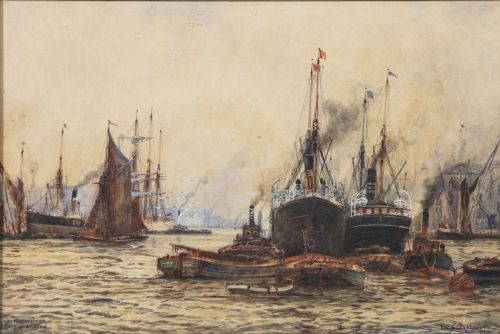
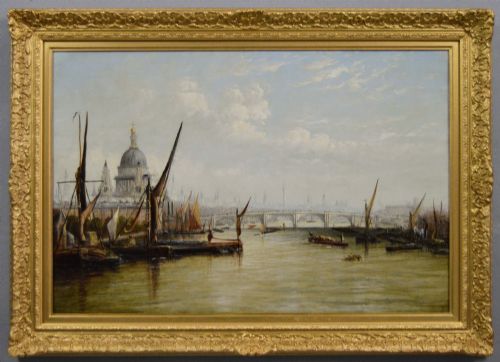
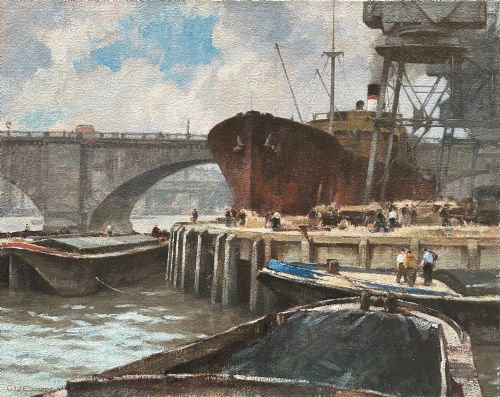
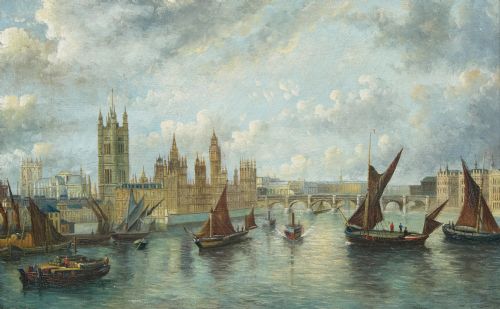
River thames artwork spans oil paintings, watercolours, etchings, and prints depicting famous London landmarks, bridges, and stretches of the waterway. These works record the changing face of the capital and its surrounding reaches from the Georgian period through the Edwardian era and into the mid-twentieth century.
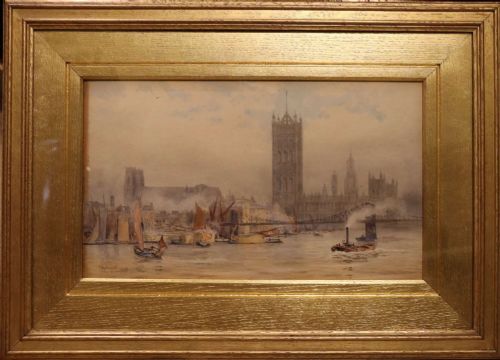
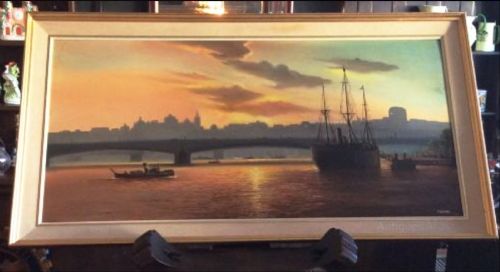
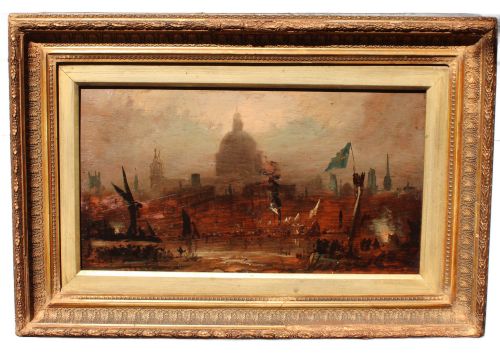
The selections available here lean heavily toward Victorian and Edwardian watercolours and oil paintings on canvas or board. Buyers frequently encounter detailed depictions of the Pool of London, Westminster, St Pauls, and rural Thameside villages by named British artists.
How they were made
Artists utilised oil paint on canvas, panel, or board to build rich textures and deep tones for marine and landscape scenes. Watercolours on paper capture the shifting atmospheric light and hazy atmospheric conditions peculiar to the London river.
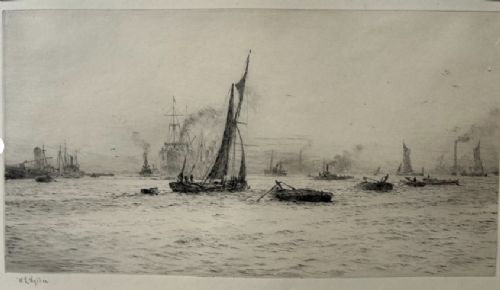
Printmakers employed etching, aquatint, and lithography to produce detailed topographical views of bridges, barges, and processions. These works often incorporate framing in wood and glass, sometimes augmented with gold leaf detailing.
Artists frequently captured smokey London fogs, transforming industrial pollution into atmospheric masterpieces.
What varies in quality
Quality rests upon the artist's command of light, water movement, and architectural perspective. Stronger examples display confident brushwork and precise topographical rendering rather than stiff, formulaic execution.
Condition plays a part, particularly with paper works where foxing, fading, or discolouration can detract from the image. Original framing and the presence of artist signatures or exhibition records elevate the standing of a piece.
H Medlycott·Alfred Young Nutt·William Lionel Wyllie·Frank William Scarbrough·Francis Moltino·Henry H Parker·Charles William Wyllie·Henry John Kinnaird·George Hilditch·Edward Henry Eugene Fletcher·Joseph Constantime Stadler·Jack Merriott·Walter Duncan·Thomas Whittle the Younger·Henry Sykes·Frederick George Coleridge·Edgar J Maybery·EW Haslehurst·Frank Wasley·Carleton Grant·Frances E Nesbitt·William A Macdonald·Herbert John Finn
The River Thames Artwork Glossary
- Aquatint
- An intaglio printmaking technique that produces tonal areas resembling watercolour washes. It was frequently used for colour-printed topographical plates.
- Etching
- A printmaking method where lines are bitten into a metal plate with acid before ink is applied. Signed pencil impressions often indicate artist involvement.
- Watercolour
- A paint consisting of water-soluble pigments used on paper. It allows for transparent washes suited to capturing river mists.
- Topographical
- Depicting specific physical locations and architecture accurately. These works serve as historical records of London bridges and reaches.
- Marine
- Art focusing on ships, shipping, and coastal or river waters. Works in this category often feature barges and tugboats on the Thames.
River Thames Artwork: Frequently Asked Questions
What periods do these river views cover?
The works span from the early nineteenth century through the Victorian and Edwardian eras up to the mid-twentieth century. This range documents both historical pageantry and everyday industrial traffic on the water.
Earlier pieces often reflect Georgian topographical traditions, while later works embrace British impressionist techniques and atmospheric townscapes.
How do I identify a watercolour from an oil painting?
Watercolours are executed on paper, usually displayed under glass with a mount, showing translucent washes of pigment. Oil paintings utilise a heavier medium on canvas, board, or panel, exhibiting visible brush texture and opaque coverage.
Examining the surface with a magnifier reveals the weave of the canvas or the absorbent texture of the paper fibres.
Where were these river scenes typically painted?
Locations range from rural stretches at Windsor, Wargrave, and Mapledurham down to central London landmarks like Waterloo Bridge, the Houses of Parliament, and the Pool of London. Artists set up their easels along towpaths, bridges, and passing vessels.
Views capture both the bustling commercial docks and quiet backwaters favoured by nineteenth-century watercolourists.
How should I care for antique works on paper?
Works on paper require protection from direct sunlight and high humidity to prevent fading and foxing spots. Framing should utilise acid-free mounts and conservation glass to shield the medium from environmental degradation.
Keeping pieces in stable indoor conditions preserves the integrity of the original watercolour pigments and etching ink.