


Rich Mahogany Sideboard
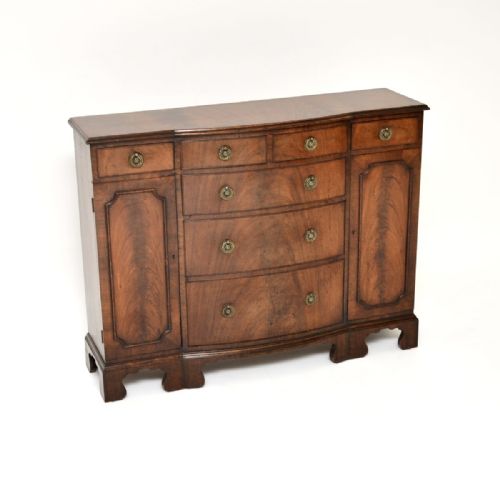
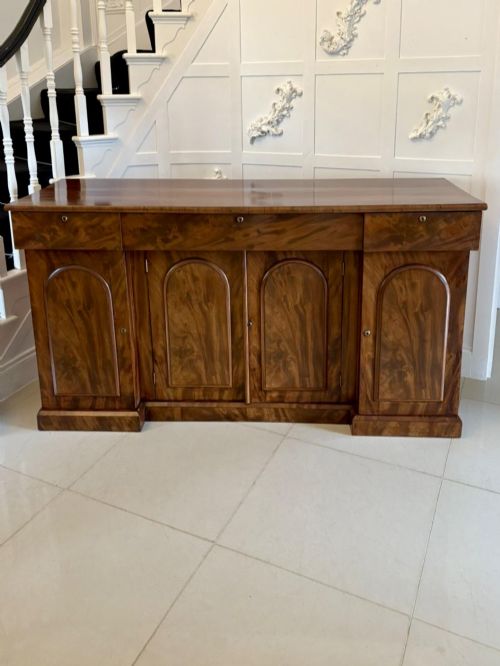
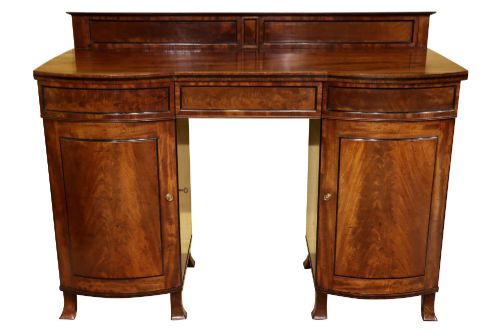
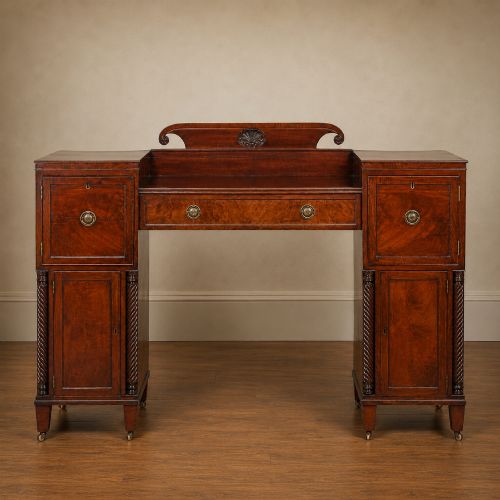
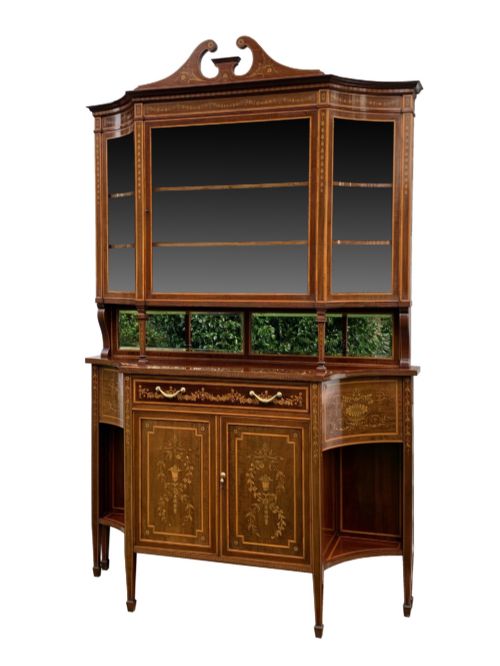
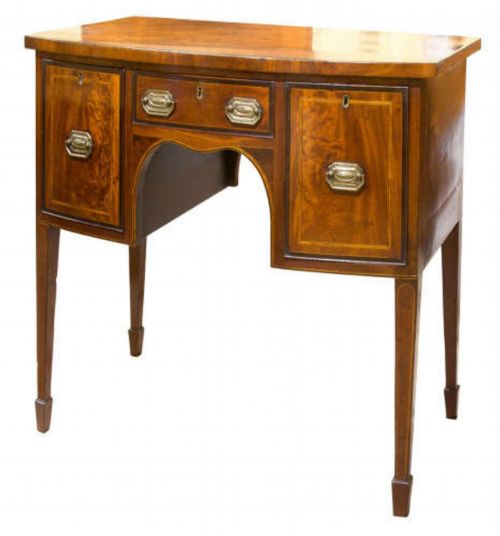
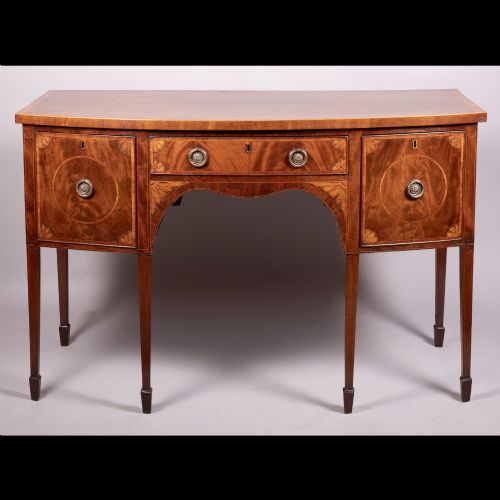
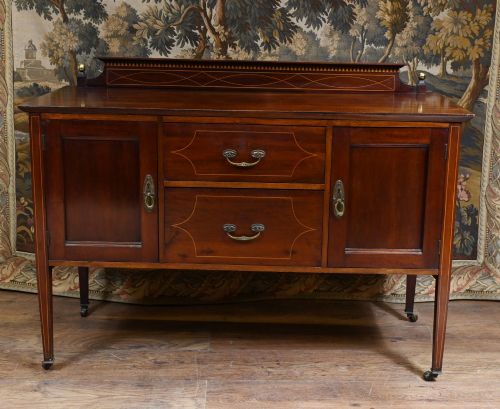
A rich mahogany sideboard anchors a dining room with dark timber and substantial presence, offering ample storage for silver and linen.
Rich Mahogany Sideboard
A rich mahogany sideboard brings deep reddish-brown grain and robust proportions to a dining room or hall, serving practical storage needs with formal dignity. Buyers searching for a rich mahogany sideboard will encounter pieces spanning the eighteenth, nineteenth, and early twentieth centuries, encompassing Georgian, Regency, Victorian, and Edwardian revivals.
Makers such as Edwards & Roberts and Gillow occasionally mark pieces, while others remain unsigned workshop productions. Forms include four-door cupboards, inverted breakfronts, and serpentine serving tables equipped with brass hardware.
Indicators of Excellence
Quality rests upon the selection of the timber, where highly figured flame mahogany veneers and crisp boxwood or satinwood stringing elevate the visual impact of the facade. Construction integrity shows in the dovetailing of drawer linings and the stability of pedestal bases or heavy carved legs.
The sophistication of the design dictates value, distinguishing restrained George III serpentine fronts from later mass-produced revival pieces. Original brass hardware, intact glass, and untouched patination complete the distinction between standard utility items and exceptional cabinet work.
Listings feature eighteenth and nineteenth-century pieces alongside Edwardian revivals, uniting solid mahogany with flame veneer, satinwood, and brass hardware.
Edwards & Roberts·Gillow
The Rich Mahogany Sideboard Glossary
- Bow-front
- A convex curved cabinet front that projects outward in an arc, popular during the Georgian and Regency periods. This shape softens the corners of a dining room.
- Pedestal sideboard
- A form featuring a central serving surface flanked by two separate pedestals or cupboards, characteristic of Regency dining rooms. These units are often substantial in scale.
- Serpentine
- A front edge curving inward centrally and outward at the sides in an S-shape, requiring precise carpentry. This contour appears on eighteenth-century serving tables.
- Chiffonier
- A compact sideboard or cabinet equipped with enclosed lower cupboards and sometimes upper shelving, originating in the nineteenth century. It provides smaller-scale dining storage.
- Flame mahogany veneer
- Thin slices of timber cut from mahogany forks to produce a flickering, highly figured grain pattern. Cabinet makers applied these over stable secondary woods.
Rich Mahogany Sideboard: Frequently Asked Questions
Where should I place a large sideboard?
A large sideboard requires a generous dining room wall where its length and depth can be appreciated without blocking traffic flow. It functions best opposite a dining table or along a principal hallway.
Ensure adequate clearance for opening cabinet doors and drawers fully. The substantial weight of these timber pieces means positioning them on a stable, level floor is essential.
How do I maintain the mahogany surface?
Maintain the timber by dusting regularly with a soft cloth and applying traditional beeswax sparingly to nourish the grain. Avoid placing the piece in direct sunlight or near heat sources to prevent veneer lifting.
Using felt pads under objects placed on the top surface prevents scratches and ring marks. Proper humidity control in the room preserves the stability of the antique wood.
What is the difference between a sideboard and a serving table?
A sideboard incorporates integrated storage cupboards and drawers beneath the main top surface for holding dining accessories. It functions as a permanent storage and display unit.
A serving table typically offers an open frame with legs and perhaps a single frieze drawer, designed strictly for presenting dishes during meals. Many eighteenth-century examples favour this lighter profile.
How can I date a mahogany sideboard?
Dating relies on stylistic markers, construction methods, and timber types seen across Georgian, Regency, and Victorian eras. Regency pieces often feature brass inlay and pedestal bases, while Victorian versions display heavier carved details and four-door configurations.
Examining drawer linings, screw types, and secondary woods provides further clues to the decade of manufacture. Comparing the piece to documented archive examples helps narrow the period.