



Ribbon Bow Wall Lights
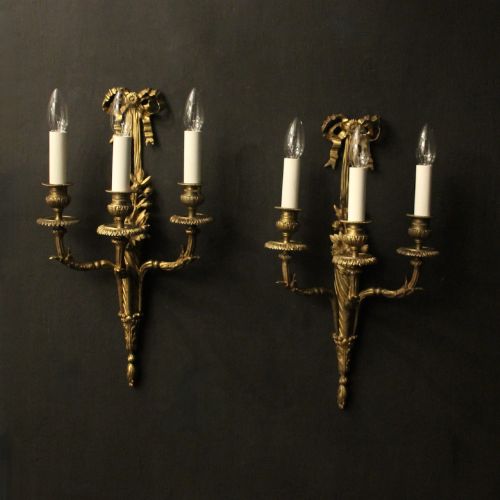
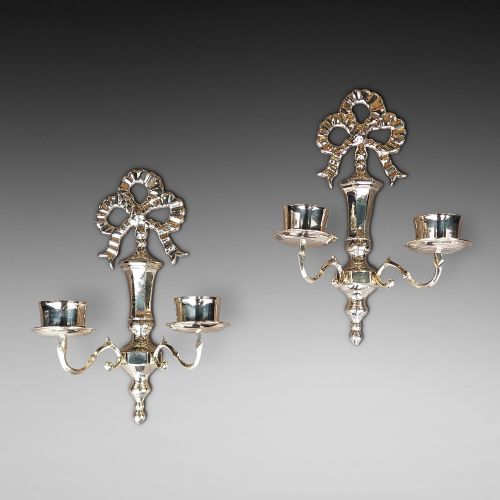
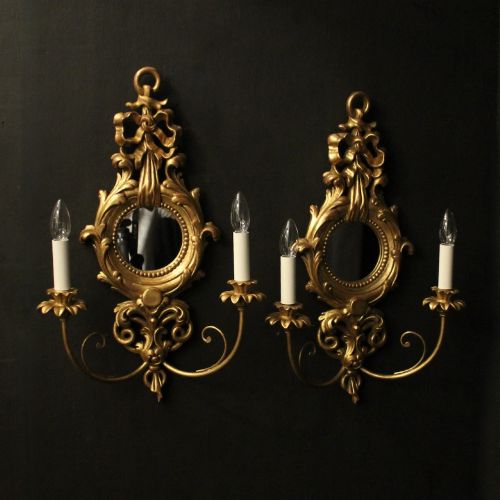
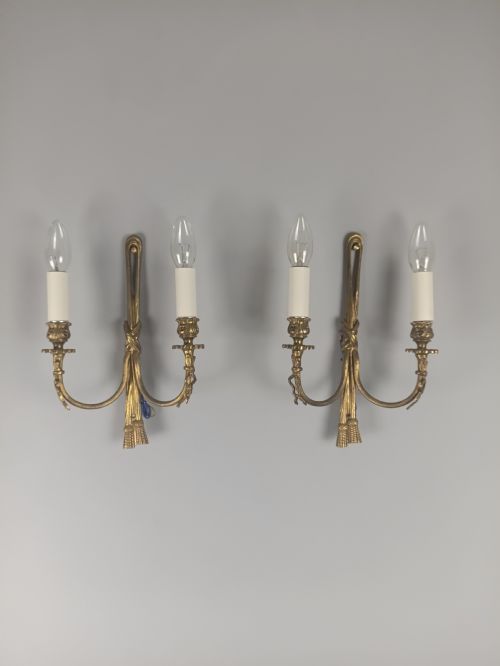
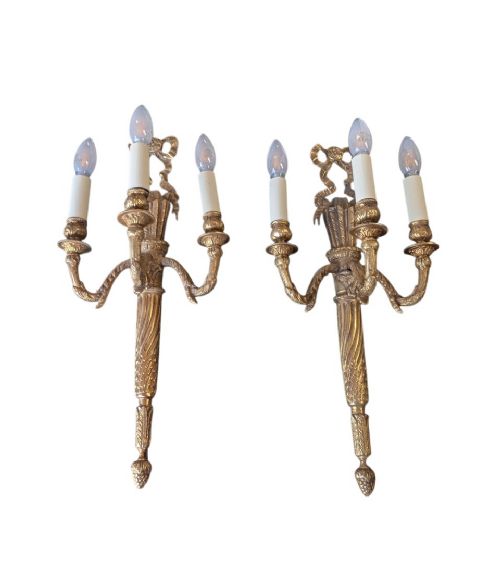
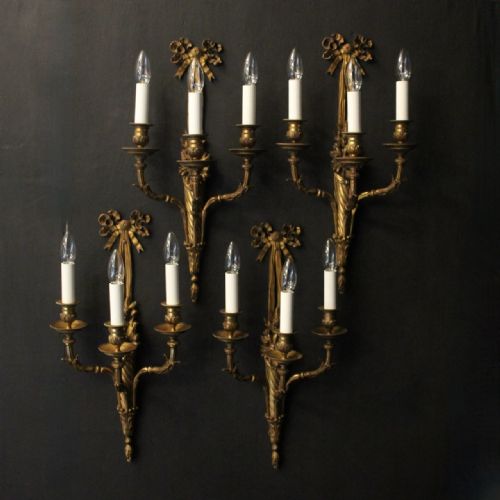
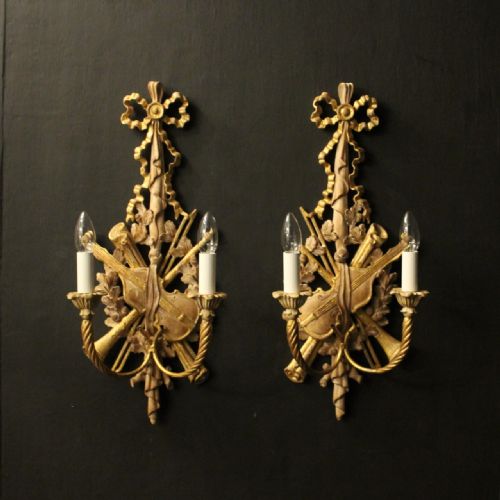
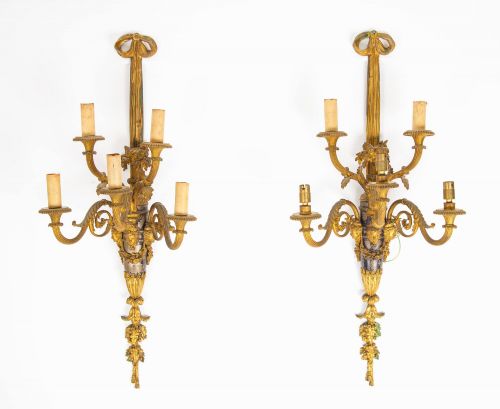
Ribbon bow wall lights bring classic wall illumination to a room, cast in gilt bronze, brass and carved giltwood.
Ribbon Bow Wall Lights
Ribbon bow wall lights are decorative wall sconces and girandoles defined by their prominent carved or cast ribbon motifs, usually anchoring the fixture at the top. These pieces appear frequently in French Neoclassical, Louis XVI, and Adam Revival styles, reflecting European decorative traditions from the Georgian, Victorian, Edwardian, and later periods.
Most examples found here are pairs or larger sets featuring twin, triple, or five-arm configurations designed to hold candles or electrical fittings. The physical forms span cast metals such as brass, gilt bronze, and ormolu alongside carved wood frameworks finished in gold leaf or giltwood.
Originating largely from French and Italian workshops, these wall lights bridge the gap between architectural hardware and sculptural art. A buyer searching for ribbon bow wall lights selects these items to introduce formal symmetry and decorative elegance to a period interior.
How they were made
The construction of these wall lights relies heavily on metal casting techniques using brass, bronze, and ormolu, which allow for intricate detailing in the ribbon bows and foliate arms. Metal components are often gilded, fire-gilded, or silver-gilded to achieve a bright reflective surface that enhances candle or light illumination.
Wooden variants utilise carved giltwood or toleware, where artisans shape timber into flowing drapery and bow forms before applying gold leaf. Cast elements are assembled via mechanical joints and screws, supporting multiple candle branches or glass components securely against the wall.
Ribbon Bow Wall Lights Retail Price Guide 2026
Typical asking prices for ribbon bow wall lights among the pieces listed under this phrase on Sellingantiques today, from the lower quarter to the upper quarter. They describe what is for sale here now, not the wider market.
Dating ranges from Georgian and Victorian productions through to Edwardian and 1930s interpretations of neoclassical aesthetics.
What varies in quality
Quality in these lighting fixtures rests on the crispness of the casting and the depth of the metalwork or wood carving. Finer examples display sharply rendered folds in the ribbon and detailed chasing across the bronze surfaces, whereas simpler production shows softer edges and less hand-finishing.
The choice of materials dictates the upper tier of the range, with heavy gilt bronze and fire-gilded ormolu commanding attention over standard brass or painted metal. Weight, structural rigidity, and the integration of multiple branch arms further separate standard decorative production from exceptional archival pieces.
Henri Vian·Maison Baques
The Ribbon Bow Wall Lights Glossary
- Girandole
- A branched wall light or sconce, frequently featuring a mirrored backplate to multiply the reflected candle illumination in a room. These fixtures combine functional lighting with decorative wall furniture.
- Ormolu
- Finely chopped high-karat gold applied to a bronze base using a mercury amalgamation technique, common in French decorative arts. This finish yields a deep and enduring lustre distinct from modern electroplating.
- Louis XVI
- A neoclassical design style spanning the late eighteenth century characterised by straight lines, symmetry, and classical motifs like ribbons, swags, and urns. Revival periods later replicated these balanced proportions.
- Adam Revival
- An architectural and decorative style inspired by eighteenth-century classical motifs, incorporating delicate swags, urns, and ribbons. It appears frequently in British and European interior fittings from the Victorian era.
- Toleware
- Painted or lacquered metalware used in decorative objects and light fittings. It allows for vibrant surface colours and hand-painted details on functional items.
Ribbon Bow Wall Lights: Frequently Asked Questions
Where should ribbon bow wall lights be hung?
These wall lights function best when mounted symmetrically flanking a fireplace, mirror, or doorway in reception rooms and hallways. Their decorative ribbon top provides a natural focal point at eye level.
Spacing depends on the width of the furniture below and the overall scale of the twin or triple arm branches. Proper positioning ensures the light distributes evenly across the wall space.
Were these wall lights wired for electricity originally?
Original period wall lights were manufactured to hold candles rather than electric bulbs. Many examples have subsequently been adapted to accept modern internal wiring for electrical use.
When evaluating a piece, buyers often check whether the conversion preserves the original metal arms and candle tubes. Some fixtures retain their original drip pans despite modern rewiring.
How do I distinguish Louis XVI style from Victorian pieces?
Louis XVI style wall lights rely on authentic eighteenth-century neoclassical design vocabulary, featuring restrained proportions and crisp cast bronze details. Victorian and Edwardian revival pieces interpret these same motifs with slightly heavier casting methods.
Examining the rear mounting plates and fixing screws often reveals the manufacturing period. Metal composition and the style of gilding provide further clues to dating.
What is the difference between gilt bronze and brass?
Gilt bronze consists of a copper and tin alloy treated with gold leaf or mercury gilding to produce a rich, warm surface finish. Brass is a copper and zinc alloy that tends to have a brighter, yellower metallic tone when unpolished.
Bronze generally accepts finer chasing work during casting, allowing for sharper definition in decorative ribbon bows. Brass appears more commonly in standard revival and later commercial production.