



Revival Marquetry Side Cabinets
Revival marquetry side cabinets bring together intricate floral and geometric wood veneers within nineteenth and twentieth-century period forms.
Revival Marquetry Side Cabinets
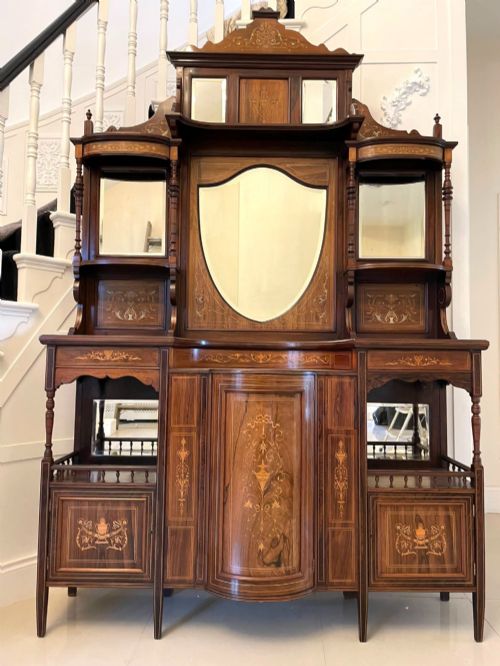
Revival marquetry side cabinets encompass pieces created during the Victorian, Edwardian, and early twentieth-century periods, drawing heavily on earlier French and English design vocabularies. When searching this phrase, a buyer encounters forms ranging from compact bedside chests and pier cabinets to grander display pieces and credenzas.
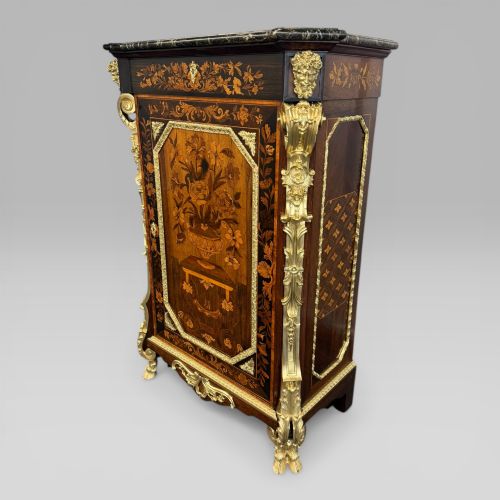
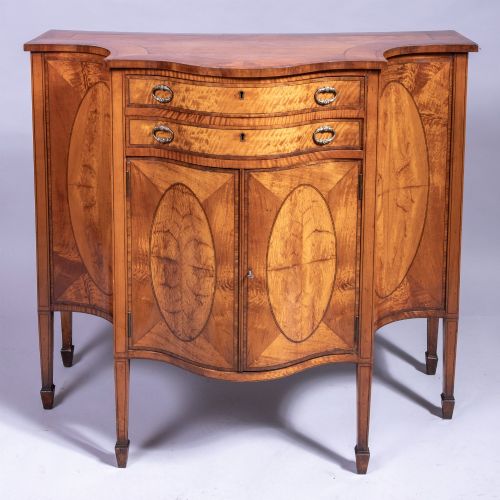
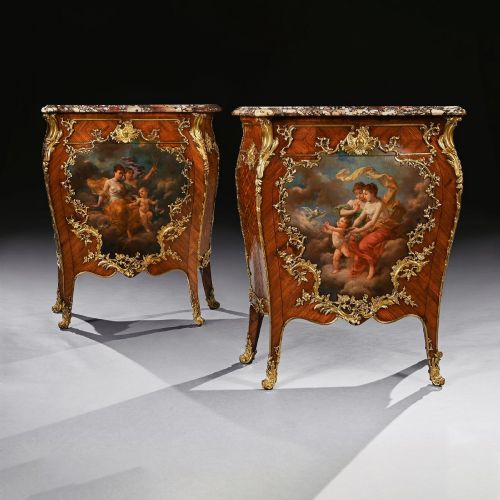
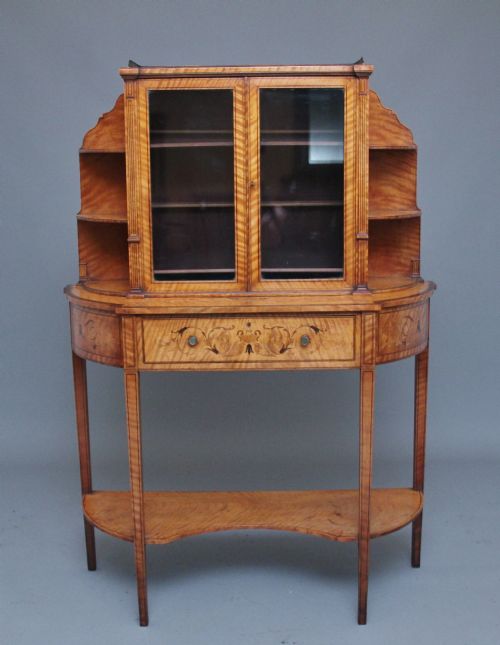
The aesthetic leans strongly towards Sheraton revival satinwood creations and French Louis XV or Louis XVI revival pieces adorned with elaborate floral and foliate veneers. English and continental makers reinterpreted these historic styles for contemporary nineteenth and twentieth-century interiors.
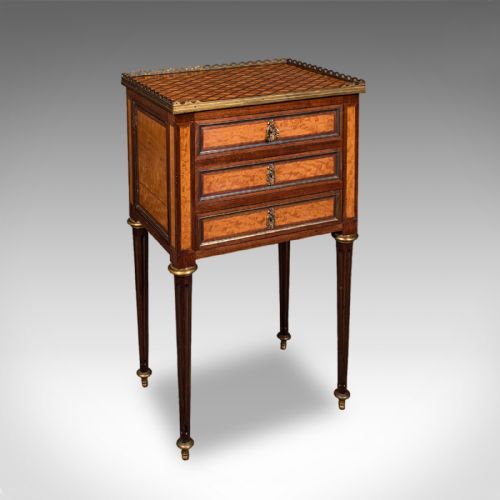
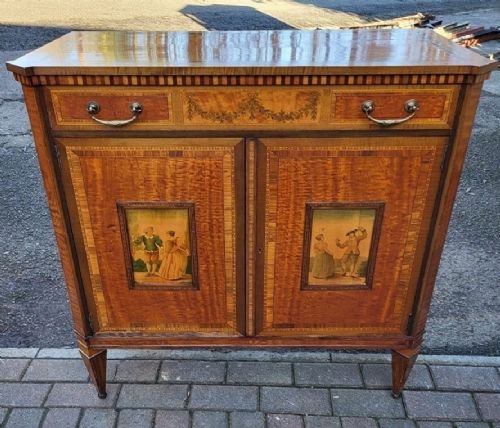
Side cabinets, display cabinets, and smaller commodes dominate the selections on this page, frequently featuring inlaid marquetry panels set into walnut, rosewood, mahogany, or satinwood carcases.
Materials and Techniques
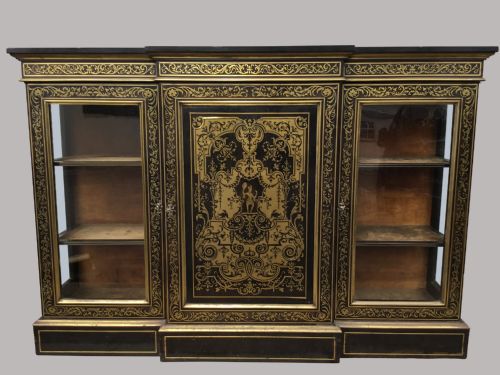
Cabinet makers utilised a foundation of solid timbers such as mahogany, walnut, or oak, overlaid with carefully selected decorative veneers including satinwood, kingwood, rosewood, and ebony. Individual pieces of contrasting wood, brass, or tortoiseshell were hand-cut to form intricate marquetry and Boulle inlay patterns depicting floral sprays, urns, or scrolling foliage.
Ormolu mounts, gilt bronze details, and pierced brass galleries were cast and hand-chased to accent the corners, borders, and feet of French and English revival cabinets. Marble tops and glazed doors frequently completed the construction of higher-end display and side cabinets.
The listings feature woods such as satinwood, rosewood, walnut, and mahogany, often enhanced with ormolu mounts and marble tops.
Craftsmanship and Materials
The distinction between standard and exceptional pieces rests upon the precision of the veneer work and the crispness of the applied bronze or ormolu mounts. Finer cabinets exhibit seamless junctions in complex marquetry, where contrasting woods fit together without visible gaps or excessive filler.
The choice of secondary timbers inside drawers and backboards, alongside the weight and depth of the cast brass hardware, separates utilitarian production from the output of accomplished workshops and documented makers.
Edward Holmes Baldock·Maple and Co.·Gordovil Spain·Paul Sormani·Edwards and Roberts
The Revival Marquetry Side Cabinets Glossary
- Marquetry
- Decorative veneer work arranged in pictorial or geometric patterns using various coloured woods, shells, or metals. This technique transforms a plain wooden surface into a detailed canvas.
- Ormolu
- Gilt bronze mounts applied to furniture for decorative effect. The technique involves treating brass or bronze with an amalgam of gold.
- Satinwood
- A durable hardwood with a lustrous, golden-yellow sheen frequently utilised in Sheraton revival furniture. It provides a bright background for contrasting inlay.
- Boulle
- An elaborate form of marquetry developed in France, combining tortoiseshell and brass inlay. This technique is characteristic of grand nineteenth-century revival pier cabinets.
- Credenza
- A large sideboard or cabinet, often featuring glazed doors and marquetry panels. These pieces served both display and storage purposes in Victorian reception rooms.
Revival Marquetry Side Cabinets: Frequently Asked Questions
What periods do these cabinets date from?
The listings span the nineteenth and early twentieth centuries, encompassing Victorian, Edwardian, and later revival periods. Most examples reflect a nineteenth-century interest in copying or adapting eighteenth-century French and English aesthetics.
Craftsmen during the eighteen-eighties and nineteen-hundreds produced the majority of these revival pieces, utilising older decorative techniques within contemporary room layouts.
How were revival marquetry side cabinets used?
These cabinets served multiple functions in period homes, functioning as storage units for linens, china, or sheet music, as well as surfaces for displaying ornaments. Pier cabinets and display variations were specifically designed to showcase porcelain and glassware in formal reception rooms.
Smaller bedside tables and commodes provided enclosed storage within bedrooms, while larger credenzas anchored dining rooms and grand hallways.
How do I care for antique marquetry?
Maintain these cabinets by keeping them away from direct sunlight and steady heat sources, which can dry out woods and cause veneers to lift. Dust regularly with a soft, dry cloth and apply a quality beeswax sparingly to nourish the polished surfaces.
Avoid liquid cleaners and excessive moisture, both of which can damage delicate inlay work and compromise older glue joints.