



Reverse Painted Mezzotint
These reverse painted mezzotint works combine printmaking and glass painting to create rich portraits and seasonal scenes that collectors prize.
Reverse Painted Mezzotint
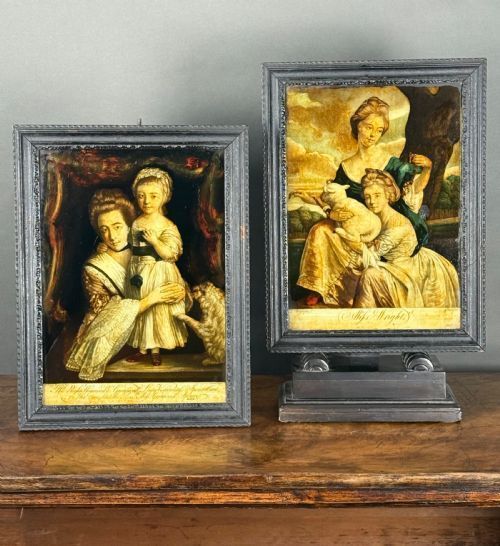
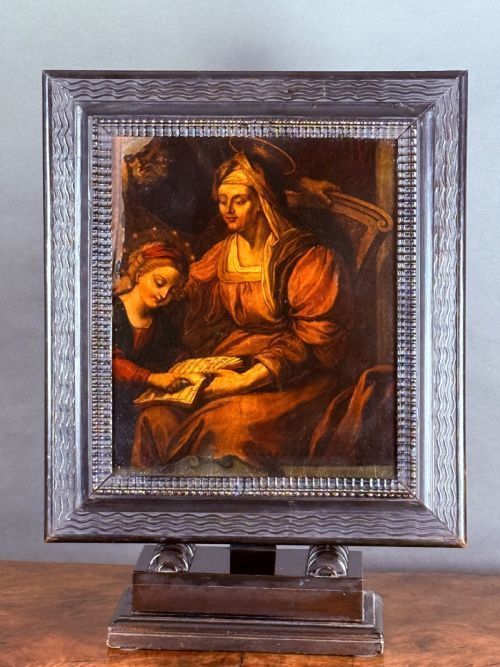
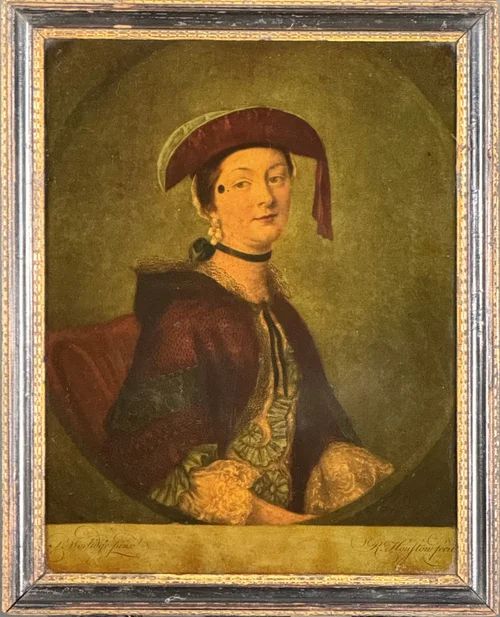
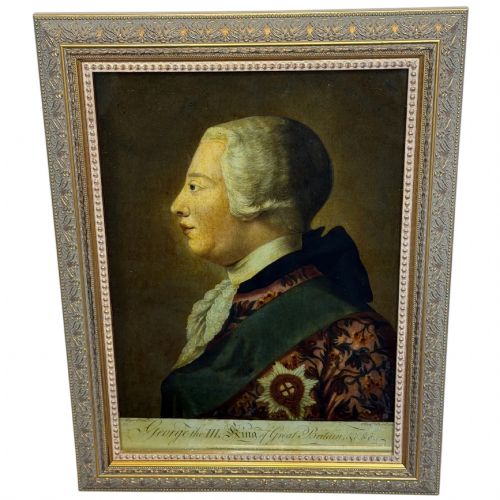
When you search for reverse painted mezzotint, you encounter wall art and framed prints produced primarily during the Georgian and Regency periods. The inventory spans the seventeenth century through to the nineteenth century, featuring portraits of nobility, royal figures, and allegorical subjects such as the seasons.
Most examples you meet on this page utilise glass as the primary support, combined with wood frames, paper, and pigment. These pieces range from single portraits like those of King George III and Mrs Brooks to pairs and sets depicting seasonal themes.
How they were made
The technique involves applying a mezzotint print face down onto a sheet of glass, carefully removing the paper backing, and then painting the reverse with oil paint, pigment, and occasionally gold leaf or gilt. This method locks the delicate tones beneath the glass surface while giving the image a luminous depth.
Makers mounted these fragile panels into wood frames, securing the work to protect the delicate pigment layers applied behind the glass. The combination of oil pigment and paper transferred onto glass demands steady precision from the artist.
Object forms include wall art, reverse glass prints, paintings, and framed prints depicting portraits, seasonal sets, and historical subjects.
What varies in quality
The distinction between standard examples and finer works lies in the subtlety of the hand-applied pigment and the preservation of the delicate transferred print beneath the glass. Skill in handling the brushwork behind the transparent medium dictates whether a portrait possesses sharp character or flat tones.
Original framing and the intact condition of the glass surface distinguish superior pieces from those with heavy restoration. The clarity of the underlying mezzotint engraving through the glass sets the finer works apart.
Sebastiaan Vrancx·Fletcher·Charles Spooner·Richard Purcell·W. Bishop·Richard Phillips
The Reverse Painted Mezzotint Glossary
- Mezzotint
- A printmaking process where the copper plate is roughened to achieve rich tonal gradations in the dark areas. This method allows for subtle shifts in shadow and light.
- Reverse glass painting
- An art form where the image is painted or transferred onto the back of a glass panel to be viewed from the front. This protects the pigments from dust and atmospheric damage.
- Georgian
- The period spanning the reigns of the four British monarchs named George from 1714 to 1830. Pieces from this era frequently showcase classical portraiture and allegorical subjects.
- Regency
- The stylistic era in Britain covering the early nineteenth century during the prince regent's rule. Items from this time often display refined neoclassical design elements.
- Gilt
- A thin layer of gold applied to wood frames or decorative elements to provide a bright metallic finish. It enhances the visual weight of the display.
Reverse Painted Mezzotint: Frequently Asked Questions
What is a reverse painted mezzotint?
It is an artwork created by adhering a mezzotint print face down onto glass and applying oil paint and pigments to the reverse side. This technique produces a protected image with a glossy finish.
Printers and artists used this method during the seventeenth, eighteenth, and nineteenth centuries to produce decorative portraits and seasonal scenes for domestic interiors.
How should I hang these framed pieces?
Hang them away from direct sunlight to prevent the pigments and oil paint behind the glass from fading over time. Use sturdy fixings suited to the weight of the wood frame and glass.
Keep them on interior walls where temperature and humidity fluctuations remain minimal to protect the fragile paper and glass bond.
How do I identify a Georgian piece?
Georgian pieces often depict figures from the eighteenth century, such as royalty, nobility, or literary characters, rendered in characteristic period attire and hairstyles. The materials typically include eighteenth-century glass and traditional timber frames.
Look for the handling of the oil pigment and the specific style of the mezzotint engraving typical of workshops operating between 1714 and 1830.